10 min read
Disclosure: As an Amazon Associate and eBay Partner Network publisher, we earn from qualifying purchases. This doesn’t affect what we recommend or how we describe it.
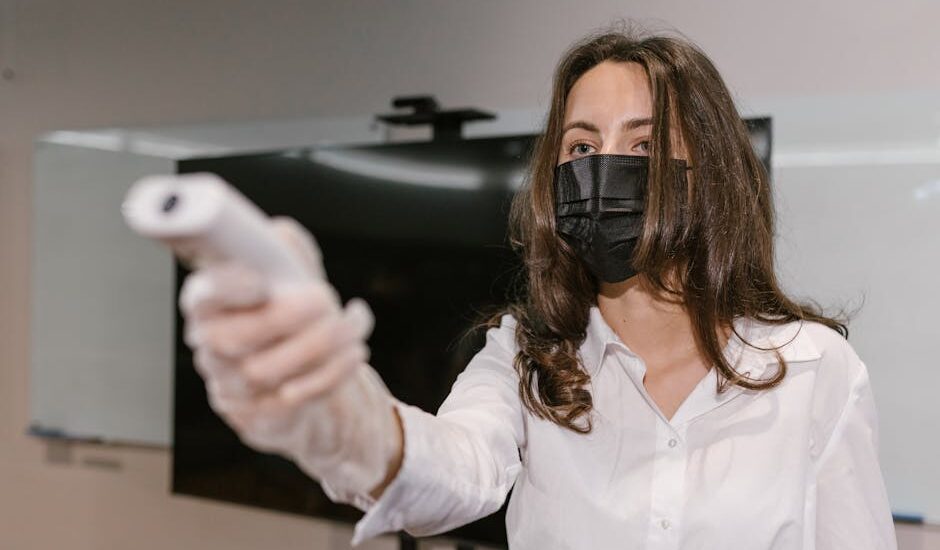
You’re standing over a restless child at 2 a.m., thermometer in hand. Should you aim for the center of the forehead or slide over to the temple for the most accurate fever reading? This isn’t just a matter of comfort—it’s about trust in the number you see, and your next steps. This guide will break down the real differences between infrared forehead and temple thermometers, how each works, and which approach actually delivers reliable results when it matters most.
Spot the difference between forehead and temple infrared readings
Infrared thermometers have changed how we take temperatures at home—no more under-the-tongue waiting games or wrestling with ear probes. But not all “no-touch” readings are created equal. Two main approaches dominate: those designed for the center of the forehead (frontal) and those targeting the temple area, just to the side of the eye. The distinction isn’t marketing fluff; it’s rooted in anatomy, blood flow, and sensor design.
Forehead (frontal) infrared thermometers are typically aimed at the midpoint between the eyebrows and the hairline. They measure the infrared radiation emitted by the skin, which correlates to the temperature of the blood in superficial arteries. Temple infrared thermometers, on the other hand, are positioned over the superficial temporal artery—closer to the hairline, just above the cheekbone. This artery sits nearer to the skin’s surface and, in theory, provides a more direct reflection of core body temperature.
Both approaches rely on the same core technology: a sensor detects infrared energy and converts it into a temperature readout. But the location you choose—and the design of the device—can impact accuracy, consistency, and even how easy it is to get a good reading in the middle of a feverish night.
How the options compare: Forehead vs. Temple infrared thermometers
| Approach | Measurement Site | Typical Accuracy | Scan Time | Ease of Use | Price |
|---|---|---|---|---|---|
| Forehead (Frontal) Scan | Center of forehead (midline above eyebrows) | ±0.4°F (±0.2°C) | 1–3 seconds | Very simple; ideal for children | $$ |
| Temple Scan | Side of forehead (temple, over temporal artery) | ±0.2°F (±0.1°C) | 2–5 seconds (often requires slow swipe) | Requires correct placement and motion | $$$ |
| Hybrid (Forehead-to-Temple Sweep) | Swiped from center forehead across to temple | ±0.2–0.4°F (±0.1–0.2°C) | 2–5 seconds | More steps; more sensitive to technique | $$$ |
| Spot-Check (Contactless) | Any area; held at 1–3 cm distance | ±0.5°F (±0.3°C) | 1–2 seconds | Quick, but less consistent | $ |
About the $ symbols: they’re a quick budget/mid/premium read of where each option sits relative to the others in this comparison. See current prices in the live listings below.
Choose the right approach for your needs
Not every household needs the clinical precision of a hospital-grade temporal artery scan—but knowing the strengths and quirks of each approach helps you avoid disappointment or, worse, a false sense of security about a fever. Here’s how these options play out in real-world use:
- Forehead (frontal) scan thermometers are the most user-friendly. You simply place the sensor at the center of the forehead, press a button, and get a reading in under three seconds. They’re less sensitive to precise positioning, making them a favorite for squirmy kids or self-use at night. However, they can be thrown off by sweat, heavy makeup, or direct sunlight.
- Temple scan thermometers require you to locate the temporal artery, often just above the cheekbone and toward the hairline. The sensor must be pressed gently against the skin and sometimes moved slowly across the artery for a few seconds. When done correctly, this method can offer slightly higher accuracy (within ±0.2°F) because the temporal artery is a more direct proxy for core body temperature. The catch: technique matters. An off-target swipe or inconsistent pressure can skew results.
- Hybrid sweep designs instruct you to start at the center forehead and sweep across to the temple. This method tries to combine the ease of the forehead scan with the improved arterial reading of the temple. In practice, it can be tricky to get right—especially on a moving child.
- Spot-check “no contact” thermometers offer speed and hygiene but sacrifice accuracy, especially if the device is not held at precisely the recommended distance (usually 1–3 cm). These are best for quick screening rather than clinical decision-making.
See what’s available in each category and weigh what matters most for your family—speed, precision, or absolute ease of use.
What does clinical research say about site accuracy?
Medical studies consistently show that readings taken over the temporal artery (temple area) are closer to core body temperature than those taken at the forehead midline. The superficial temporal artery carries blood directly from the heart and sits just beneath the skin, making it a reliable site for non-invasive measurement. In fact, clinical protocols in many hospitals specify the temple as the preferred site for infrared scanning, especially in infants and young children.
However, the difference is not dramatic for most home users. Forehead scans, when performed correctly, are usually within ±0.4°F (±0.2°C) of core temperature—close enough for routine home monitoring. The real risk is user error: a forehead scan taken too high (into the hairline) or too low (near the brow) loses accuracy. The temple approach can be more precise, but only if you consistently locate the artery and follow the device’s instructions to the letter.
For more on the clinical context, see recommendations from the Centers for Disease Control and Prevention and device-specific guidance from regulatory bodies.
Who should choose forehead vs. temple—does age or condition matter?
Small children, the elderly, and people with certain medical conditions may have unique needs. For infants under 3 months, pediatricians often prefer rectal or ear thermometers due to the higher precision and the risk of subtle fevers. For everyone else, the main considerations are comfort, speed, and how likely you are to follow the correct technique every time.
- Forehead scans: Best for quick checks in kids over 6 months, especially when you need a fuss-free process. They’re also less invasive for adults who dislike in-ear or oral thermometers.
- Temple scans: Preferable if you want the closest approximation to core temperature without rectal or tympanic (ear) measurement. Ideal for tracking fever trends during illness, provided you’re confident in your technique.
Both approaches are generally safe for use during sleep, but temple scans may require moving hair aside and maintaining skin contact for several seconds. If you’re monitoring a restless or sleeping child, the forehead approach is less disruptive.
Related Guides
Common mistakes to avoid
- Scanning over hair or hats: Both forehead and temple readings require direct skin contact. Measuring over bangs, hats, or hair can drop the recorded temperature by up to 1°F, giving a false sense of security.
- Not allowing the device to acclimate: Bringing a thermometer from a cold room or car directly onto warm skin can result in inaccurate readings. Let the device and the person’s skin adjust to room temperature for at least 10 minutes first.
- Incorrect placement: A forehead scan taken too low (on the brow) or too high (into the hairline) can misrepresent the true temperature. Similarly, missing the temporal artery during a temple scan reduces accuracy.
- Skipping cleaning between uses: Infrared sensors can pick up residue from skin oils, sweat, or lotions. Wipe the sensor gently with alcohol or a soft cloth after each use to maintain accuracy.
- Ignoring manufacturer-specific instructions: Each device may have unique placement, distance, or scan-time requirements. Relying on generic technique can lead to systematic under- or over-reading.
What specs actually matter in a forehead or temple infrared thermometer?
Thermometer marketing is full of buzzwords—“advanced sensors,” “medical-grade accuracy,” “instant read”—but only a few specs genuinely affect your experience and trust in the reading.
- Accuracy margin: Look for clinical validation with accuracy within ±0.4°F (±0.2°C) for forehead scans, or ±0.2°F (±0.1°C) for temple scans. Devices without a published accuracy margin may not be reliable for fever detection.
- Measurement range: Most home thermometers cover 89.6°F–109.4°F (32°C–43°C). Some add ambient mode for room/object temperature, but for body readings, this core range is what matters.
- Response time: Faster isn’t always better if it sacrifices reliability. Many temple-scanning models take 2–5 seconds to stabilize; forehead-only models can be as quick as 1 second. If you’re checking a wiggly child, shorter scan times reduce the chance of movement error.
- Memory and fever alert features: Some models store 20+ readings or offer color-coded fever indicators. These are helpful for tracking illness over several days but don’t affect the core measurement quality.
- Hygiene design: Contactless models reduce germ transfer, but even non-contact sensors need regular cleaning. Removable covers or alcohol-wipe compatibility are practical bonuses.
Compare today’s deals on clinically validated thermometers that publish real accuracy data and offer clear, user-friendly instructions.
FAQs: Forehead vs. Temple infrared thermometers
Which is more accurate for detecting fever—forehead or temple infrared thermometers?
Temple (temporal artery) infrared thermometers are generally more accurate, with clinical studies showing they can be within ±0.2°F (±0.1°C) of core temperature when used correctly. Forehead readings are almost as reliable for most home uses but can be thrown off by sweat, makeup, or incorrect placement. For critical medical decisions, temple scans have a slight edge.
How long does it take to get a reading with each type?
Forehead infrared thermometers usually deliver a reading in 1–3 seconds. Temple scans take a bit longer, typically 2–5 seconds, because they often require a slow, steady swipe over the artery. Hybrid sweep models fall into the same 2–5 second range.
Is one approach better for young children or infants?
Forehead scans are easier to use on young children, especially if they’re restless or asleep. Temple scans can be more accurate but require precise placement and may be harder to perform on a moving child. For infants under 3 months, consult a healthcare provider, as rectal thermometers remain the gold standard for this age group.
What factors can throw off an infrared thermometer reading?
Hair, sweat, recent physical activity, exposure to cold or heat, and improper device acclimation can all skew results. Even a difference of 1–2 cm in placement can change the reading by up to 0.5°F. Always follow the manufacturer’s instructions and ensure the skin is clean and dry.
Can you use the same device for both forehead and temple readings?
Some hybrid models are designed to scan both the forehead and temple in a single sweep, but not all devices are calibrated for both sites. Using a forehead-only model at the temple (or vice versa) may result in inaccurate readings. Check the device’s manual for approved measurement sites.
What should you do if readings vary between the two sites?
It’s normal for forehead and temple readings to differ by up to 0.5°F. For monitoring fever trends, pick one site and stick with it for consistency. If you get a result that doesn’t match symptoms, retake the temperature after waiting a few minutes and ensuring proper technique.
Are these thermometers covered by warranties or return policies?
Most reputable infrared thermometers come with at least a one-year warranty. Return policies vary, but many retailers offer 14–30 day windows if the device is unopened or defective. Always check before purchasing, especially if you’re buying online or during sales events. View options with strong warranty support.
Why the right choice isn’t always the “most accurate”
In the end, the best thermometer is the one you’ll use correctly, every time. Temple scans may win on pure accuracy, but if you’re bleary-eyed at 3 a.m. or dealing with a squirmy toddler, the simplicity of a forehead scan can be worth the minor trade-off. Prioritize devices with clear instructions, published accuracy specs, and a design that fits your household’s real needs. When it comes to family health, trust in the number you get—and your ability to get it right—matters as much as the underlying technology.


Last updated: July 2026 · Our editorial process