8 min read
Disclosure: As an Amazon Associate and eBay Partner Network publisher, we earn from qualifying purchases. This doesn’t affect what we recommend or how we describe it.
If you’re shopping for adaptive eating utensils as an adult, your needs are likely specific: you may want something to help with tremors or muscle weakness, or you might be looking for tools that make self-feeding easier after an injury or due to a chronic condition. Some buyers care most about affordability, while others need utensils that can be bent or shaped to fit a unique grip. Understanding these differences is the key to picking the right set—because not all adaptive utensils are built for the same challenges.
Top picks at a glance
- Mars Wellness Weighted Adaptive Utensils 3-Piece Set — the budget pick
- Medline Weighted and Bendable Utensils Set 4 Pcs — the best for flexibility and adjustability
Choose the right adaptive utensils for your needs
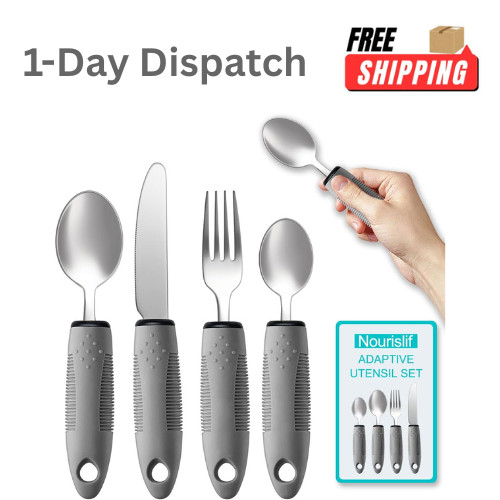
Adaptive eating utensils come in a variety of designs, each aiming to solve a different problem. The Mars Wellness Weighted Adaptive Utensils 3-Piece Set is a budget-friendly starter kit designed to add weight and stability, while the Medline Weighted and Bendable Utensils Set 4 Pcs stands out for its flexibility and customizability, letting you bend the handles to suit your grip. These are not one-size-fits-all solutions—each set is better suited for certain hand strengths, types of tremor, and price points.
Spot the difference between the Mars Wellness set and Medline set
On paper, both sets offer weighted utensils, but they diverge in adjustability, set composition, and price. The Mars Wellness set is streamlined—just three pieces, all new, and priced for accessibility. The Medline set, available as a used product, includes four utensils and features bendable handles, making it the most adaptable choice for users with limited hand mobility or unique grip needs. For those who need versatility over simplicity, the Medline set is the clear winner. If budget is your top concern, the Mars Wellness set covers the basics without the adjustability.
Comparison table: Mars Wellness vs Medline adaptive utensils
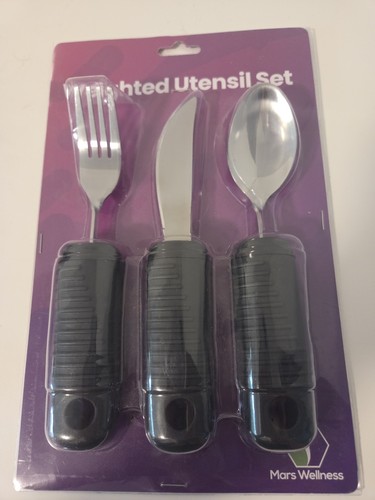
Pictured: Mars Wellness set
| Product | Condition | Price | Best For | Pieces in Set | Bendable Handles |
|---|---|---|---|---|---|
| Mars Wellness Weighted Adaptive Utensils 3-Piece Set |
New | $ | Budget pick | 3 | — |
 Medline Weighted and Bendable Utensils Set 4 Pcs Medline Weighted and Bendable Utensils Set 4 Pcs |
Used | $$$ | Flexibility and adjustability | 4 | Yes |
Note on pricing: the $ symbols are relative tiers within this comparison — $ is the cheapest of the bunch, $$$ the priciest. Live listings (and exact prices) appear further on.
Related Guides
- Hearing Aids vs Cochlear Implants: Understanding the Key Differences
- Digital Dynamometer Prices: What to Expect and How to Find the Best Deals
- Are Smart Scales Accurate? What the Science Says
- Our guide to Are Microcurrent Facial Treatments Safe? What the Science Says
- Our guide to How to Set Up a Digital Blood Pressure Monitor: Step-by-Step Guide
- Are Home Cholesterol Tests Accurate? What You Need to Know
- Browse all Buying Guides →
Decide which features really matter for you
For adults managing hand tremors, weighted utensils can make a measurable difference in control. The Mars Wellness set focuses on this principle, offering a straightforward, weighted fork, spoon, and knife. There’s no adjustability, but the simplicity works if you have mild-to-moderate tremor and don’t need custom grip angles.
The Medline set, meanwhile, is built for customization. Each utensil can be bent at the handle, allowing you to adjust the angle for either left or right hand or to compensate for limited wrist movement. This feature is especially useful if you have arthritis, contractures, or other conditions that limit your range of motion. The set also adds an extra piece—typically including a teaspoon, tablespoon, fork, and knife—so you’re covered for more meal types.
How we selected these utensils
The shortlist here is based on a review of listed features, set composition, adjustability, and price tier. Weighted utensils were prioritized because they’re the most common adaptive solution for tremors and muscle control issues, and because they have a strong evidence base in occupational therapy literature (National Institute on Aging offers more on adaptive equipment research). Sets with bendable handles were included for buyers who need to customize grip due to limited dexterity or specific hand positioning needs.
We compared each product’s stated weight, number of included utensils, and handle adjustability. Only complete sets with all core utensils (fork, spoon, knife) were considered; single utensils and unbranded listings with unclear specs were excluded. Sets with no stated handle adjustability or with fewer than three pieces didn’t make the cut. This guide is for adults—if you need pediatric sizes or utensils for very severe contractures, you’ll want to look for more specialized solutions than what’s covered here.
All evaluations are based on research of manufacturer specs and market positioning, not direct testing or personal use.
Total cost of ownership
The sticker price of adaptive utensils is only part of the story. Here are the real-world costs to consider over a year of regular use:
- Replacement utensils: If you lose or damage a piece, buying a single adaptive fork or spoon often costs more per item than buying in a set—expect to pay 50–100% of the set’s per-piece price.
- Cleaning and maintenance: Both sets are typically dishwasher safe, but repeated high-heat washes can cause handle materials to degrade. Plan on replacing a set every 1–2 years with daily use.
- Grip covers or handle sleeves: Some users add foam or silicone sleeves for extra comfort or thickness, which can run $10–$20 per set annually if you need to replace them due to wear.
- Shipping and returns: If you’re buying online, factor in shipping fees (which can add 10–20% to the total cost) and potential return shipping if the utensils aren’t a good fit.
- Accessory costs: If you want a carrying case for travel or storage, these are usually sold separately and can add another $10–$15.
Keep these additional costs in mind, especially if you’re buying for multiple users or planning to use adaptive utensils long-term.
FAQ: Adaptive eating utensils for adults
Are weighted utensils actually helpful for adults with tremors?
Weighted utensils are designed to provide additional stability, which can help reduce the impact of hand tremors during meals. Several occupational therapy resources suggest weighted handles can improve control for people with mild to moderate tremor, though results vary by individual. If your tremor is severe, you may need more specialized devices.
What’s the main difference between the Mars Wellness set and the Medline set?
The Mars Wellness set is a basic, affordable three-piece set with weighted handles but no adjustability. The Medline set includes four pieces and features bendable handles, allowing you to customize the angle for your grip or range of motion. Choose the Mars Wellness set for simplicity and price; choose the Medline set if you need handle flexibility.
How many utensils come in each set, and is that enough for daily use?
The Mars Wellness set includes three utensils (typically a fork, spoon, and knife), which covers most basic meals. The Medline set includes four utensils, often adding a teaspoon or a second spoon, which can be useful for soup or dessert. For most adults, either set is sufficient for daily meals, though the extra piece in the Medline set provides more options.
How long do adaptive utensil sets last with daily use?
Most weighted adaptive utensils are designed for durability and can last 1–2 years with regular, daily use if cleaned properly. However, exposure to high heat in dishwashers may shorten their lifespan, especially for plastic or silicone handles. If you use handle sleeves or add-on grips, those may need to be replaced more frequently.
Is buying a used set like the Medline set safe and worthwhile?
Buying used can save money, but you should inspect the utensils for wear, cracks, or degraded handle materials. Thoroughly clean and disinfect all pieces before use, especially if you have immune concerns. If you need pristine condition or have hygiene sensitivities, a new set may be a better choice.
Should I get bendable utensils even if I don’t have limited hand mobility?
If you don’t need to adjust the angle or shape of your utensils, bendable handles may be unnecessary. For buyers with stable grip and no range-of-motion issues, a weighted set like the Mars Wellness option is likely sufficient. Bendable utensils are best for those who struggle with traditional straight handles or need to adapt the utensil to their specific grip.
What if none of these sets fit my needs?
If you require pediatric sizes, utensils for extremely limited hand function, or devices with built-in electronic assistance, you’ll need to look for more specialized adaptive equipment. Consult with an occupational therapist or check resources like the Assistive Technology Industry Association for advanced options.
Final thoughts: Which adaptive utensil set is right for you?
If you want the simplest, lowest-cost way to add stability at mealtime, the Mars Wellness set covers the basics and is easy to replace. If you need customization—whether for arthritis, stroke recovery, or unique grip requirements—the Medline set offers the most flexibility, though you’ll pay more and may be buying used. Both sets are practical solutions for adults, but your specific needs—especially around hand strength, grip, and budget—should drive your final decision.
Still undecided? You can browse more adaptive utensil options here.
Last updated: July 2026 · Editorial standards