
8 min read
Disclosure: As an Amazon Associate and eBay Partner Network publisher, we earn from qualifying purchases. This doesn’t affect what we recommend or how we describe it.
Most adjustable rollator walkers with seats weigh between 15 and 20 pounds, and height settings can span a 5-inch range to fit users from about 5’2” to 6’2”. That means even small differences in size, weight, and adjustability can make a rollator much easier—or harder—to use. The two most widely available models, the Drive Medical 10257BL-1 4 Wheel Rollator Walker with Seat and the Medline Steel Rollator Walker with Seat, both offer adjustable handles and a built-in seat, but differ in their weight, frame material, and price. Here’s what matters when choosing between them.
Top picks at a glance
- Drive Medical 10257BL-1 4 Wheel Rollator Walker with Seat — the best all-around choice
- Medline Steel Rollator Walker with Seat — the budget pick
Comparison table: adjustable rollator walkers with seat
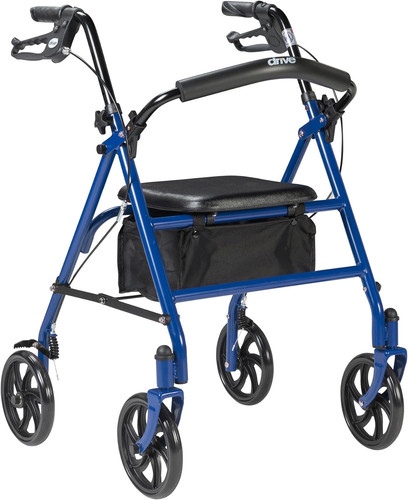
Pictured: Drive Medical 10257BL-1
| Product | Condition | Price | Best For | Frame Material | Weight Capacity (lbs) |
|---|---|---|---|---|---|
| Drive Medical 10257BL-1 4 Wheel Rollator Walker with Seat |
New | $$$ | Best all-around choice | Aluminum | 300 |
 Medline Steel Rollator Walker with Seat Medline Steel Rollator Walker with Seat |
New | $ | Budget pick | Steel | 350 |
Price tiers ($/$$/$$$) read across this comparison only — they mark each product’s relative position from cheapest to priciest in the set. Actual prices live below.
Seat comfort and size
The seat on the Drive Medical 10257BL-1 measures 12″ x 14″, with a padded surface and a backrest for extra support. This is a comfortable size for most adults, providing enough width without making the walker bulky. The Medline Steel Rollator has a slightly smaller seat at 12″ x 12″, which will still work for many users but may feel a bit narrow if you prefer more sitting room. Both seats are designed to support breaks during walks, but for longer rests, the extra two inches on the Drive Medical model can make a noticeable difference.
Frame weight and portability
Frame weight is a dealbreaker for many buyers. The Drive Medical 10257BL-1 uses an aluminum frame, bringing the total weight down to around 17 pounds. That makes it easier to lift into a car trunk, fold up for storage, or maneuver over thresholds. The Medline Steel Rollator, as the name suggests, uses a steel frame and weighs in closer to 19 pounds. While a 2-pound difference doesn’t sound like much, it’s very noticeable if you need to pick up the walker regularly or have less upper body strength. If you want the lightest option that still feels sturdy, the Drive Medical model stands out.
Handle height adjustability
Proper handle height is key for safe, comfortable walking posture. The Drive Medical 10257BL-1 offers handle height adjustment from 31″ to 35″, accommodating users from about 5’3” to 6’1”. The Medline Steel Rollator adjusts from 31.5″ to 35.5″, so both cover a similar range, but if you’re very petite or very tall, you’ll want to double-check that your ideal handle height is within these limits. Neither model is ideal for users under 5’2” or over 6’2”; in those cases, look for specialty models with extended adjustment ranges.
Related Guides
Braking system and wheel performance
Both walkers use loop-style hand brakes, which are the standard for rollators: squeeze to slow down, push down to lock in place for sitting. The Drive Medical 10257BL-1 features 7.5″ wheels, which are large enough for most indoor and outdoor surfaces—not ideal for gravel or grass, but fine for sidewalks and indoor floors. The Medline Steel Rollator also uses 8″ wheels, which offer slightly better stability on uneven pavement. If you primarily use your walker outdoors, the Medline’s larger wheels can help smooth out small bumps and cracks, while the Drive Medical’s slightly smaller wheels make for a tighter turning radius indoors.
Storage and folding
Both models fold for transport and storage, but the mechanism differs. The Drive Medical 10257BL-1 collapses inward with a single pull on the seat handle, and the basket underneath can stay attached when folded. The Medline Steel Rollator also folds, but you’ll need to remove the storage bag first to collapse it fully. If you’re looking for a walker that’s quick to stow in a car or closet, the Drive Medical model is slightly more convenient in day-to-day use.
How these models made the shortlist
To narrow down the best adjustable rollator walkers with seats, the focus was on models with:
- Adjustable handle height spanning at least 4 inches
- Integrated padded seat and backrest
- Frame weight under 20 lbs for portability
- Minimum weight capacity of 250 lbs
- Published seat dimensions
- Standard loop brakes and 7.5″ or larger wheels
We compared the listed specs and manufacturer features for each candidate, prioritizing adjustability, weight, and seat comfort. Models with no stated seat size, unclear height adjustment, or no published weight capacity were excluded. Unbranded or generic listings—common on auction and third-party platforms—were also left out, since they often lack warranty support and clear specs. If you need a rollator for heavy outdoor use, or require extra-narrow or bariatric models, these two picks may not be the best fit. In those cases, consider specialty walkers designed for your environment or body type.
Red flags in listings to walk past
- No stated weight capacity: If a listing doesn’t specify how much weight the walker supports, it’s safer to skip it. This often signals a generic or untested product.
- Missing handle height range: Adjustable rollators should always list minimum and maximum handle heights. If you can’t find this info, you can’t be sure it’ll fit you safely.
- Unbranded stock photos: Listings using only generic images (no brand or model visible) may be reselling low-quality imports or knockoffs.
- No warranty or return info: Reputable brands usually offer at least a limited warranty. If a seller won’t stand behind the product, that’s a red flag.
- Unusually low weight for a steel frame: If a steel-frame walker claims to be under 15 lbs, double-check. Most steel rollators are heavier; a low weight may indicate inaccurate specs or a smaller, less stable frame.
Drive Medical 10257BL-1 vs Medline Steel Rollator: which should you choose?
The Drive Medical 10257BL-1 is the strongest choice if you want a balance of weight, comfort, and folding convenience. Its aluminum frame is lighter and easier to lift, and the seat is a little roomier, making it a good fit for most adults who prioritize portability and comfort. The Medline Steel Rollator is the clear budget pick. Its steel frame is heavier, but it supports up to 350 lbs—a better match if you need a higher weight capacity at the lowest price point. The Medline’s slightly larger wheels also help on rougher outdoor terrain.
Both models use standard loop brakes, similar handle height adjustment, and fold for storage. The main differences come down to frame material (aluminum vs steel), seat size, and a roughly 2-pound weight difference. If the best price is your top concern and you don’t mind a bit of extra weight, the Medline is a solid value. For most users, the Drive Medical model justifies its higher price with easier handling and more comfortable seating. If neither fits your height or home environment, specialty rollators with extra-tall, extra-short, or heavy-duty frames may be a better direction. For further guidance on mobility aids, the American Occupational Therapy Association offers practical resources on walker selection and safe use.
Frequently asked questions about adjustable rollator walkers with seat
How much weight can these rollator walkers support?
The Drive Medical 10257BL-1 supports up to 300 lbs, while the Medline Steel Rollator is rated for 350 lbs. Always check the weight capacity before purchasing—using a walker beyond its rated limit can affect safety and durability.
Is the extra cost of the Drive Medical 10257BL-1 worth it over the Medline Steel Rollator?
If you value a lighter frame, easier folding, and a slightly larger seat, the Drive Medical 10257BL-1 offers real improvements. For buyers on a tight budget or those needing higher weight capacity, the Medline Steel Rollator is a good alternative. The price difference buys you convenience and comfort, not just a brand name.
Which is better for outdoor use?
The Medline Steel Rollator’s 8″ wheels handle sidewalk cracks and uneven ground a bit better than the Drive Medical’s 7.5″ wheels. If you spend a lot of time outdoors, those extra half-inch wheels can help, but neither is ideal for gravel or grass. For mostly indoor use, both perform well.
How do I know if the handle height will fit me?
Measure from the floor to the crease of your wrist when standing upright. Compare this to the product’s handle height range (31″-35″ for Drive Medical, 31.5″-35.5″ for Medline). If you fall outside this range, consider a model with a wider adjustment span.
What kind of warranty do these walkers come with?
Both Drive Medical and Medline typically offer limited warranties on their rollators, but specifics can vary by seller. Always check the product listing or contact the seller for warranty details and return policies before buying. Reputable brands will stand behind their products.
How long will these rollator walkers last with daily use?
With regular maintenance (checking brakes, tightening bolts), both models can last several years under normal use. Padded seats and wheels may show wear after 1-2 years, but replacement parts are widely available. Durability depends on usage patterns and care.
Can I use these walkers in narrow hallways or small apartments?
Both models are about 24″ wide, which fits through most standard doorways but may be tight in very narrow spaces. Measure your most-used doorways and hallways before buying. If you need a more compact walker, look for a model specifically labeled as “narrow” or “junior.”
For additional information on rollator safety features and best practices, check resources from the AgingCare community and consult with a physical therapist for tailored mobility advice.
Last updated: June 2026 · Editorial standards