
7 min read
Disclosure: As an Amazon Associate and eBay Partner Network publisher, we earn from qualifying purchases. This doesn’t affect what we recommend or how we describe it.
The BackJoy Posture Corrector Cushion Orthopedic Seat Support is the most recognisable name in posture seat cushions, but the DMI Sloping Seat Cushion for Coccyx Support and Better Posture with Cover offers a new, medical-brand alternative for a fraction of the price. Your choice comes down to whether you prefer the reputation and design refinements of BackJoy, or the straightforward, value-focused approach of DMI. This guide breaks down how these two options stack up for real-world use, who each one is best for, and what to expect before you buy.
Top picks at a glance
- BackJoy Posture Corrector Cushion Orthopedic Seat Support — the best-known ergonomic brand
- DMI Sloping Seat Cushion for Coccyx Support and Better Posture with Cover — the budget pick from a medical brand
Spot the difference between BackJoy and DMI seat cushions
Both products aim to support better sitting posture—reducing slouching, encouraging spinal alignment, and relieving pressure on your lower back. But they approach the problem differently. The BackJoy cushion is known for its contoured, rigid shell that tilts your pelvis and cues your body into an upright position. The DMI Sloping Cushion uses a simple foam wedge shape, with a pronounced slope to help tilt your pelvis forward and take pressure off the coccyx (tailbone).
BackJoy’s reputation comes from years of being recommended for ergonomic support in offices and by some physical therapists. DMI, meanwhile, is a staple medical-supply brand: their cushion is all about practicality, affordability, and straightforward function. The right pick for you depends on your priorities—brand trust, adjustability, portability, or simply price.
Compare the top posture corrector seat cushions

Pictured: BackJoy cushion
| Product | Condition | Price | Best For | Design Type | Stated Use |
|---|---|---|---|---|---|
| BackJoy Posture Corrector Cushion Orthopedic Seat Support |
Used | $$$ | Brand reputation, ergonomic support | Contoured shell | Posture correction, general back pain |
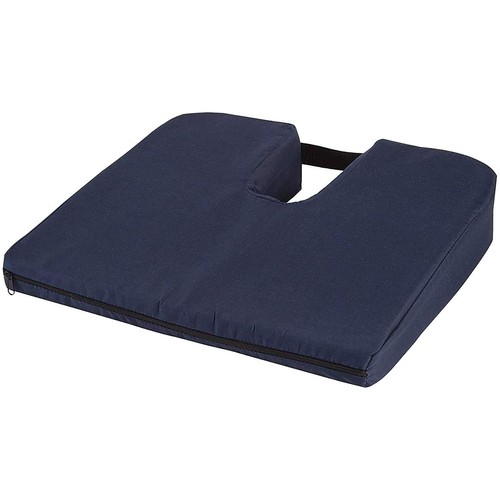 DMI Sloping Seat Cushion for Coccyx Support and Better Posture with Cover DMI Sloping Seat Cushion for Coccyx Support and Better Posture with Cover |
New | $ | Budget, coccyx relief | Foam wedge | Coccyx pain, posture improvement |
Pricing key: $ marks the budget tier, $$ the mid-range, $$$ the premium picks. Tiers are relative to the products in this comparison; actual prices update live below.
Choose the right cushion for your priorities
If you want the backing of a well-known ergonomic brand and a design that actively positions your pelvis for better posture, the BackJoy cushion is the clear leader. Its molded shell is unlike most foam or gel seat pads—there’s no risk of “flattening out” over time, and the curved base encourages consistent posture without much thought. The downside is price: BackJoy products regularly cost several times as much as basic foam wedges, and most listings are for used units. Some users may also find the rigid shell less cushioned than expected, especially for extended sitting sessions.
The DMI Sloping Cushion is the best fit if you’re looking for new, budget-friendly support and want relief focused on the tailbone (coccyx). Its wedge shape (typically 3 to 4 inches of lift at the back, tapering to 1 inch at the front) angles your hips forward, which can help reduce pressure on the lower spine and promote a more upright sitting position. Unlike BackJoy, the DMI uses high-density foam—softer and warmer, but it may compress over time. It’s also lighter and more portable, with a removable cover for easy cleaning.
Neither cushion is a substitute for medical advice or a solution for complex back problems, but both can help cue better sitting habits for desk workers, drivers, or anyone who spends long hours seated. For more on best practices in ergonomic seating, see the Chartered Institute of Ergonomics & Human Factors.
Related Guides
How we picked these posture seat cushions
This guide focuses on posture seat cushions with explicit claims of “posture correction” or “orthopedic support” in their product names and listings. The main criteria were: design type (rigid shell vs. foam wedge), brand reputation, intended use (general posture vs. coccyx relief), condition (new vs. used), and price tier. We compared manufacturer specs, listed features, and how each cushion is positioned in the market—favoring products with a clear ergonomic rationale and a verifiable track record.
We excluded generic, unbranded foam pads with no stated specs, as well as any seat cushion bundles that combine unrelated accessories or lack a clear focus on posture support. Listings with no brand history or minimal product information didn’t make the cut. If you’re dealing with severe back pain, sciatica, or need a cushion for wheelchair use, these options may not be suitable; consult a healthcare professional for more specialised solutions.
Specifications that actually matter
Pelvic tilt angle
This determines how aggressively the cushion encourages your hips to roll forward, which in turn affects spinal alignment. Foam wedges like the DMI typically offer a 7° to 15° slope; the higher the angle, the more pronounced the effect. BackJoy’s shell creates a fixed tilt, but the precise angle isn’t always specified—expect a moderate forward tilt that’s subtle but noticeable.
Material and firmness
Rigid shell cushions (BackJoy) hold their shape over years of use, while foam wedges (DMI) offer more cushioning but can compress over time. High-density foam is best for maintaining support over months, but check user reviews for real-world compression and heat retention.
Cover removability
Removable, washable covers make a big difference in long-term usability, especially if you use the cushion daily or in multiple settings. The DMI includes a washable cover by default; BackJoy’s shell can be wiped down but doesn’t come with a fabric cover.
Dimensions and portability
Larger cushions provide more support but may not fit all chairs or car seats. The DMI’s wedge is typically around 15 x 13 x 3 inches, making it easy to move between home, office, and car. BackJoy is lightweight and compact, but its shape can be less compatible with deeply contoured seats.
Condition (new vs. used)
Used ergonomic products can offer savings, but check for signs of wear or loss of structural integrity. Foam can degrade, and hard shells can develop cracks over time. New cushions (like the DMI) guarantee full lifespan and hygiene.
FAQ: Posture corrector seat cushions explained
How do posture corrector seat cushions actually work?
These cushions aim to position your pelvis in a way that encourages the natural curve of the spine. Rigid shell types cue your hips into a more upright tilt, while foam wedges physically angle your seat to promote forward pelvic rotation. The result is less slouching and reduced lower back strain for many users.
BackJoy vs DMI — which is better for all-day office sitting?
If you spend eight or more hours at a desk, the BackJoy cushion’s contoured shell is less likely to compress over time and provides more consistent posture support. The DMI is softer and may be more comfortable short-term, but can flatten with prolonged, heavy use. For pure durability, BackJoy has the edge—if you don’t mind buying used.
How long does a typical foam wedge cushion last with daily use?
High-density foam cushions like the DMI can maintain their shape for 6 to 18 months of daily use, depending on user weight and usage patterns. Lower-density foams may flatten in as little as a few months. Rigid shell cushions, by contrast, often last several years unless cracked or physically damaged.
Do these seat cushions fit all chair types?
Both options are designed for standard office or dining chairs, but fit can vary. The DMI’s wedge is compatible with most flat seats and is slim enough for car use. The BackJoy’s molded shape may not sit evenly on deeply contoured or bucket-style seats, and can feel unstable on very soft surfaces. Always check dimensions before buying.
Is it worth paying extra for a branded ergonomic cushion?
Brand reputation usually means better design, tested materials, and a track record of customer support. BackJoy’s higher price reflects its unique shell construction and years of ergonomic feedback, but some users find generic wedges sufficient for basic posture improvement. If you only need occasional support, the DMI may be enough. For daily, long-term use, the investment in BackJoy can pay off in durability and consistent performance.
What should I know about returns and warranties?
Returns and warranty coverage depend on the seller and product condition. New cushions like the DMI generally include a basic manufacturer warranty, while used BackJoy cushions may not be eligible for returns or coverage. Always review the seller’s policy before purchase, especially for used ergonomic gear.
For more on seating ergonomics and posture support, see the Posturite guide to sitting posture.



Last updated: July 2026 · How we research and evaluate