

9 min read
Disclosure: As an Amazon Associate and eBay Partner Network publisher, we earn from qualifying purchases. This doesn’t affect what we recommend or how we describe it.
Imagine sitting down to watch your favorite show, only to realize you can’t follow the dialogue—no matter how high you turn up the TV volume. If you’re using hearing aids, wireless TV streamers can bridge the gap, delivering clear audio straight to your ears without disturbing anyone else. This guide cuts through the noise, comparing the real options on the market so you can pick the right wireless hearing aid TV streamer for your needs, model, and budget.
Top picks at a glance
- ReSound TV Streamer+ Auracast Bluetooth — the most advanced Bluetooth option
- Signia TV Sound Streaming Device for Hearing Aids — the premium pick
- Widex TV Play Wireless TV Streaming Version 2.0 — the best for Widex users
- Starkey TV Streamer 2.4GHz — the best for Starkey hearing aids
Direct compatibility matters more than features
TV streamers for hearing aids aren’t one-size-fits-all. Each brand typically requires its own dedicated device—plugging in a generic Bluetooth adapter won’t work for most hearing aids. The biggest decision is matching the streamer to your hearing aid brand and model. Beyond that, you’ll want to weigh Bluetooth version, audio latency, device condition (new, open box, or used), and price.
Comparison table: Wireless hearing aid TV streamers
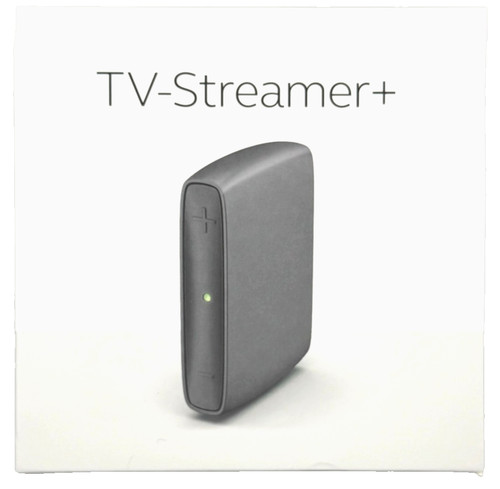
Pictured: ReSound TV Streamer+
| Product | Condition | Price | Best For | Bluetooth / Wireless Standard | Brand Compatibility |
|---|---|---|---|---|---|
| ReSound TV Streamer+ Auracast Bluetooth |
New | $$$ | Most advanced Bluetooth | Bluetooth Auracast | ReSound |
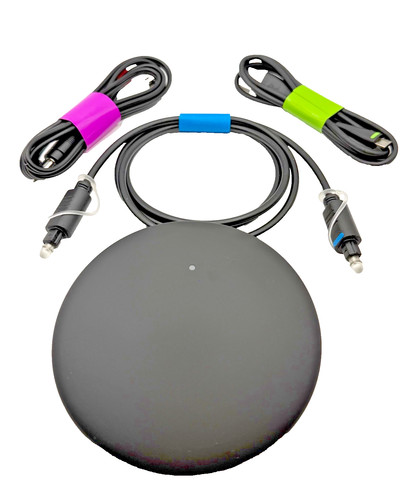 Signia TV Sound Streaming Device for Hearing Aids Signia TV Sound Streaming Device for Hearing Aids |
New | $$$ | Premium pick | Proprietary 2.4GHz | Signia |
 Widex TV Play Wireless TV Streaming Version 2.0 Widex TV Play Wireless TV Streaming Version 2.0 |
Open Box | $ | Best for Widex users | Bluetooth/2.4GHz | Widex |
 Starkey TV Streamer 2.4GHz Starkey TV Streamer 2.4GHz |
Open Box | $$ | Best for Starkey hearing aids | 2.4GHz | Starkey |
 Sonova Digital Wireless TV Connector V2 Sonova Digital Wireless TV Connector V2 |
Used | $$ | Best for Phonak and Unitron compatibility | 2.4GHz | Phonak, Unitron |
 Oticon TV Adapter 3.0 for Hearing Aids Oticon TV Adapter 3.0 for Hearing Aids |
Used | $ | Best for Oticon hearing aids | 2.4GHz | Oticon |
 Phonak Digital Wireless TV Connector Phonak Digital Wireless TV Connector |
Used | $ | Budget pick for Phonak users | 2.4GHz | Phonak |
Note on pricing: the $ symbols are relative tiers within this comparison — $ is the cheapest of the bunch, $$$ the priciest. Live listings (and exact prices) appear further on.
Brand-by-brand: Which streamer fits your hearing aids?
Your hearing aid brand will usually dictate which TV streamer you need. Here’s how the real-world options stack up:
- ReSound: The ReSound TV Streamer+ Auracast Bluetooth is the clear leader if you want the latest wireless standard. Auracast Bluetooth unlocks broadcast audio, so you can connect directly to compatible TVs or even public sound systems in the future. It’s the only device on this list with Auracast, but you’ll pay a premium for new hardware and cutting-edge tech.
- Signia: The Signia TV Sound Streaming Device for Hearing Aids is Signia’s official premium solution. It offers low-latency, stable audio over a proprietary 2.4GHz connection—no Bluetooth pairing headaches, but only compatible with Signia hearing aids. If you want a new-in-box, plug-and-play experience and don’t mind paying for it, this is the strongest fit for Signia wearers.
- Widex: The Widex TV Play Wireless TV Streaming Version 2.0 is the best match for Widex hearing aids. This open-box unit delivers stereo sound via Bluetooth or 2.4GHz wireless, and is the least expensive new-generation Widex option available. It’s ideal if you’re already in the Widex ecosystem and want to save without sacrificing features.
- Starkey: The Starkey TV Streamer 2.4GHz is purpose-built for Starkey hearing aids. Its 2.4GHz wireless connection means you get direct, low-latency streaming. This model is a solid mid-priced pick if you want a dedicated Starkey solution.
- Phonak & Unitron: You have two options. The Sonova Digital Wireless TV Connector V2 is compatible with both Phonak and Unitron hearing aids, making it the most versatile pick if you might switch brands within the Sonova group. If you want the lowest price, the Phonak Digital Wireless TV Connector is the budget-friendly choice, but it’s Phonak-specific and comes used.
- Oticon: The Oticon TV Adapter 3.0 for Hearing Aids is the go-to for Oticon users. It uses a 2.4GHz connection for clear, reliable audio and is the most affordable Oticon-compatible option on the list.
Bluetooth, 2.4GHz, and Auracast: What changes?
Most TV streamers for hearing aids use proprietary 2.4GHz wireless—not standard Bluetooth—to minimize lag and keep your audio in sync with video. The exception is the ReSound TV Streamer+ with Auracast Bluetooth, which supports the new Bluetooth LE Audio standard. Auracast is designed to let multiple users connect to a single audio stream, so as more TVs and public venues adopt it, compatibility and convenience should improve. However, unless your hearing aids specifically support Auracast, you won’t benefit from this feature.
If you’re not sure what your hearing aids support, check your user manual or consult your audiologist before buying. Some earlier hearing aid models lack the hardware for Auracast or even basic Bluetooth streaming, so a dedicated 2.4GHz streamer is still the most reliable choice for now.
Related Guides
- How to Replace Batteries in Hearing Aids: A Step-by-Step Guide
- Our guide to How to Use a Jaw Exerciser: A Step-by-Step Guide
- Our guide to Smart Sensing Chairs: How They Detect and Monitor Sitting Posture
- Our guide to Pill Splitters, Reviewed and Compared
- Our guide to Electric Pill Crushers That Are Worth Buying
- How to Install a Bidet Attachment: Step-by-Step Guide for Beginners
- Browse all Medical Devices →
Condition and price: New, open box, or used?
TV streamers for hearing aids are expensive when new, but open-box and used units are common on the secondary market. New-in-box guarantees you get full accessories, manuals, and the latest revision, but you’ll pay a premium (as with the ReSound TV Streamer+ and Signia TV Sound). Open-box units like the Widex TV Play and Starkey TV Streamer may be unused returns or display models—typically tested and complete, but confirm the listing details. Used models like the Oticon TV Adapter 3.0, Sonova TV Connector V2, and Phonak TV Connector are the most affordable, but may have cosmetic wear or lack original packaging. If warranty and support matter, factor this into your decision.
Audio latency and streaming quality
Audio lag is a real concern with wireless TV streaming—especially if you rely on lip reading or want perfectly synced dialogue. Proprietary 2.4GHz connections (used by all but the ReSound TV Streamer+) are specifically designed to minimize latency, often achieving sub-40ms delays that are imperceptible in real-world TV use. Bluetooth, especially older versions, can introduce longer delays, but the new Auracast LE Audio standard claims to close the gap. If you’re sensitive to lag, stick with a brand-matched 2.4GHz streamer unless you know your hearing aids support the latest Bluetooth protocols.
For more on audio latency and hearing aid streaming, see the Hearing Review industry resource.
Common mistakes to avoid
- Buying a generic Bluetooth adapter: Most hearing aids require their own brand’s streamer. Generic Bluetooth transmitters rarely work and can lead to wasted money and frustration.
- Ignoring hearing aid compatibility: Even within brands, not all streamers work with all hearing aid models or firmware versions. Double-check the compatibility list for your exact model before buying.
- Assuming new equals better: Open-box or used units may deliver identical performance at a lower price. Unless you need a warranty or the latest revision, you can often save by considering non-new options.
- Overlooking latency specs: If you’re sensitive to audio lag, avoid older Bluetooth streamers and stick to proprietary 2.4GHz models or the latest Bluetooth LE Audio solutions.
- Forgetting about returns and support: Used and open-box streamers may not come with return windows or tech support. If you need help setting up, factor this into your buying decision.
How these wireless TV streamers made the cut
This list focuses on dedicated wireless TV streaming devices designed specifically for major hearing aid brands—ReSound, Signia, Widex, Starkey, Phonak, Unitron, and Oticon. We prioritized:
- Brand and model compatibility: Only devices with clear compatibility for current hearing aid models were included.
- Wireless protocol: Preference for low-latency proprietary 2.4GHz solutions or, in the case of ReSound, the latest Auracast Bluetooth LE Audio standard.
- Condition and price tier: We included new, open box, and used units at all price levels, but excluded listings without clear condition or incomplete accessories.
- Audio quality and latency (by spec): All selected devices offer direct streaming designed to minimize lag and maximize clarity.
We compared the listed specs and market positioning for each model based on manufacturer documentation and retail listings. Unbranded adapters, universal Bluetooth transmitters with no hearing aid support, and bundles missing the core TV streaming unit were excluded. If you use hearing aids not from these brands, or if you want to stream audio from sources other than TV (like smartphones), this category may not be the best fit—look for a separate solution designed for general Bluetooth audio.
FAQ: Wireless hearing aid TV streamers
Can I use a standard Bluetooth transmitter with my hearing aids for TV audio?
In most cases, no. Most hearing aids require a brand-specific TV streaming device, as they use proprietary wireless protocols or Bluetooth LE Audio. Standard Bluetooth transmitters will not pair directly with most hearing aids and may cause significant audio lag even if they connect.
Is the ReSound TV Streamer+ worth the price over other options?
The ReSound TV Streamer+ is the only model here with Auracast Bluetooth LE Audio, which is the most future-proof wireless standard. If your hearing aids support Auracast and you want to be ready for wider TV and public venue compatibility, the higher price may be justified. For straightforward TV streaming, however, brand-matched 2.4GHz options usually deliver similar real-world performance at a lower cost.
How long does it take to set up a TV streamer?
Setup time varies, but most brand-specific TV streamers are designed for plug-and-play use. Expect to spend 10–20 minutes connecting the device to your TV and pairing it with your hearing aids, assuming you have the correct model. If you’re unfamiliar with pairing procedures, consult your hearing aid manual or ask your audiologist for help.
Which is better for Phonak: the Sonova TV Connector V2 or the Phonak TV Connector?
The Sonova TV Connector V2 works with both Phonak and Unitron hearing aids, so it’s the better choice if you might switch brands within the Sonova group. The Phonak TV Connector is more limited in compatibility but is the more affordable pick if you only use Phonak hearing aids and want to save money.
Will these streamers work with all TV models?
Most TV streamers connect via standard analog (RCA or 3.5mm) or digital (optical/TOSLINK) audio outputs, which are supported on most modern TVs. If your TV only has HDMI or lacks audio outputs, you may need an adapter. Always check the input/output options on both your TV and the streamer before buying.
What happens if my hearing aids are not listed as compatible?
If your hearing aids aren’t listed as compatible with any of these streamers, you likely won’t be able to use them for direct TV audio streaming. In that case, consider contacting your audiologist for model-specific recommendations or check if your hearing aid brand offers a TV streaming accessory not covered here. For more on hearing aid connectivity, see the Hearing Loss Association of America.
Last updated: June 2026 · About our research