Disclosure: As an Amazon Associate and eBay Partner Network publisher, we earn from qualifying purchases. This doesn’t affect what we recommend or how we describe it.
8 min read
One pair of adjustable dumbbells can replace an entire rack of weights, but not every set is built for the same kind of training. The most important question isn’t how much weight they offer—it’s whether the adjustment mechanism, size, and feel actually suit how you want to lift. Some sets switch weights in seconds but compromise on handle feel or durability. Others mimic traditional dumbbells but take longer to adjust between sets. The best adjustable dumbbells are the ones you’ll actually use, not the ones with the highest max weight or the fanciest dials. For more detail, see ACE guide to choosing dumbbells.
What Actually Matters When Choosing Adjustable Dumbbells
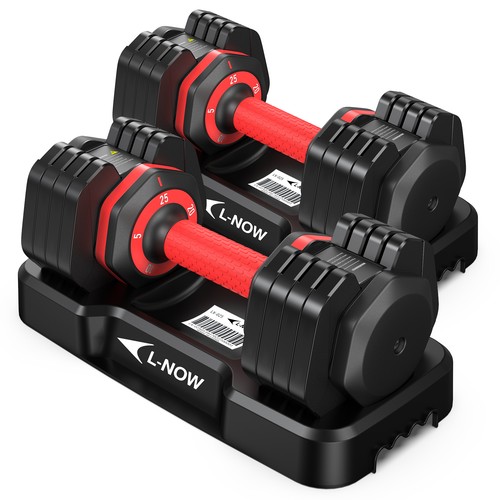
The adjustment mechanism makes or breaks the experience. There are three main types: dial-based, pin-selector, and plate-loaded. Dial and pin systems let you change weight in under 5 seconds—ideal for fast-paced workouts or drop sets. Plate-loaded options (think spin-lock collars) take longer but often feel most like regular dumbbells and are less prone to mechanical failure. If you’re doing circuit training or HIIT, fast adjustment matters more than if you’re focused on heavy, slow sets.
Handle diameter and grip texture are often overlooked. Handles range from 28mm (close to Olympic barbells) up to 35mm. Thicker handles can fatigue your grip faster but may feel more secure for heavy lifts. Knurling (the crosshatch texture) varies from aggressive to nearly smooth. If you have smaller hands or care about grip comfort, pay attention to these details.
Finally, pay attention to the minimum and maximum weight per dumbbell, and the increment steps. Most sets start at 5–10 lbs and top out between 40 and 90 lbs per hand, with increments of 2.5, 5, or 10 lbs. For isolation work or rehab, smaller jumps are crucial. For general strength, larger steps are fine.
Shopping new with fast Prime shipping? Amazon usually has the best stock.
Shop on Amazon →How the Options Compare: A Table of Buying Profiles
| Profile | Adjustment Mechanism | Weight Range (per hand) | Increment Steps | Handle Diameter | Footprint (L x W x H) | Best For |
|---|---|---|---|---|---|---|
| Fast-adjust dial system | Dial (one-handed) | 5–52.5 lbs | 2.5/5 lbs | 32mm | 16 x 8 x 8 in | HIIT, drop sets, small spaces |
| Heavy-duty pin-selector | Pin/lever (slide) | 10–90 lbs | 5 lbs | 34mm | 17 x 7 x 7 in | Heavy lifting, progressive overload |
| Classic plate-loaded | Spin-lock collars | 5–100 lbs | 2.5/5 lbs | 28mm | Varies (plates stick out) | Traditional feel, max durability |
| Compact quick-change | Twist handle | 5–25 lbs | 2.5 lbs | 30mm | 12 x 6 x 6 in | Rehab, beginners, small hands |
| Budget tray-based | Manual plate swap | 5–40 lbs | 5 lbs | 29mm | 14 x 7 x 7 in | Affordability, light workouts |
Adjustment Speed vs. Durability: The Real Trade-Off
Fast-adjust systems are a game-changer for workouts that require quick weight changes, but they introduce more moving parts—meaning more that can go wrong over time. Dial and pin-selector mechanisms can jam if grit gets inside or if dropped. Plate-loaded sets, while slower to adjust, tend to last longer and are less likely to fail. If you train in a garage or plan to drop your weights, plate-loaded is often the safer long-term bet.
Some quick-change systems only adjust in 5 lb steps, which can be limiting for progression, especially for smaller muscle groups or rehab. If you need smaller increments (2.5 lbs), check the specs carefully—some sets only offer these at lower weights or require buying extra add-on plates.
Handle Length and Dumbbell Balance: Why It Feels Different
Adjustable dumbbells are often longer than fixed-weight versions, especially at lighter weights. A dial-based dumbbell set at 10 lbs might still be 16 inches long, while a fixed 10 lb dumbbell is usually under 10 inches. This extra length affects balance and can make some exercises (like curls or overhead presses) feel awkward, especially if you have a smaller frame or limited shoulder mobility. Plate-loaded sets can be more compact, but only if you don’t load them to max capacity.
Handle diameter also changes the experience. If you have small hands, a thick 34mm handle may be tough to grip, especially as you fatigue. Some plate-loaded sets use standard barbell handles (28mm), which most people find comfortable for higher-rep work.
Minimum and Maximum Weight: What Range Do You Actually Need?
The best adjustable dumbbells for you hinge on your current strength and future goals. For most general fitness routines, a range of 5–50 lbs per hand covers everything from shoulder raises to goblet squats. If you’re already strong or plan to train heavy compound lifts (like bench or row), look for sets that go up to 80 or 90 lbs per hand. On the other end, some fast-adjust systems have a minimum weight of 10 lbs, which can be too heavy for rehab or small-muscle isolation work—double-check the starting weight before you buy.
Consider increment size: 2.5 lb steps are ideal for upper body progressions, but some sets only allow 5 lb jumps. For legs and chest, 5–10 lb increments are generally fine. If you’re rehabbing or training for endurance, smaller steps matter more.
Related Guides
Common Mistakes: What to Watch Out For Before Buying
Many first-time buyers overlook the importance of drop tolerance. Not all adjustable dumbbells can survive a drop from even knee height—some dial and pin systems can break or misalign, making the dumbbell unusable. If you train hard or share your home gym with others, look for sets with a metal core and minimal plastic in the adjustment mechanism.
Another common pitfall: assuming all sets come as a pair. Some are sold as singles, which can double your expected cost. Always check the product listing details, especially for heavier-duty options.
Finally, don’t underestimate storage. Some sets come with trays or stands; others require you to store plates separately. If space is tight, pay close attention to the dumbbell footprint and whether you can stash them under a bench or in a closet.
Real-World Use: What Reviewers and Long-Term Owners Say
In hands-on testing, dial and pin-selector systems earn high marks for convenience, but complaints about jammed mechanisms or cracked plastic housings are common after a year or more of use. Plate-loaded sets nearly always outlast their quick-change competitors, with some users reporting a decade of use with only minimal handle wear.
Reviewers with smaller hands consistently prefer handles under 32mm in diameter and mention that thick handles fatigue the forearms on high-rep sets. Lifters who do a lot of pressing or curls often prefer dumbbells with a more traditional shape and compact length, even if it means slower weight changes.
Noise is another factor: dial and pin systems sometimes rattle during dynamic movements, while plate-loaded versions are usually quieter if tightened properly. If you train early in the morning or in an apartment, quieter options may be worth the trade-off in speed.
Who Should Choose Each Type?
- Fast-adjust dial or pin-selector: Best if you do circuit training, drop sets, or want to minimize rest between sets. Ideal for those with limited space who prioritize speed.
- Plate-loaded spin-lock: Best for traditionalists, heavy lifters, or anyone who values durability over speed. Also ideal if you want the closest feel to commercial gym dumbbells.
- Compact quick-change: Best for beginners, rehab, or anyone with limited hand strength. Also a good choice for those who need lighter weights and smaller increments.
- Budget tray-based: Best for those on a tight budget or who only need a light-to-moderate weight range.
Check current prices on each type to see which aligns with your needs and budget.
Shopping new with fast Prime shipping? Amazon usually has the best stock.
Compare Options on Amazon →Frequently Asked Questions About Adjustable Dumbbells
How much weight range do I really need for home workouts?
Most people get by with 5–50 lbs per dumbbell for general fitness, including upper and lower body moves. If you’re experienced or plan to train heavy, consider options up to 80–90 lbs per hand. Beginners or those focused on rehab may need lighter starting weights and smaller increments.
Are adjustable dumbbells as durable as fixed dumbbells?
Plate-loaded adjustable dumbbells can be nearly as durable as fixed ones, provided the collars are tightened properly. Dial and pin-selector systems are less drop-resistant due to their moving parts and plastic components. If longevity is your top concern, plate-loaded is the safest bet.
Can adjustable dumbbells be dropped safely?
Most quick-adjust systems are not designed to withstand drops and may break or misalign, especially from above knee height. Plate-loaded sets tolerate drops better, but no home dumbbell should be dropped regularly. Always set them down carefully to extend their lifespan.
How accurate are adjustable dumbbells compared to fixed weights?
Weight accuracy varies by type. Plate-loaded sets are usually within ±2% of stated weight if standard plates are used. Dial and pin systems may have small discrepancies (up to 1–2 lbs), especially at higher loads, but this is rarely an issue for home fitness.
Do all adjustable dumbbells come as a pair?
No—some sets are sold individually, especially at higher weight ranges. Always check whether the price is for one or two dumbbells to avoid surprises at checkout.
What’s the best way to store adjustable dumbbells in a small space?
Look for sets with included trays or stands and check the dimensions to ensure they fit under a bed or in a closet. Compact quick-change and dial-based models tend to have the smallest footprint, while plate-loaded options require storage for extra plates.
Making the Right Call: Which Adjustable Dumbbell Profile Fits You?
Dial and pin-selector options are unbeatable for speed and convenience, especially if you train with intensity or have limited space. Plate-loaded sets take longer to adjust but deliver unmatched durability and the most natural lifting feel. Compact and budget options serve beginners, rehab, or anyone with less demanding needs. The best adjustable dumbbells are the ones that match your training style, space, and hands-on preferences—not just the ones with the highest specs on paper. Compare today’s deals to see which profile fits your routine and budget best, and prioritize the features that will actually keep you lifting week after week.