Disclosure: As an Amazon Associate and eBay Partner Network publisher, we earn from qualifying purchases. This doesn’t affect what we recommend or how we describe it.
8 min read
Choosing an ECG monitor for home use isn’t simply about picking the device with the most features or the lowest price. The crucial question is: what level of clinical accuracy and usability do you actually need, and how do you balance that with privacy, data access, and the realities of your own health monitoring? Not all home ECG monitors are created equal—differences in lead configuration, measurement range, data export, and physician compatibility can mean the difference between a device that genuinely empowers you and one that gathers dust in a drawer. Clinical context, not just consumer features, should drive your choice. For more detail, see AHA guide to electrocardiograms.
Single-Lead vs Multi-Lead: What Really Matters for Home Monitoring?
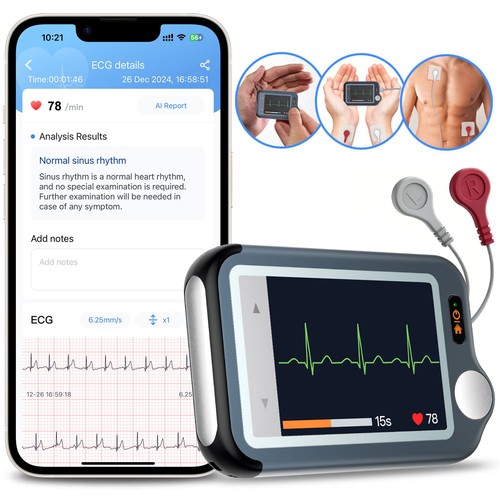
Most ECG monitors designed for home use fall into two categories: single-lead handheld devices and multi-lead chest-strap or patch systems. The distinction is critical. Single-lead monitors (often using your fingers or a small patch) capture electrical activity from one vector, usually Lead I. This is enough to detect rhythm irregularities like atrial fibrillation, but cannot reliably identify more complex conduction issues, ischemia, or localized changes seen in a full 12-lead clinical ECG. For more detail, see CPSC home medical device safety tips.
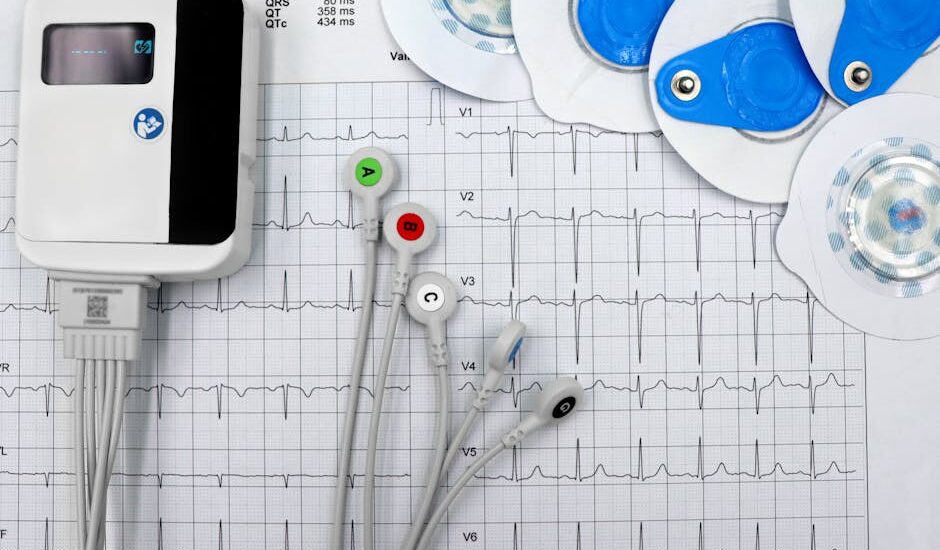
Multi-lead home monitors, which may offer 3-lead or even 6-lead capability, provide additional perspectives on cardiac activity. For users with a history of arrhythmias, ambiguous symptoms, or the need for physician-reviewed data, these can offer more actionable information—though at the cost of complexity and often a higher price.
Amazon tends to carry the widest range of new models with same-week delivery — useful when you’ve already picked your shortlist.
Compare on Amazon →Why Measurement Range and Sampling Rate Aren’t Just Specs
Measurement range refers to the amplitude of electrical signals a monitor can accurately detect, usually specified in millivolts (mV). For ECG, a typical adult’s heart signal amplitude is 0.5–2.0 mV. Home devices should reliably capture at least 0.15–5.0 mV to accommodate most users, including those with low-voltage QRS complexes.
Sampling rate, measured in Hz, dictates how often the device records a data point. Clinical ECGs use at least 250–500 Hz; anything below 100 Hz risks missing fine-grained waves (notably P and T waves). Some entry-level home monitors cut corners here—always check for a sampling rate of at least 200 Hz for credible rhythm analysis.
How the Options Compare: Table of Buying Profiles
| Buying Profile | Lead Configuration | Data Access | Sampling Rate | Battery Life | Best For |
|---|---|---|---|---|---|
| Entry-level finger touch | Single-lead (Lead I) | On-device only | 100–200 Hz | ~20 hours use | Basic rhythm checks, first-time users |
| App-connected handheld | Single-lead (Lead I) | App export (PDF/CSV) | 200–300 Hz | ~30 hours use | Tech-savvy users, sharing with doctor |
| Patch-based wearable | 3-lead or 6-lead | Cloud/app + physician portal | 250–500 Hz | 3–7 days per charge | Ongoing monitoring, physician review |
| Chest-strap sport monitor | Single-lead or 3-lead | Bluetooth app, live streaming | 250 Hz | 24–48 hours | Active users, exercise ECG |
| Full-featured desktop | Up to 12-lead (cable) | USB/SD card, printout | 500 Hz | AC-powered/long-life battery | Clinical-level detail, advanced users |
How Clinical Accuracy Differs Outside the Doctor’s Office
Home ECG monitors are not substitutes for clinical-grade 12-lead ECGs. Yet, for many people, their value lies in rhythm detection (especially atrial fibrillation), spot checks during symptoms, or daily logging for known arrhythmias. Single-lead devices can flag irregular rhythms with high sensitivity—often above 90% for AFib detection in published studies—but may miss subtle conduction problems or ischemic changes.
For users with ambiguous symptoms or a complex cardiac history, a patch-based or multi-lead home monitor offers more diagnostic data. These devices, though bulkier and pricier, can transmit multi-vector ECGs to your physician, supporting more nuanced interpretations. Always remember: only a medical professional can diagnose or interpret ECG results in context. The best home monitor is one that fits your actual clinical needs, not just your gadget wishlist.
What to Look For: Real-World Specs That Matter
- Lead configuration: At least single-lead for rhythm checks; 3-lead or 6-lead if your doctor requests more detail.
- Sampling rate: 200 Hz minimum; 250–500 Hz preferred for waveform fidelity.
- Measurement range: 0.15–5.0 mV covers most users. Lower ranges may miss weak signals.
- Battery life: For handhelds, 20–30 hours per charge. For wearables, look for 3–7 days if you need continuous monitoring.
- Data export: PDF/CSV export is essential if you plan to share results with a clinician. Some devices allow direct physician portal uploads.
- App compatibility: iOS and Android support is standard, but check for desktop or web access if you want to review data without a phone.
Compare today’s deals on top-rated options with these features.
Data Privacy and Physician Compatibility: Overlooked but Critical
Many home ECG monitors store data on the device or sync to a mobile app. The most user-friendly systems offer encrypted cloud storage and the ability to export data in standard formats (PDF, CSV, sometimes DICOM). If you need your doctor to review your ECGs, check whether the device supports data sharing via email, cloud portal, or direct physician dashboard. Some patch-based wearables are designed for physician prescription and integrate with telehealth platforms, while entry-level handhelds may only display results on-device.
Privacy is another concern. Always review what personal data is uploaded to manufacturer servers, and whether you control data deletion. For sensitive health information, devices that let you store ECGs locally (on your device or SD card) give you more control. See what’s available with advanced privacy features.
Common Mistakes: What Users Regret After Buying
- Overbuying complexity: Multi-lead or patch-based monitors can be overkill if your doctor only recommends rhythm spot checks. These devices are pricier and more cumbersome.
- Ignoring data export: Many users discover too late that their device can’t export raw ECG files, making physician review nearly impossible.
- Underestimating size and comfort: Wrist or chest-strap monitors may be uncomfortable for overnight or all-day wear, especially for those with sensitive skin or mobility challenges.
- Misreading “medical grade” claims: “FDA-cleared” or “medical grade” labels on consumer devices don’t guarantee clinical accuracy for all situations. Always check published validation data and consult your healthcare provider for interpretation.
View options designed for comfort and easy data sharing.
Related Guides
- Air Purifiers vs Humidifiers: Which One Does Your Home Really Need?
- Top Electric Nail Files Worth Trying for Salon-Quality Results at Home
- The Best Acupressure Mats Worth Trying for Home Wellness
- Red Light Therapy Panels for Home Use: What to Know Before You Buy
- Rowing Machines: How to Choose the Right Option for Your Home Gym
- Browse all Buying Guides →
- Treadmills for Home Use 2026: Our Top Picks
When a Home ECG Monitor Is (and Isn’t) a Good Fit
For most adults interested in home ECG monitoring, the main use cases are: tracking known arrhythmias, checking symptoms like palpitations, or providing documentation for remote physician review. If you have a history of heart disease, unexplained chest pain, or fainting, a home monitor can supplement—but never replace—clinical evaluation.
People who should think twice about home ECGs include those who may misinterpret results, become anxious over minor irregularities, or lack the tech skills to manage data sharing. In these cases, simpler devices or even routine in-office checks may be more appropriate.
Amazon tends to carry the widest range of new models with same-week delivery — useful when you’ve already picked your shortlist.
Compare Options on Amazon →FAQs: Home ECG Monitors and What You Need to Know
Can a home ECG monitor detect a heart attack?
No current home ECG monitor reliably diagnoses a heart attack (acute myocardial infarction). Most home devices are single-lead and cannot detect the ST-segment changes across multiple vectors required for this diagnosis. If you experience chest pain or symptoms of a heart attack, seek emergency medical care immediately.
How accurate are home ECG monitors compared to hospital ECGs?
Single-lead home ECG monitors are generally accurate for rhythm detection, particularly for atrial fibrillation, with sensitivity and specificity often above 90% in validation studies. However, they do not match the diagnostic capability of a full 12-lead clinical ECG, especially for ischemic or structural heart disease.
Can I share my home ECG data with my doctor?
Most app-connected home ECG devices allow you to export results as PDF or CSV files, which can be emailed or uploaded to a physician portal. Always confirm data export options before you buy, as some entry-level models only display results on the device.
What is the difference between an ECG and an EKG?
There is no difference—ECG (electrocardiogram) and EKG (from the German “elektrokardiogramm”) refer to the same test. Both terms are used interchangeably in the medical field and consumer product marketing.
Do I need a prescription for a home ECG monitor?
Most single-lead handheld ECG monitors are available over-the-counter and do not require a prescription. Some multi-lead or patch-based devices, especially those designed for continuous monitoring and physician review, may require a prescription depending on your location.
Are home ECG monitors safe to use daily?
For most users, daily use of a home ECG monitor is safe and poses no health risks. However, over-monitoring can lead to unnecessary anxiety about benign irregularities. Always follow your healthcare provider’s guidance on frequency of use and interpretation of results.
What features are most important for seniors using a home ECG?
Seniors should look for devices with large, readable displays, tactile buttons, simple operation, and clear audio or visual feedback. Automatic data transmission to a caregiver or physician can be especially helpful.
Final Take: The Best Home ECG Monitor Is the One That Fits Your Clinical Needs
No single home ECG monitor is “best” for everyone. For simple rhythm checks and reassurance, a single-lead, app-connected handheld is usually sufficient and cost-effective. For ongoing monitoring or more complex cardiac profiles, a patch-based or multi-lead system is worth the extra investment. The most important step is matching the device’s technical capabilities—lead configuration, sampling rate, data export—to your actual medical needs and your physician’s workflow. Prioritize clinical utility and ease of data sharing over flashy features, and you’ll make a choice that genuinely supports your health.