
10 min read
Disclosure: As an Amazon Associate and eBay Partner Network publisher, we earn from qualifying purchases. This doesn’t affect what we recommend or how we describe it.
Allergic rhinitis sufferers, chronic sinusitis patients, and parents of kids with relentless stuffy noses all have one thing in common: at some point, they wonder if an electric nasal irrigator could make life easier. For anyone tired of manually squeezing a bulb syringe or wrestling with gravity-fed neti pots, the promise of automated, consistent sinus rinsing is compelling. But the electric models on the market range from minimalist, single-speed wands to programmable machines with multiple pressure settings and self-cleaning modes. The real challenge isn’t whether electric nasal irrigation works—clinical research supports its use for nasal hygiene and symptom relief—but choosing the right device for your needs, budget, and tolerance for maintenance.
Who actually benefits from an electric nasal irrigator?
Before comparing features, it’s worth clarifying who gets the most out of upgrading to an electric model. Manual neti pots and squeeze bottles remain effective for many users, especially those with simple seasonal allergies or mild congestion. Where electric irrigators shine is in three groups:
- Chronic sinusitis patients who need daily, reliable, high-volume rinsing and want to minimize hand fatigue.
- People with dexterity issues (arthritis, tremors, or post-surgery) who struggle with manual devices.
- Parents managing children’s sinus care—automated flow and safety shutoffs can make the process faster and less messy.
For these users, investing in the right electric irrigator can improve adherence, comfort, and outcomes. But not all devices are created equal, and some trade convenience for complexity—or recurring costs.
Pressure control: the most critical spec
The main advantage of electric nasal irrigators is consistent, adjustable pressure. Manual squeeze bottles rely on hand strength and technique, which can be inconsistent. Electric units, in contrast, typically offer pressure ranges between 10-30 psi (pounds per square inch), with some advanced models reaching up to 35 psi. Why does this matter?
- Low pressure (10-15 psi) is gentler for sensitive nasal passages or children, reducing the risk of discomfort or ear fullness.
- Mid-range pressure (16-25 psi) is suitable for most adults with moderate congestion or for routine maintenance.
- High pressure (26-35 psi) can help break up stubborn mucus or flush out heavy pollen loads, but may be too forceful for some users.
Look for devices that offer at least two pressure settings or a variable dial. Single-speed units usually deliver around 15-18 psi—a middle ground, but not ideal if you want fine-tuned control.
Reservoir design and capacity
Reservoir size directly impacts how thorough a rinse you can perform in one session. Most electric irrigators fall between 200 mL (suitable for a quick flush) and 600 mL (enough for a full, bilateral rinse). For chronic sinus conditions, a 400-500 mL reservoir allows for extended irrigation without refilling.
- Removable reservoirs are easier to clean and refill, reducing the risk of mold or bacterial buildup.
- Integrated tanks may save counter space but can be harder to dry completely—something to keep in mind if you have a humid bathroom.
Some high-end models feature heated reservoirs or temperature control, but these add cost and complexity. For most users, room-temperature saline is sufficient.
Nozzle options and hygiene factors
Nozzle design is often overlooked, but it matters for both comfort and infection control. Most electric irrigators ship with 2-4 interchangeable tips, usually made of medical-grade silicone or hard plastic. Key considerations:
- Angled nozzles help direct flow into the nasal cavity, improving effectiveness and reducing post-rinse dripping.
- Child-sized or extra-soft tips are essential if you’re buying for pediatric use.
- Disposable vs. reusable tips: Reusable tips must be sterilized regularly (ideally after every use). Disposable options add ongoing cost but reduce the risk of cross-contamination if multiple family members use the device.
Always check if replacement tips are easily available and reasonably priced. Some units require proprietary tips, which can be a hidden cost driver.
Pump mechanism and noise level
Electric nasal irrigators use either peristaltic pumps (squeezing a tube to move liquid) or diaphragm pumps (flexing a membrane). Peristaltic pumps tend to be quieter, usually operating in the 50-65 dB range (like a quiet conversation). Diaphragm pumps may produce 70-75 dB—noticeably louder, especially in small bathrooms or for noise-sensitive users.
Noise isn’t just about comfort; it can be a dealbreaker for parents rinsing a child’s nose before bed, or for anyone sensitive to mechanical sounds. If quiet operation is a priority, look for listed decibel ratings or user reviews that specifically mention pump noise.
Battery life and charging options
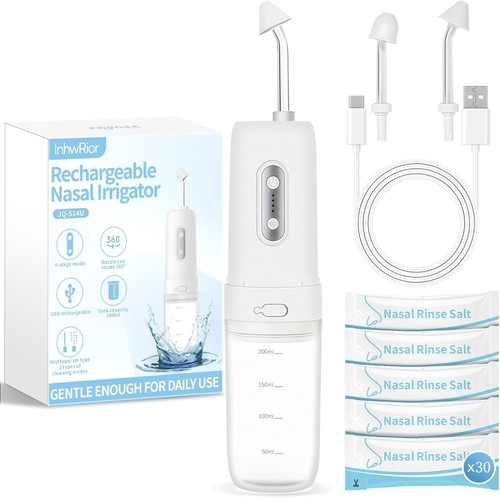
Most electric irrigators are either plug-in countertop models or cordless, rechargeable units. Cordless models typically use lithium-ion batteries, with run times ranging from 30 to 90 minutes per charge (enough for 10-30 rinses). Charge times vary from 2-4 hours. Some models use USB-C charging, which is more convenient than proprietary adapters.
Countertop models avoid battery issues but require you to be near an outlet—potentially limiting use in shared bathrooms or while traveling. If you plan to irrigate daily, check for battery capacity (mAh rating) and whether “battery low” indicators are included.
Related Guides
- Our guide to How to Charge an Electric Heating Pad: Step-by-Step Instructions
- Electric Facial Cleansing Brushes That Are Actually Worth Buying
- Electric Foam Rollers That Are Worth It: Our Top Picks and Reviews
- Our guide to Electric Foot Baths Worth Buying: Features, Benefits, and Top Picks
- Our guide to Electric Pill Crushers That Are Worth Buying
- Our guide to Electric Heating Pads Worth Trying for Effective Pain Relief
How the options compare: electric nasal irrigator types and features
| Category | Pressure Range (psi) | Reservoir Size (mL) | Nozzle Options | Noise Level (dB) | Price |
|---|---|---|---|---|---|
| Basic cordless wand | 15-18 | 200-250 | 2 reusable tips | 65-70 | $ |
| Mid-range variable pressure | 10-30 | 350-500 | 3-4 tips (incl. child) | 55-65 | $$ |
| Countertop high-volume | 15-35 | 500-600 | 4+ tips, angled | 60-75 | $$$ |
| Self-cleaning model | 10-25 | 400-500 | 2-3 tips, disposable | 60-65 | $$$ |
| Child-focused design | 10-15 | 200-300 | 2 soft, small tips | 50-55 | $$ |
About the $ symbols: they’re a quick budget/mid/premium read of where each option sits relative to the others in this comparison. See current prices in the live listings below.
Total cost of ownership
Sticker price is only part of the equation. Electric nasal irrigators come with several ongoing or hidden costs that can add up over time:
- Replacement tips: Most manufacturers recommend replacing tips every 1-3 months. At $2-5 per tip, a family of four could spend $30-60/year.
- Saline packets: Pre-measured saline packets cost $0.10-0.30 each. Daily use adds $36-110 annually per person. Bulk salt is cheaper, but pre-packs are more convenient and reduce dosing errors.
- Battery replacement: Cordless units with non-removable batteries typically last 2-3 years before capacity drops significantly. Replacing the device may be more cost-effective than servicing, so factor in a replacement cycle.
- Cleaning supplies: To prevent biofilm and mold, you’ll need white vinegar or hydrogen peroxide for weekly cleaning—$5-10/year.
- Potential repairs: Electric pumps can fail, especially if water seeps into the motor. Warranty coverage varies (typically 1-2 years), but out-of-warranty repairs often cost as much as a new device.
When comparing options, consider not just the initial investment, but also these recurring expenses—especially if multiple household members plan to use the device.
Clinical context: what research says about electric irrigation
Multiple studies confirm that nasal irrigation—whether manual or electric—can reduce symptoms of allergic rhinitis, chronic sinusitis, and upper respiratory infections. The main advantage of electric devices is improved user adherence and consistency. A leading otolaryngology association notes that effective irrigation relies on both volume (at least 200 mL per nostril) and consistent pressure, both of which are easier to achieve with an electric pump.
However, electric irrigators don’t inherently provide better clinical outcomes than manual methods; the key is regular use, proper saline concentration (0.9% isotonic or 2-3% hypertonic), and strict hygiene. The risk of infection is low if you use sterile or distilled water and clean the device thoroughly. Improper cleaning has led to rare but serious infections, so always follow the manufacturer’s instructions and allow all parts to dry completely between uses.
Common mistakes and real user considerations
Many first-time buyers underestimate the importance of cleaning. Electric nasal irrigators have more nooks and crannies than a simple squeeze bottle. Failing to regularly disassemble and dry the reservoir, tubing, and tips can lead to mold, bacterial biofilm, or mineral buildup. Dishwasher-safe parts are a genuine advantage—check the manual before assuming this feature.
Another common pitfall: using tap water without boiling or filtering. Most ENT specialists recommend sterile, distilled, or previously boiled water to avoid introducing pathogens. This applies whether the irrigator is manual or electric. For travel, single-use sterile water bottles or portable filters can be a smart investment.
Finally, don’t overlook ergonomics. Some high-volume countertop models take up significant space and require careful assembly. Cordless wands are easier to handle but may require more frequent refilling. If you have limited counter space or plan to irrigate while traveling, factor in the device’s footprint and portability.
When to choose a premium model (and when not to)
Premium electric nasal irrigators offer programmable settings, self-cleaning cycles, and heated reservoirs. These features add convenience but come at a cost—often double or triple the price of basic models. For users with frequent sinus infections, post-surgical care needs, or immune compromise, advanced hygiene features may justify the investment.
For occasional users or those on a budget, a mid-range device with adjustable pressure and a decent reservoir is usually sufficient. The “sweet spot” for most adults is a model with 10-30 psi range, 350-500 mL reservoir, and at least three nozzle options. Check current prices on adjustable-pressure models or view options for more budget-friendly devices.
FAQ: electric nasal irrigators
How often should you replace the nozzle tips on an electric nasal irrigator?
Most manufacturers recommend replacing reusable nozzle tips every 1-3 months, especially if multiple people use the device. Disposable tips should be discarded after each use. Regular replacement reduces the risk of bacterial buildup and ensures optimal hygiene.
Is electric nasal irrigation safe for children?
Yes, provided you use a device with low-pressure settings (typically 10-15 psi) and child-sized soft tips. Always supervise children during use, and consult a pediatrician if your child has had recent nasal surgery or chronic ear infections.
What’s the difference between an electric nasal irrigator and a manual neti pot?
Electric irrigators use a motorized pump to deliver consistent pressure and flow, making rinsing easier and more uniform. Manual neti pots rely on gravity and user technique, which can be less consistent but don’t require batteries or electricity. Electric models are more convenient for frequent users or those with limited dexterity.
How long does a typical battery charge last on a cordless electric nasal irrigator?
Battery life varies by model, but most cordless units deliver 30 to 90 minutes of use per charge—enough for 10-30 full rinses. Frequent users should look for units with at least 60 minutes of battery life and a quick recharge time of 2-3 hours.
Countertop vs. cordless nasal irrigator—which is better for daily use?
Countertop models offer larger reservoirs (up to 600 mL) and higher pressure ranges, making them ideal for daily, high-volume rinsing. Cordless units are more portable and easier to handle but may require more frequent refilling and charging. Choose based on your available space, travel needs, and how many people will use the device.
What should you do if water leaks from the device during use?
Check that all parts are assembled correctly and that seals are intact. Overfilling the reservoir or using the wrong tip can also cause leaks. If the problem persists, consult the user manual for troubleshooting steps or contact the manufacturer for warranty support.
Final thoughts: what actually matters in choosing the best electric nasal irrigator
The right electric nasal irrigator for you comes down to pressure control, reservoir size, ease of cleaning, and total cost—far more than bells and whistles. For chronic users or those with dexterity limitations, a mid- to high-end model with adjustable pressure and dishwasher-safe parts is worth the investment. For occasional users, a basic cordless wand may suffice. Prioritize features that fit your real-world routine, and don’t underestimate the value of easy cleaning and affordable consumables. Compare today’s deals to see which configuration matches your needs and budget.



Last updated: July 2026 · Our editorial process