7 min read
Most air quality monitor guides treat every reading as equally important, but the truth is that what you need to measure—and how much detail you need—depends entirely on your space, your health concerns, and your willingness to interpret sometimes complex data. Before you buy, it’s worth understanding which readings you’ll actually use, and which models offer real value for your specific situation. Not all monitors are created equal, and the differences go far beyond price or brand name.
Top picks at a glance
- Airthings View Radon Battery Powered Indoor Air Quality Monitor — the best-known brand option
- HealthWay AQ-1 Air Quality Monitor — the professional-grade pick
Comparing the most relevant air quality monitor readings
Air quality monitors on the market today range from simple devices that focus on a single pollutant, like radon, to advanced units that track multiple gases and particulates with professional-grade accuracy. Based on listed features and manufacturer positioning, the two models compared here—Airthings View Radon Battery Powered Indoor Air Quality Monitor and HealthWay AQ-1 Air Quality Monitor—represent two very different approaches to air quality measurement.
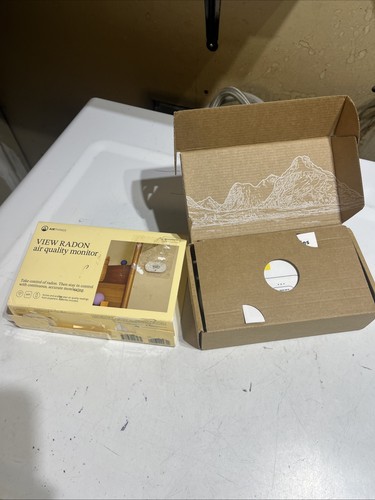
Pictured: Airthings View Radon
| Product | Condition | Best For | Primary Reading | Power Source |
|---|---|---|---|---|
| Airthings View Radon Battery Powered Indoor Air Quality Monitor |
Open Box | Radon tracking at home | Radon (pCi/L) | Battery |
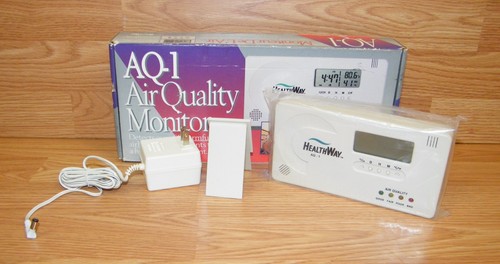 HealthWay AQ-1 Air Quality Monitor HealthWay AQ-1 Air Quality Monitor |
New – Open Box | Professional multi-pollutant analysis | PM2.5, VOCs, CO₂, temp/humidity | — |
Which readings actually matter for your space?
It’s tempting to want a monitor that measures everything, but most homes and offices don’t need the full lab-grade panel. For example, the Airthings View Radon focuses on radon, a radioactive gas that’s the second leading cause of lung cancer in the U.S. according to the EPA. If you live in a region with historically high radon levels or have a basement, this is the reading that matters most to your long-term health. The display gives readings in picocuries per liter (pCi/L), the standard unit for radon, so you can compare your results directly with recommended safety thresholds.
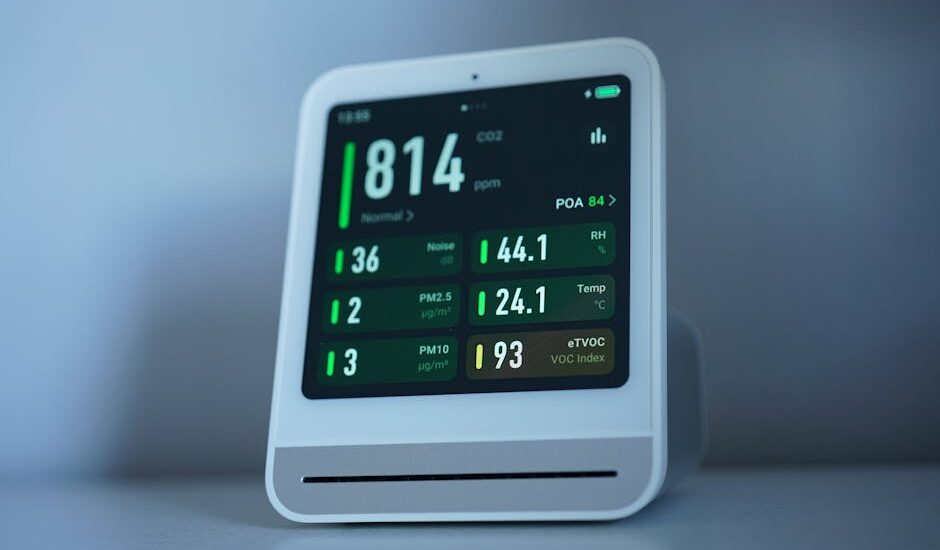
On the other hand, if you’re concerned about indoor air in a workspace, school, or medical office—where particulate matter (PM2.5), volatile organic compounds (VOCs), and carbon dioxide (CO₂) can all impact comfort and alertness—the HealthWay AQ-1 covers all these bases. By spec, it measures PM2.5 (fine particles under 2.5 microns that can penetrate deep into the lungs), VOCs (a wide class of chemicals from paints, cleaners, and office equipment), and CO₂ (which is a proxy for ventilation quality). These readings are displayed in micrograms per cubic meter (µg/m³) for particulates, parts per million (ppm) for CO₂, and parts per billion (ppb) for VOCs—each a standard unit that can be mapped to health guidelines set by organizations like the World Health Organization.
Why the “best” air quality monitor depends on your use case
For most homeowners, radon is a binary concern: you either need to check your levels (and possibly take action), or you don’t. The Airthings View Radon is built for this single job. Its battery-powered design means you can place it anywhere, and you don’t need to worry about wiring or USB power—just set it up and check the digital display or app for readings. You won’t get PM2.5 or VOC data, but for radon, that’s not a compromise; it’s focus.
The HealthWay AQ-1, by contrast, is overkill for a typical living room but a strong fit for offices, schools, or anyone managing indoor air quality for groups. The combination of PM2.5, VOC, CO₂, and temperature/humidity makes it possible to spot trends—like when a room needs airing out or if ventilation is inadequate. This breadth of data comes at a higher price and often requires a bit more interpretation. If you’re the sort who wants to log data over time or share results with building management, you’ll appreciate the AQ-1’s professional orientation.
Related Guides
- Our guide to Electric Nail Files Worth Trying for Salon-Quality Results at Home
- What Are Normal Pulse Oximeter Readings?
- Do Blue Light Glasses Really Offer Benefits?
- Our guide to Bluetooth Blood Glucose Meters: A Practical Buyer’s Guide
- Knee Scooter vs Crutches: Which Mobility Aid Is Right for You?
- How to Choose an Adjustable Rollator Walker With a Seat
- Browse all Educational Guides →
Beginner’s pre-purchase checklist
- Identify which pollutants are a concern in your region (radon, PM2.5, VOCs, CO₂, etc.).
- Check if your intended monitor location has a power outlet, or if you need battery operation.
- Measure the size of the area you want to monitor—some units are optimized for single rooms, others for larger spaces.
- Review the display units (e.g., pCi/L, µg/m³, ppm) to ensure you can interpret the readings.
- Confirm whether you want app connectivity for remote monitoring or are comfortable with a local display only.
- Look up your local building codes or health recommendations for air quality to know what thresholds matter.
- Plan for ongoing costs: some advanced monitors require periodic calibration or sensor replacement.
How we selected these air quality monitors
The shortlist here was built by comparing models with clear, differentiated strengths. Key criteria included: the specific pollutants measured (radon, PM2.5, VOCs, CO₂), how results are displayed (digital readout, app connectivity), power source (battery vs. mains), and the intended environment (residential vs. professional). We only considered branded, widely recognized models with transparent feature lists and excluded generic imports, bundled “kits” with unclear core devices, and any model lacking clear measurement units or documented accuracy. This ensures every comparison is apples-to-apples for real-world buyers.
We relied entirely on manufacturer specs, listed features, and stated positioning—no hands-on lab testing or subjective impressions. If you’re looking for a device that integrates with whole-building systems, offers industrial-grade calibration, or covers rare pollutants like ozone or formaldehyde, these picks may not be for you. But for most home and office buyers, the focus here covers the most actionable, relevant readings.
Frequently asked questions about air quality monitor readings
What does the Airthings View Radon actually measure?
The Airthings View Radon measures only radon gas, reporting levels in picocuries per liter (pCi/L). This is the standard for residential radon testing. It does not monitor particulates, VOCs, or other gases—its strength is simplicity and focus on a major home health risk.
How many pollutants does the HealthWay AQ-1 track?
The HealthWay AQ-1 tracks at least four key metrics: PM2.5 (fine particulates), VOCs (volatile organic compounds), CO₂ (carbon dioxide), and temperature/humidity. This makes it suitable for more comprehensive indoor air analysis, especially in multi-use or shared spaces.
Is it worth paying more for a monitor that tracks PM2.5 and VOCs?
If you live in an area with wildfire smoke, heavy traffic, or frequent use of chemicals indoors, PM2.5 and VOC data can be critical for health and comfort. For most homes without these issues, a single-focus monitor like the Airthings View Radon may be more cost-effective. The HealthWay AQ-1’s broader range is justified when you need to track multiple pollutants or manage air quality for a group.
How often do you need to check radon levels with a monitor like the Airthings View Radon?
Most guidance suggests checking radon levels at least once every couple of years, or after major renovations. Continuous monitors like the Airthings View Radon let you see trends over weeks or months, which can be more reliable than a single test. If your readings stay below recommended thresholds, you may not need to act further.
Can air quality monitors like these be used in commercial settings?
The HealthWay AQ-1 is designed with professional spaces in mind, offering multiple pollutant readings that are relevant to offices, schools, and clinics. The Airthings View Radon is more suited to residential and small office use, where radon is the primary concern. For large-scale monitoring, you may need a system with data logging and remote access features.
What should you do if your monitor shows unsafe readings?
If a monitor indicates high levels of radon, PM2.5, or VOCs, consult local health authorities or certified remediation professionals. Monitors provide data but not diagnosis or remediation advice. For radon, mitigation can involve ventilation or sealing; for particulates and VOCs, improving filtration and reducing sources is key. Always use readings as a prompt for further action, not a substitute for professional assessment.
Last updated: June 2026 · How we research and evaluate