
10 min read
Disclosure: As an Amazon Associate and eBay Partner Network publisher, we earn from qualifying purchases. This doesn’t affect what we recommend or how we describe it.
Which machine actually pushes you harder: an elliptical bike or an air bike? The answer depends less on calorie charts and more on how you move, what your joints can handle, and whether you crave a steady ride or an all-out sprint. The “elliptical bike vs air bike” debate isn’t just about which burns more calories — it’s about finding the right fit for your body, your goals, and how you like to sweat. Here’s how these two machines stack up when you look past the marketing and focus on real-world use.
Motion mechanics: what your body does on each machine
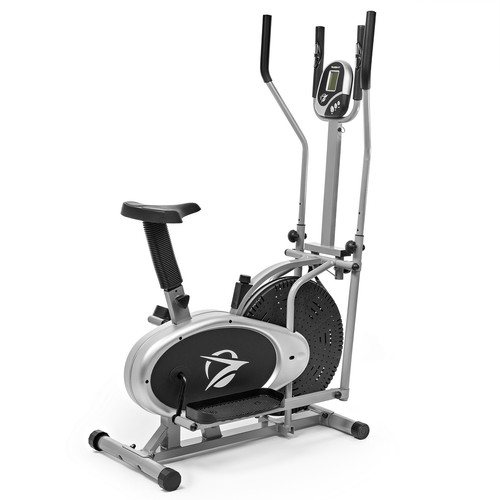
Elliptical bikes and air bikes both promise a full-body workout, but the way they get you there is fundamentally different. On an elliptical bike, you stand upright and pedal in a long, oval-shaped motion, with your feet never leaving the pedals. The handlebars move in sync with your legs, encouraging a rhythm that’s smooth and low-impact. This design limits jarring forces on your knees, hips, and ankles — making it a favorite for people with joint sensitivity or those rehabbing injuries.
Air bikes, by contrast, are built for intensity. You sit on a saddle and push-pull the handlebars as you pedal, but the resistance comes from a large fan: the harder you work, the more air it moves, and the tougher it gets. This “infinite resistance” means your effort determines the challenge. Unlike ellipticals, air bikes allow — and often encourage — short, explosive bursts of all-out effort. The movement is less guided; you can lean forward, shift your posture, and use upper or lower body more as you fatigue. The trade-off: the seat and upright position can be tough on some users’ backsides and lower backs, especially over longer sessions.
Resistance systems: what actually makes it hard
Elliptical bikes typically use either magnetic or friction-based resistance. Most home models offer at least 8–20 resistance levels, adjustable via console or dial, with magnetic systems providing a whisper-quiet ride. The resistance stays consistent regardless of your speed — you set a level, and the machine holds it. This makes ellipticals excellent for steady-state cardio and interval work where you want predictable effort.
Air bikes use a fan (sometimes 20–26 inches in diameter) to generate resistance. There’s no manual adjustment — the resistance scales with how hard you push and pedal. At a slow pace, the effort is light; but as you sprint, resistance ramps up rapidly. This is what makes air bikes a staple in high-intensity interval training (HIIT) and CrossFit gyms. The downside: air bikes are loud, with most models generating 70–75 decibels at sprint effort (similar to a vacuum cleaner), which may matter if you’re sharing space or working out early or late.
Calorie burn and workout intensity: the real numbers
Both machines can deliver serious calorie burn, but the pattern is different. On an elliptical bike, a 155-pound user burns roughly 300–400 calories in 30 minutes at moderate intensity, according to Mayo Clinic estimates. The upper limit is determined by your resistance setting and cadence — most people can sustain a steady pace for 30–60 minutes.
Air bikes can produce a higher calorie burn in short bursts. In HIIT-style intervals (20–30 seconds all-out, rest, repeat), it’s not unusual to see 20–25 calories per minute for trained users, but most people can only sustain this intensity for a few minutes. Over a full 30-minute session at moderate effort, air bikes and ellipticals are often comparable in total calories — but if you’re chasing a “max effort” spike, air bikes win.
What actually matters: if you want the highest sustained calorie burn for 30+ minutes without joint stress, the elliptical bike is typically more comfortable. For interval training, metabolic conditioning, or short, brutal sprints, the air bike delivers a unique challenge.
Joint impact and injury risk: who should be cautious
Elliptical bikes are specifically designed to minimize impact. The gliding motion keeps your feet planted, reducing stress on knees, hips, and lower back. This makes them a top pick for older adults, those with arthritis, or anyone recovering from lower-body injuries. Most elliptical bikes also have adjustable stride lengths (16–22 inches is typical), letting you match the machine to your height and gait.
Air bikes, while “low-impact” compared to running, do involve repetitive knee flexion under load and a seated position that can aggravate pre-existing hip or back issues. The fan resistance also encourages explosive effort, which — if form slips — can stress joints or strain muscles. The seat design on many air bikes is basic, and some users report numbness or soreness after 20+ minutes. If you have a history of lower back pain or struggle with sitting for long periods, the air bike may require more caution.
Space, noise, and maintenance: practical realities at home
Elliptical bikes are generally larger, with footprints ranging from 50–80 inches long and 24–36 inches wide. Ceiling clearance is another factor — the pedal height can add 12–18 inches to your standing height at the top of the stride, so measure carefully if you have a low basement ceiling. Most ellipticals are quiet (under 60 decibels) and require little maintenance beyond occasional lubrication and cleaning.
Air bikes are more compact (typically 42–52 inches long, 20–26 inches wide), but they’re much louder. Expect a whooshing fan and chain or belt noise, especially at high speeds. Maintenance is minimal (wipe down, check bolts, lubricate chain if present), but the fan does attract dust and hair, so regular cleaning is a must. If you live in an apartment or plan to work out early or late, noise may be a deal-breaker for the air bike.
How elliptical and air bikes compare: key profiles side by side
| Option Type | Typical Footprint (L x W in.) | Resistance System | Noise Level (decibels) | Max User Weight (lbs) | Price |
|---|---|---|---|---|---|
| Elliptical bike (basic home) | 55 x 26 | Magnetic, 8–16 levels | 50–60 | 250–300 | $ |
| Elliptical bike (adjustable stride) | 70 x 32 | Magnetic, 16–24 levels | 55–60 | 300–350 | $$ |
| Air bike (compact, chain drive) | 44 x 24 | Fan, infinite | 70–75 | 250–300 | $ |
| Air bike (heavy-duty, belt drive) | 52 x 26 | Fan, infinite | 70–75 | 350–400 | $$$ |
$ / $$ / $$$ indicates budget / mid-range / premium relative to the picks above. Check live listings further down for current prices.
Related Guides
Quick decision tree
- If you want zero joint impact and long, steady workouts: choose an elliptical bike (adjustable stride if you’re tall or want more customization).
- If you crave short, intense intervals and maximum calorie spikes: go with an air bike (heavy-duty for larger users or frequent HIIT).
- If noise is a concern (shared spaces, apartments): elliptical bikes are much quieter than air bikes.
- If space is tight: compact air bikes have the smallest footprint, but check the noise trade-off.
- If you have back or hip issues aggravated by sitting: elliptical bikes put less stress on these areas.
What specs actually matter — and what’s just marketing
Stride length on an elliptical bike is the single most important comfort factor. If you’re under 5’5”, a 16–18 inch stride usually fits best; taller users often need 20–22 inches to avoid a choppy, unnatural feel. Resistance levels matter less than how smoothly the adjustment works — most users don’t use all 20+ settings, but a wide range gives you room to progress. Console features (heart rate sensors, built-in programs) are nice but secondary to motion quality and stability.
For air bikes, the two real differentiators are drive system (chain vs. belt) and fan size. Belt drives are quieter and require less maintenance, but cost more. Larger fans (24–26 inches) offer more resistance at top speed — which only matters if you plan to do all-out sprints. Weight capacity is also a key spec: look for at least 300 lbs if you’re above average size or want a more stable ride. Most other features (LCD consoles, cup holders) are afterthoughts. Don’t overpay for gimmicks you won’t use.
For both machines, always check the warranty coverage (at least 1 year for parts and frame is standard) and return policy — some machines are heavy and expensive to ship back if you change your mind.
For a deeper dive into exercise equipment standards and user safety, see the Underwriters Laboratories guidelines on fitness equipment.
Common mistakes: where buyers go wrong
- Ignoring stride length or seat comfort: A machine that doesn’t fit your body is miserable to use, no matter how many features it has.
- Underestimating noise: Air bikes are loud, and magnetic ellipticals are much quieter. Test in person if possible, or look for decibel ratings before buying.
- Assuming “infinite resistance” is always better: Air bikes are only as challenging as your effort. If you need structure or dislike self-paced workouts, you may prefer the set-and-forget resistance of an elliptical.
- Overlooking weight capacity: Always check that the max user weight is at least 10–20% above your own for long-term durability.
- Choosing based on calorie calculators alone: Actual burn depends more on your effort and consistency than the machine’s display numbers.
Compare today’s deals if you’re ready to check current pricing on top-rated elliptical and air bike categories.
FAQ: elliptical bike vs air bike
Which burns more calories in 30 minutes: elliptical bike or air bike?
In steady-state workouts, both can burn 300–400 calories in 30 minutes for an average adult. Air bikes can deliver higher spikes during short sprints, but most users find it hard to sustain the same intensity for a full half-hour. Elliptical bikes offer a more consistent calorie burn for longer sessions.
Is an elliptical bike better for bad knees than an air bike?
Elliptical bikes are generally easier on the knees because your feet stay on the pedals and the motion is smooth and guided. Air bikes involve more knee flexion and can be tougher if you have existing knee pain or instability, especially during intense intervals.
How much space do I need for each machine?
Elliptical bikes require more floor space — plan for at least 6–7 feet in length and 3 feet in width, plus extra ceiling clearance for pedal height. Air bikes are more compact, usually fitting in a 4 x 2.5 foot area, but consider extra space for the fan’s airflow.
How loud are air bikes compared to elliptical bikes?
Air bikes are significantly louder, with noise levels around 70–75 decibels at high effort, roughly the volume of a vacuum cleaner. Elliptical bikes with magnetic resistance are much quieter, often under 60 decibels, making them better for shared or quiet environments.
Elliptical bike vs air bike — which is better for HIIT?
Air bikes are purpose-built for HIIT, thanks to their infinite resistance and ability to ramp up challenge instantly. Elliptical bikes can be used for intervals, but the fixed resistance system doesn’t deliver the same explosive intensity or rapid fatigue that air bikes provide.
What’s the typical warranty and return policy for these machines?
Most reputable elliptical and air bike categories offer at least a 1-year warranty on parts and frame. Return policies vary — some sellers provide a 30-day window, but return shipping can be expensive due to the machines’ size and weight. Always confirm details before buying.
How long does it take to assemble these machines?
Assembly time varies by model, but most elliptical bikes take 1–2 hours with two people, due to their size and moving parts. Air bikes are simpler and can usually be assembled in under an hour. Check if in-home assembly is available if you’re not comfortable with tools.
See what’s available if you want to browse current options with fast shipping and clear return policies.
Which machine wins for real-world use?
If you want quiet, joint-friendly, steady-state cardio and a machine you’ll actually use for 30–60 minutes at a time, a well-fitted elliptical bike is hard to beat. If your priority is HIIT, all-out sprints, or you want the maximum challenge in the shortest time, the air bike delivers a workout that’s hard to match. Both can be smart investments — just don’t let marketing hype or calorie charts make the decision for you. Fit, comfort, and the kind of workout you’ll stick with matter most. Check current prices to see which profile fits your space, budget, and body best.


Last updated: June 2026 · Our editorial process