Disclosure: As an Amazon Associate and eBay Partner Network publisher, we earn from qualifying purchases. This doesn’t affect what we recommend or how we describe it.
9 min read
Neither the elliptical nor the treadmill is inherently “better” — but the difference between them is rarely just about calories burned or joint impact. The real decision comes down to how each machine challenges your body, fits your goals, and holds up over months of real-world use. Before you buy, it’s worth digging into the numbers, the feel, and the practical realities that don’t show up on spec sheets. For more detail, see CDC physical activity basics.
What Actually Changes When You Switch from Treadmill to Elliptical?
Switching from a treadmill to an elliptical isn’t just a matter of swapping one cardio machine for another. The biomechanics, muscle recruitment, and even the experience of exertion change in ways that matter for both results and long-term joint health. For more detail, see ACE Fitness elliptical vs treadmill comparison.
- Impact Loading: Treadmills replicate the mechanics of walking and running. Every stride, especially at higher speeds, generates ground reaction forces — typically 2-3 times your body weight during running. Ellipticals, by contrast, use a gliding motion with your feet never leaving the pedals, dramatically reducing peak impact forces. This matters if you have a history of knee, hip, or ankle issues.
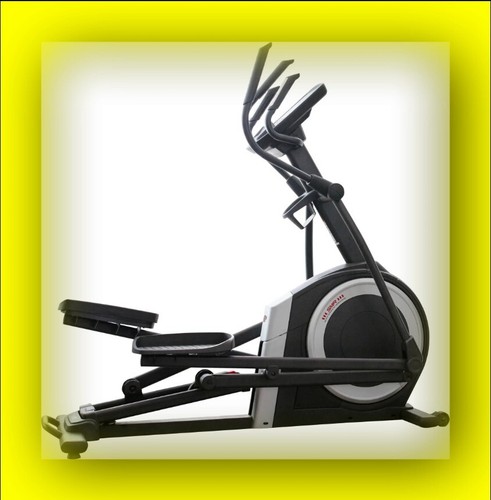
- Muscle Engagement: Treadmills emphasize your posterior chain (glutes, hamstrings, calves) and hip flexors. Ellipticals distribute the effort more evenly, especially if you use the handles for upper body engagement. Actual EMG studies show treadmills activate hamstrings and calves more, while ellipticals increase quadriceps and anterior tibialis use.
- Perceived Exertion: Many users report feeling less “beat up” after a 30-minute elliptical session versus a treadmill run of similar heart rate intensity. That doesn’t mean less work — but the lack of pounding can leave you feeling fresher, which may support more frequent sessions.
When you want a brand-new unit with the full warranty, Amazon’s catalogue is usually the deepest.
Find on Amazon →How the Options Compare: Key Metrics and Real-World Trade-offs
| Criteria | Elliptical Machine | Treadmill |
|---|---|---|
| Impact on Joints | Minimal (foot stays in contact with pedal; peak force ~0.5-1x bodyweight) | Moderate to high (especially at running speeds; 2-3x bodyweight with each stride) |
| Calorie Burn (per 30 min, 160 lb person) | ~270-400 kcal (varies with resistance and speed) | ~300-480 kcal (walking: 170-250; running: 350-480 at 6 mph+) |
| Muscle Groups Targeted | Quads, glutes, hamstrings, calves, core, plus arms/shoulders if handles used | Glutes, hamstrings, calves, hip flexors, core (minimal upper body) |
| Noise Level (decibels) | ~50-65 dB (quiet conversation to normal speech) | ~55-75 dB (walking to running; running can be as loud as a vacuum cleaner) |
| Space Required (L x W) | Typically 5-7 ft x 2-3 ft (plus rear clearance for stride) | Typically 6-7 ft x 3 ft (plus rear safety zone of 2+ ft) |
| Maintenance | Low: occasional lubrication, check for pedal/bearing wear | Moderate: belt alignment/lubrication, motor cleaning, deck inspection |
| Incline/Resistance Options | Variable magnetic or mechanical resistance (often 12-20 levels); some offer incline | Incline typically 0-15%; speed 0.5-12 mph+; fixed resistance (gravity) |
| Weight Capacity | 220-350 lb (varies; premium models up to 400 lb) | 250-400 lb (premium models support higher weights) |
| App/Tech Integration | Available on mid/high-end; Bluetooth, heart rate, streaming classes | Widespread, especially on higher-end models; interactive classes, tracking |
| Price Range (typical home use) | $500-$2,500+ (entry to club-grade) | $600-$3,000+ (entry to club-grade) |
Why Calorie Burn Isn’t the Whole Story
Calorie calculators are everywhere — but real-world fat loss and fitness come down to more than the numbers on a display. Both ellipticals and treadmills can burn significant calories, but the difference depends heavily on how hard you push and how long you can sustain that effort.
- Intensity is Personal: A treadmill set at 6 mph burns more calories per minute than a moderate elliptical session, but if you can only sustain that pace for 10 minutes, versus 30 minutes on the elliptical, your total burn may be lower.
- Form and Engagement: On an elliptical, dialing up resistance or using the incline can drive up calorie burn — but many users unconsciously “coast.” On a treadmill, it’s harder to slack off without noticing, since the belt keeps moving.
Bottom line: The best machine for calorie burn is the one you can use consistently, at a challenging intensity, without injury or dread. Check current prices on a range of machines to see what fits your budget and workout style.
Joint Health: What Matters for Injury Prevention
For anyone with a history of knee, ankle, or hip pain, the difference in impact forces matters. Ellipticals are specifically designed to minimize repetitive loading. The lack of heel-strike and the continuous contact with the pedals means less microtrauma to cartilage and connective tissue. Treadmills, though lower-impact than outdoor running (thanks to shock-absorbing decks), still subject joints to significant forces — especially at higher speeds or inclines.
However, if your goal is to build bone density or prepare for outdoor events, some degree of impact is beneficial. Walking or running on a treadmill provides the kind of weight-bearing stimulus that ellipticals cannot fully replicate. For most users without existing joint concerns, alternating between both machines may provide the best mix of cardiovascular training and musculoskeletal health.
Which Machine Builds More Muscle?
Neither machine is a substitute for true resistance training, but the way they target muscles is different. Treadmills emphasize the posterior chain — glutes and hamstrings — especially when running or walking on an incline. Ellipticals, especially those with moving handles, bring in the upper body and anterior thigh (quadriceps) more actively.
If you want a cardio workout that also engages your arms, shoulders, and chest, an elliptical with dual-action handles offers more total-body activation. For those focused on strengthening the legs for running, hiking, or sports, the treadmill’s natural gait pattern and incline settings more closely mimic real-world movement.
Some ellipticals offer stride length adjustments (typically 16-22 inches) and incline features that can further target specific muscle groups. If you’re looking for versatility, compare today’s deals on machines with these options.
Noise, Space, and Setup: What Most Buyers Overlook
One of the most overlooked differences is how each machine fits into your actual living space. Treadmills, especially when running at 6 mph or above, can reach 70-75 decibels — about as loud as a vacuum cleaner. Ellipticals are typically quieter (50-65 dB), making them more apartment-friendly.
Space requirements also differ. Ellipticals often require additional rear clearance to accommodate full stride motion, while treadmills need a safety zone behind the belt in case of a fall (at least 2 feet is recommended). Both machines are heavy (often 150-250 lb), so measure your space and plan for delivery and assembly. Some treadmills fold, but most ellipticals do not.
Real-World Buying Profiles: Who Each Machine Suits Best
- Low-Impact Seekers: If joint sensitivity is a concern, or you’re rehabbing from injury, the elliptical’s minimal impact and smooth stride are clear advantages.
- Outdoor Runners Training Indoors: Treadmills are the only option that closely simulates outdoor running mechanics, pace, and incline. If you’re training for a race or want to maintain running-specific fitness, nothing else substitutes.
- “All-in-One” Cardio and Strength: Ellipticals with upper-body handles provide a more comprehensive, full-body workout in a single session.
- Space-Constrained Users: Compact treadmills exist (usually with shorter decks, 50-55 inches), but ellipticals tend to be quieter and can fit tighter spaces if you don’t need a long stride.
- Motivation Through Tech: Both categories offer smart features, but treadmills tend to have a wider range of interactive classes and running-specific metrics. If you thrive on leaderboard competition or want detailed running analytics, look for tech-integrated treadmills. See what’s available for your needs.
Common Mistakes When Comparing Ellipticals and Treadmills
It’s easy to get caught up in display calorie counts or marketing claims, but several practical mistakes can derail your decision:
- Ignoring Stride Length: On ellipticals, stride length matters — users over 5’9” often need at least 18-20 inches to avoid an awkward, choppy motion.
- Underestimating Noise: If you plan to exercise early or late, treadmill noise can be intrusive. Ellipticals are generally better for shared living spaces.
- Focusing Only on Top Speed: Most users rarely exceed 6-8 mph on a treadmill. Prioritize deck cushioning, stability, and incline range over headline speed.
- Overlooking Weight Capacity: Both machines list maximum user weights, but stability and longevity are better if you’re well below the rated limit.
- Assuming All Machines Are Equally Durable: Entry-level models in both categories can feel unstable or wear out quickly, especially under heavy use. Heavier frames (150 lb+), welded steel construction, and longer warranties are worth the investment for regular users.
When you want a brand-new unit with the full warranty, Amazon’s catalogue is usually the deepest.
Compare Options on Amazon →FAQ: Elliptical Machine vs Treadmill — What People Really Want to Know
Which machine burns more calories in a typical workout?
For most people, running on a treadmill burns slightly more calories per minute than using an elliptical at moderate resistance. However, if you can sustain a higher intensity or longer duration on the elliptical (due to lower impact), your total calorie burn may actually be higher. Walking on a treadmill burns less than running but can match elliptical output at brisk paces.
Is an elliptical better for bad knees or joint pain?
Ellipticals are generally considered safer for people with knee, hip, or ankle issues because the motion is low-impact and eliminates repetitive pounding. However, improper form or excessive resistance can still cause discomfort. Always consult a professional if you have existing injuries or pain.
Do ellipticals help with weight loss as effectively as treadmills?
Both machines can support weight loss when paired with a calorie-controlled diet and regular use. The key factor is consistency — choose the one you’re more likely to use regularly at a challenging intensity. There’s no inherent metabolic advantage to either machine.
Can you build muscle with either machine?
Neither elliptical nor treadmill workouts provide resistance levels sufficient for significant muscle growth. They do help maintain leg and (for ellipticals with handles) upper body endurance. For real muscle gains, add strength training to your routine.
Which machine is quieter for home use?
Ellipticals are typically quieter, averaging 50-65 dB during use, while treadmills can reach 70 dB or more at running speeds. If noise is a concern (apartments, shared spaces), ellipticals are usually the better choice.
How much space do you need for each machine?
Treadmills usually require a footprint of 6-7 feet long and 3 feet wide, plus at least 2 feet of clearance behind. Ellipticals are slightly shorter (5-7 feet long) but may need extra room behind for full stride movement. Always measure your intended space before purchasing.
Are foldable treadmills or compact ellipticals worth considering?
Foldable treadmills save floor space when not in use but often have shorter decks and less stability than fixed models. Compact ellipticals can fit tight areas but may compromise on stride length or smoothness. Test before buying if possible to ensure comfort.
The Bottom Line: Which Machine Belongs in Your Home Gym?
If you’re looking for the most joint-friendly, full-body cardio option, a quality elliptical with adjustable resistance and stride is hard to beat. If your priority is replicating outdoor running or maximizing calorie burn at higher intensities, a treadmill with solid deck cushioning and incline is the clear winner. Ultimately, the right choice is the one that fits your body, your space, and your motivation — because the best machine is the one you’ll actually use. Before you decide, compare today’s deals and, if possible, test both options in person to see which feels like a fit for your goals.