
9 min read
Disclosure: As an Amazon Associate and eBay Partner Network publisher, we earn from qualifying purchases. This doesn’t affect what we recommend or how we describe it.
For anyone weighing home cardio machines, the elliptical and recumbent bike look similar on paper: both are low-impact, both can be used indoors year-round, and both promise a safer alternative to running. But the overlap ends quickly once you dig into the mechanics, muscle demand, calorie burn, and long-term comfort. The single most important thing to know: elliptical machines and recumbent bikes deliver fundamentally different workouts, and choosing the wrong one can mean years of frustration or chronic aches—especially if you have joint sensitivities, specific fitness goals, or limited space. Unpacking what actually matters reveals key distinctions most comparison guides gloss over. For more detail, see Elliptical vs. recumbent bike comparison.
What Sets Elliptical Machines and Recumbent Bikes Apart Physically
At a glance, both machines keep your feet off the ground and let you exercise without pounding your joints. But the way each machine moves your body—and the physical demands involved—are dramatically different. For more detail, see Recumbent bicycle overview.
- Elliptical machines require you to stand upright, moving your legs in an elongated oval motion that mimics a blend of stair climbing and cross-country skiing. Most models include moving handles so your arms and core are active, too. Step lengths typically range from 16″ to 22″, which affects stride comfort and muscle engagement.
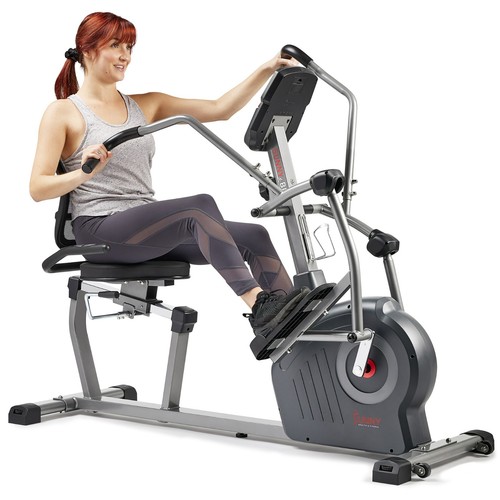
- Recumbent bikes have you seated in a reclined position, legs extended forward to pedal. Your feet never leave the pedals, and your back is supported by a larger seat, which shifts work away from your upper body. The pedal radius (crank length) is usually 6″–7″, and the seat-to-pedal distance is adjustable for knee comfort.
This means ellipticals demand full-body engagement, while recumbent bikes isolate work to your lower body. The upright stance on an elliptical also loads your core and stabilizer muscles; recumbent bikes are almost entirely hands-off, with minimal balance required.
Looking for the current generation with manufacturer warranty intact? Amazon’s new stock is the safest bet.
Browse on Amazon →How the Options Compare for Real-World Users
| Criteria | Elliptical Machine | Recumbent Bike |
|---|---|---|
| Body Position | Standing/upright; weight-bearing | Seated/reclined; non-weight-bearing |
| Muscle Groups Worked | Glutes, quads, hamstrings, calves, core, arms | Quads, hamstrings, glutes (minimal core/upper body) |
| Joint Impact | Low, but with some hip/knee/ankle load | Very low; minimal joint compression |
| Calorie Burn (avg. 30 min, 155 lb person) | ~270–400 kcal (moderate to vigorous effort) | ~180–260 kcal (moderate to vigorous effort) |
| Space Required | 4′ x 2′ footprint minimum; 6’–7′ ceiling height | 5′ x 2′ footprint minimum; standard ceiling |
| Noise Level | 50–70 dB (fan/magnetic resistance) | 40–60 dB (magnetic resistance quieter) |
| Weight Capacity | Typically 250–350 lbs | Typically 250–400 lbs |
| Ease of Access | Step-up required; less accessible for limited mobility | Step-through frame; easier for limited mobility |
| Upper Body Involvement | Yes (most models) | No |
| Best For | Full-body cardio, higher calorie burn, cross-training | Joint rehab, gentle cardio, long sessions |
Muscle Activation: Which Machine Delivers More Total-Body Work?
Ellipticals are designed for simultaneous lower and upper body movement. The inclusion of moving handlebars means your biceps, triceps, chest, and back muscles contribute with every stride. A 2014 electromyography study found that elliptical use activates glutes, quads, hamstrings, and calves to a similar degree as treadmill walking, but with about 30% less knee joint force. The core also stabilizes your trunk, especially at higher resistance levels or with interval training.
Recumbent bikes, in contrast, focus almost exclusively on the lower body. The seated, reclined position means your abs and back muscles are minimally engaged—your trunk stays supported. For users with balance issues, this is a plus, but it also means less overall calorie expenditure and muscle recruitment. If your goal is whole-body conditioning or maximizing per-minute calorie burn, the elliptical has a clear edge.
Impact on Joints and Chronic Pain: What Matters for Sensitive Knees, Hips, or Backs
Both machines are classified as “low-impact,” but in practice, recumbent bikes are in a different league for people with significant joint concerns. The seat design and horizontal pedal path mean your knees and hips move in a constrained, predictable arc with minimal load. This is why physical therapists frequently prescribe recumbent cycling during knee or hip rehab.
Ellipticals, while much gentler than treadmills, still require upright weight-bearing. The elliptical path reduces the jarring shock of running but does introduce some lateral knee and ankle movement, especially if the stride length isn’t well matched to your body. Users with severe arthritis, recent joint surgery, or chronic back pain often find recumbent bikes more sustainable for daily use.
For healthy adults without major joint limitations, elliptical use is generally safe and provides a more bone-strengthening workout, thanks to the weight-bearing element. But if you struggle with even mild instability, the recumbent bike is easier to mount and dismount safely.
Related Guides
Calorie Burn and Cardio Intensity: Real Numbers, Not Hype
Elliptical machines consistently outperform recumbent bikes for calorie expenditure at matched effort. For a 155-pound adult, moderate-intensity elliptical use burns roughly 270–320 kcal in 30 minutes; vigorous effort (raising resistance or adding intervals) can push this to 400 kcal or more. That’s because you’re using both your arms and legs, and your core is stabilizing your torso throughout.
Recumbent bikes, even at higher intensities, typically deliver 180–260 kcal per 30 minutes for the same user. The difference is even more pronounced for users who prefer to keep their hands off the handlebars or who pedal at a steady, moderate pace. For users with limited exercise tolerance or those prioritizing comfort over calorie burn, however, the bike’s “lower ceiling” can be a benefit—you’re less likely to overexert and more likely to stick with regular workouts.
If maximizing fat loss or cardiovascular fitness is a priority, the elliptical machine offers more metabolic demand per minute. But if your goal is simply to accumulate daily activity without aggravating pain or fatigue, the recumbent bike is easier to sustain for longer sessions.
Space, Noise, and Practical Setup: What to Expect at Home
Ellipticals and recumbent bikes both require more space than compact upright bikes or folding treadmills, but the dimensions and setup issues differ in ways that matter for home users.
- Elliptical machines require a minimum footprint of 4 to 6 feet in length and 2 feet in width, plus enough ceiling clearance for your full upright stride (add your height plus 15–20 inches). Some models with longer stride lengths (20–22″) need even more room front-to-back. Noise levels range from 50 to 70 decibels, with fan-based resistance being the loudest.
- Recumbent bikes need about 5 feet in length and 2 feet in width, but because you’re seated, ceiling height is rarely an issue. Magnetic resistance models are very quiet—often below 50 decibels—and can be used in apartments or shared spaces with minimal disturbance.
Recumbent bikes tend to have a higher weight capacity (some models up to 400 lbs) and are easier to move, thanks to wheels and lighter frames. Ellipticals are heavier (often 150–250 lbs) and harder to relocate once set up. If you’re tight on space or need to store the machine after use, a recumbent bike is the more practical choice.
See what’s available if space or portability is a key concern for you.
Who Should Choose an Elliptical Machine?
An elliptical is the better fit if you:
- Want a full-body workout that recruits arms, legs, and core for higher calorie burn
- Are comfortable standing and balancing for 20–40 minutes at a time
- Want to simulate running or stair climbing without high impact
- Are cross-training for outdoor activities and need weight-bearing exercise
- Have no major limitations in knee, hip, or ankle mobility
Most elliptical machines offer adjustable resistance (16–24 levels is typical), programmable workouts, and stride lengths that can be tailored to users between 5’2″ and 6’4″. If you share the machine with others, look for models with adjustable stride or multi-user profiles. Compare today’s deals on elliptical machines with the features that matter most for your body size and goals.
Who Should Choose a Recumbent Bike?
A recumbent bike is the better bet if you:
- Have chronic joint pain, arthritis, or are recovering from lower body injury
- Need a machine that’s easy to mount/dismount, especially with mobility aids
- Plan to exercise for longer sessions (45–90 minutes) at a comfortable intensity
- Prioritize back support and minimal upper body effort
- Want a quieter machine for shared living spaces
Look for recumbent bikes with a range of resistance levels (usually 8–32), a step-through frame for easy access, and seat adjustability to match your leg length. Models with heart rate sensors and pre-programmed workouts can help you track progress over time. View options
Common Mistakes When Comparing Elliptical vs Recumbent Bike
Many buyers assume these machines are interchangeable for “low-impact cardio,” but this ignores the real-world differences in muscle use, joint stress, and comfort. The biggest mistakes:
- Choosing an elliptical without testing stride length—if the stride is too short or too long for your body, you’ll develop hip or knee discomfort over time.
- Assuming recumbent bikes are “easier”—while they’re gentler on joints, it’s possible to set resistance too high and stress the knees, especially if the seat isn’t properly adjusted.
- Ignoring space and access needs—ellipticals are harder to move and require more ceiling height; recumbent bikes are easier for older adults or those with limited mobility to get on/off.
- Expecting similar calorie burn—ellipticals generally burn 25–50% more calories per session, mainly due to upper body involvement.
Test both machines in person if possible, especially if you’re buying for rehab or chronic pain. Pay attention to how your joints feel after 10–15 minutes, not just the first few strides or pedals.
Looking for the current generation with manufacturer warranty intact? Amazon’s new stock is the safest bet.
Compare Options on Amazon →FAQs: Elliptical Machine vs Recumbent Bike
Which machine is better for weight loss?
Elliptical machines typically burn more calories per minute due to full-body involvement, making them more efficient for weight loss if you can tolerate upright exercise. Recumbent bikes are better for longer, lower-intensity sessions and are easier to stick with if you have joint pain or fatigue.
Is a recumbent bike easier on the knees than an elliptical?
Yes, recumbent bikes place less stress on the knees because your legs move in a controlled, horizontal path and your body weight is supported by the seat. Ellipticals are still low-impact but can aggravate knee issues if stride length or resistance is poorly matched to your body.
Can you get a good cardio workout on a recumbent bike?
Absolutely—recumbent bikes can deliver effective cardio if you maintain a moderate to vigorous pace and adjust resistance appropriately. While maximum heart rates may be slightly lower than on an elliptical, you can still improve cardiovascular fitness and endurance, especially with interval training.
What is the best choice for seniors or users with limited mobility?
Recumbent bikes are generally safer and more comfortable for seniors or those with balance issues. The step-through frame and large, supportive seat make it easier to get on and off, and the risk of falls is much lower than with upright or elliptical machines.
Do ellipticals or recumbent bikes take up more space?
Ellipticals require more vertical and horizontal space due to their stride motion and upright design—plan for at least 4′ x 2′ and enough ceiling clearance for your height plus 15–20 inches. Recumbent bikes need a longer footprint (around 5′) but fit in rooms with standard ceiling height and are often easier to move.
Can you build muscle with either machine?
Both machines primarily target cardiovascular fitness, not muscle building. Ellipticals offer more full-body engagement and can help maintain muscle tone in the legs, arms, and core, but neither machine will produce significant hypertrophy. For muscle gain, strength training is more effective.
The Bottom Line: Choose for Your Body, Not Just the Specs
The right choice between an elliptical machine and a recumbent bike comes down to your body, goals, and environment—not just the numbers on a spec sheet. If you want whole-body conditioning and can tolerate upright exercise, the elliptical delivers more calorie burn and muscle activation. If you need a joint-friendly, accessible option for longer, more comfortable sessions, the recumbent bike is unmatched. Test both if possible, and prioritize comfort and sustainability over theoretical advantages. The best cardio machine is the one you’ll actually use regularly—and enjoy.