10 min read
Disclosure: As an Amazon Associate and eBay Partner Network publisher, we earn from qualifying purchases. This doesn’t affect what we recommend or how we describe it.
Three types of buyers search for smart bathroom scales that work with iPhone: people tracking weight for health or fitness goals, tech-savvy users who want seamless integration with Apple Health, and anyone managing a chronic condition where accurate, easy-to-share data matters. Each group needs something different—whether it’s granular body composition metrics, reliable Bluetooth syncing, or a scale that’s simple enough for daily use without tech headaches. The biggest difference between “just any smart scale” and one that genuinely fits your iPhone-centered life comes down to data reliability, ecosystem compatibility, and how much you trust the numbers staring back at you.
Spot the difference between Bluetooth-only and Wi-Fi–enabled smart scales
Most smart scales for iPhone connect via Bluetooth, Wi-Fi, or both. The distinction isn’t just about convenience—it changes how and when your data syncs, how much you can automate, and even which apps you can use.
- Bluetooth-only scales require your iPhone to be nearby and unlocked for each sync. If you weigh in without the app open, data may not transfer until next time.
- Wi-Fi–enabled scales upload measurements directly to the cloud, auto-syncing with your account even if your phone is in another room. This is a major convenience if you don’t want to think about syncing every time you step on the scale.
For Apple Health integration, both types can work, but Wi-Fi scales tend to have more robust, hands-off syncing. If you want your weight and body fat readings to show up automatically in your iPhone’s Health app, look for explicit “Apple Health integration” in the specs, not just “iOS compatible.”
Bluetooth-only models are usually less expensive and work reliably for single-user households. Wi-Fi scales are better suited for families, multi-user tracking, or anyone who wants a set-and-forget experience.
Choose the right measurement features for your health goals
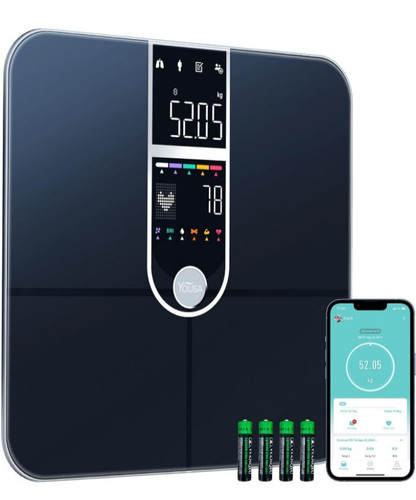
Smart bathroom scales for iPhone range from basic weight-only models to devices that estimate body fat, muscle mass, water percentage, bone mass, metabolic age, and even visceral fat. But not all metrics are equally accurate—or equally useful.
- Weight: Most smart scales measure weight to the nearest 0.1 or 0.2 kg, with a maximum capacity typically between 150–180 kg (330–400 lbs). If you need higher capacity, check the specs—some “slim” models cap out at 136 kg (300 lbs).
- Body fat %: This is estimated using bioelectrical impedance analysis (BIA), which sends a harmless current through your body. Accuracy varies: consumer-grade BIA can be off by 3–5 percentage points compared to clinical DEXA scans, and readings fluctuate based on hydration, meal timing, and skin temperature. For tracking trends over time, it’s useful; for medical decisions, it’s not precise enough.
- Muscle mass, bone mass, water %: These are also BIA-derived, and best viewed as rough estimates. No home scale can distinguish between types of muscle or bone density—think of these numbers as motivational, not diagnostic.
- Segmental readings (arms, legs, trunk): Some premium scales offer these, but they require hand electrodes or special foot placement. If you want this feature, make sure the scale specifies “segmental analysis.”
- Pregnancy mode, athlete mode: Many smart scales offer special modes to adjust readings for specific populations. If you’re pregnant, have a pacemaker, or are an athlete, check for these settings in the app.
Don’t be swayed by a laundry list of metrics. For most people, reliable weight tracking and basic body fat percentage are the features that matter. Everything else is a bonus, not a must-have.
How the top smart scale categories compare
| Option Type | Sync Method | Max Users | Body Metrics Measured | Battery / Power | Price |
|---|---|---|---|---|---|
| Bluetooth basic scale | Bluetooth only | 1–8 | Weight, body fat % | AAA/AA batteries (6–12 mo.) | $ |
| Wi-Fi multi-user scale | Wi-Fi + Bluetooth | Up to 16 | Weight, body fat %, muscle, water, bone | AAA/AA batteries (8–18 mo.) | $$ |
| Premium segmental analyzer | Wi-Fi + Bluetooth | Up to 8 | Weight, segmental fat/muscle, visceral fat | Rechargeable (USB, 2–3 mo.) | $$$ |
| Compact travel model | Bluetooth only | 1–4 | Weight only | AAA batteries (4–6 mo.) | $ |
| Accessible voice-feedback scale | Bluetooth + voice output | 1–8 | Weight, basic body fat % | AA batteries (8–12 mo.) | $$ |
Note on pricing: the $ symbols are relative tiers within this comparison — $ is the cheapest of the bunch, $$$ the priciest. Live listings (and exact prices) appear further on.
Check iPhone compatibility and app integration (don’t assume every “smart” scale works seamlessly)
Just because a scale advertises iOS support doesn’t mean it fully integrates with Apple Health or the Health app. Many cheaper Bluetooth models only sync with their own third-party app, which may or may not export data to Apple’s ecosystem. For hassle-free tracking, look for:
- Explicit Apple Health support: The packaging or website should state “syncs with Apple Health” or “Health app integration.” Avoid vague language like “iOS compatible.”
- Direct integration vs. manual export: Some apps require you to manually export or sync; others push data automatically. If you want true set-and-forget syncing, read user reviews for complaints about dropped data or missed syncs.
- iCloud backup: If you value long-term trend tracking, check if your measurements are stored in the cloud or only locally. Losing months of data when you upgrade your phone is a real risk with some budget apps.
- Multiple user profiles: If your household shares a scale, ensure the app supports switching between users and syncing to multiple iPhones. Some scales can auto-detect users by weight; others require manual selection in the app.
For the smoothest experience, prioritize scales where the manufacturer offers a well-rated, regularly updated iOS app and clear Apple Health support. You can check current prices for the best-reviewed options in this category.
Understand what “accuracy” really means for smart bathroom scales
No consumer smart scale is as accurate as a medical-grade device, but some are much better than others. Here’s what to know before you trust those numbers:
- Weight accuracy: Most smart scales claim ±0.1–0.2 kg (0.2–0.4 lbs) precision, but actual performance can vary based on floor surface, user stance, and battery level. For best results, use the scale on a hard, level surface and weigh yourself at the same time each day.
- Body fat and muscle estimates: Consumer bioelectrical impedance can fluctuate widely based on hydration, skin temperature, and even time of day. Use body composition metrics to track trends, not as absolute truth. Professional organizations like the American Heart Association caution that home BIA is best for personal monitoring, not clinical diagnosis.
- Calibration: Some scales require initial calibration or “zeroing” after battery changes or relocation. Always check the manual for calibration instructions—skipping this step can throw off readings.
If you notice wild swings in your numbers, it’s often due to inconsistent measurement conditions (wet feet, carpeted floors, weighing after a big meal). For the most consistent data, weigh at the same time, under similar conditions, and don’t obsess over day-to-day fluctuations.
You can compare today’s deals on models that balance accuracy, ease of use, and reliable iPhone integration.
Who should consider a “barebones” model vs. a feature-rich smart scale?
Not everyone needs a scale with 12 different metrics and Wi-Fi syncing. Here’s how to decide which profile fits your needs:
- Barebones Bluetooth scales are best if you care only about tracking weight and want a quick, affordable way to log it on your iPhone. These are simple, portable, and usually cost less, but you’ll need your phone nearby for every weigh-in. They’re also less likely to offer robust multi-user support.
- Feature-rich Wi-Fi scales are ideal if you want hands-off syncing, body composition tracking, and multi-user profiles. These models cost more but add convenience, better data integration, and sometimes advanced features like segmental analysis or pregnancy mode.
If you’re just starting out, a basic Bluetooth model lets you test the waters. For households or serious data trackers, a multi-metric Wi-Fi scale pays off in daily convenience and richer insights. See what’s available in each category to match your priorities.
Related Guides
- Are Smart Scales Accurate? What the Science Says
- Smart Inhalers for Asthma: Which Devices Are Worth Considering?
- Our guide to Digital Scales vs Analog Scales: Which Should You Choose?
- Smart Ring vs Fitness Band: Which Wearable Is Right for You?
- Smart Desk Features That Boost Productivity and Comfort
- Smart Sensing Chairs: How They Detect and Monitor Sitting Posture
- Browse all Buying Guides →
Total cost of ownership
Smart bathroom scales for iPhone come with hidden and ongoing costs that aren’t obvious from the sticker price. Here’s what to factor into your budget:
- Batteries: Most models use AAA or AA batteries, replaced every 4–18 months depending on usage and features. Estimate $8–$20 per year for replacements, especially on Wi-Fi models with higher power draw.
- App subscriptions: Some brands lock advanced analytics, trend reports, or long-term data storage behind a paid subscription. These fees range from $15 to $60 per year. Always check what’s included for free before you buy.
- Replacement parts: While rare, glass platforms can crack or rubber feet can wear out. Replacement parts (if available) run $10–$30, but some budget models don’t offer them—if the scale breaks, you’ll need a new one.
- Cloud backup fees: A few premium scales charge for expanded cloud storage or historical data exports. This is uncommon, but if you value long-term health records, read the fine print.
- Accessory costs: Segmental analyzers may require special hand electrodes or charging cables. Losing these can mean extra out-of-pocket expense ($10–$25 per part).
Factoring in these costs gives you a more realistic sense of what you’ll pay over the lifetime of your scale—especially if you plan to track your health for years, not months.
FAQ: Smart bathroom scales for iPhone
Will a smart scale work with any iPhone?
Most smart bathroom scales support iPhones running iOS 12 or newer, but always check the minimum app requirements. If you have an older device or iOS version, some advanced features or integrations may not be available.
How accurate are body fat measurements on smart scales?
Body fat readings from consumer smart scales use bioelectrical impedance, which is generally accurate to within ±3–5% compared to clinical methods. Factors like hydration, time of day, and skin temperature can affect results. Use these numbers to track trends, not for clinical decisions.
Bluetooth vs. Wi-Fi smart scales—which is better for syncing with iPhone?
Wi-Fi scales automatically upload data to the cloud and push it to your iPhone, even if your phone isn’t nearby during weigh-in. Bluetooth models require your phone to be within range for each sync. Wi-Fi is more convenient for multi-user households and hands-off tracking, but Bluetooth models are often more affordable and portable.
How many users can a smart scale support?
Most smart bathroom scales for iPhone support between 4 and 16 user profiles. Wi-Fi models tend to offer higher user limits and better auto-recognition. Check the specs to confirm the maximum supported users, especially if your household is sharing the scale.
What happens if I switch iPhones or upgrade my device?
If the smart scale app stores data in the cloud or syncs with Apple Health, your records will transfer to your new iPhone automatically. If the app stores data locally or lacks iCloud backup, you may lose your history unless you export it first. Always check the app’s backup and export options before upgrading.
Are there any ongoing fees with smart bathroom scales?
Some smart scales offer advanced analytics, trend reports, or extended data storage as part of a paid subscription, typically $15–$60 per year. Basic weight and body fat tracking is usually free, but always read the app’s terms to avoid surprises.
How often should I replace the batteries in a smart scale?
Battery life varies by model and features, ranging from 4 months (compact Bluetooth scales) to 18 months (Wi-Fi models with power-saving modes). Most users replace batteries once or twice per year. Rechargeable models need charging every 2–3 months depending on usage.
What’s the smart move for iPhone users?
If you want effortless, reliable tracking that fits into your Apple-centric life, prioritize a Wi-Fi–enabled smart scale with explicit Apple Health integration and good multi-user support. For budget buyers or solo users, a Bluetooth-only model is a fine starting point—just know you’ll need your phone nearby at every weigh-in. Don’t get distracted by a dozen body composition metrics; focus on accurate weight, seamless syncing, and total lifetime cost. Make your scale work for you, not the other way around.
Last updated: July 2026 · Our editorial process