10 min read
Disclosure: As an Amazon Associate and eBay Partner Network publisher, we earn from qualifying purchases. This doesn’t affect what we recommend or how we describe it.
Three types of buyers are driving the smart ring vs fitness band debate: minimalists who want health tracking without a screen, data-driven users chasing detailed metrics, and practical shoppers who just want step counts and sleep info without fuss. Each group values something different—discretion, depth, or simplicity. Deciding between these two wearables isn’t about which is “better” in the abstract; it’s about which fits your daily routine, comfort needs, and the specific health data you’ll actually use.
What really separates a smart ring from a fitness band?
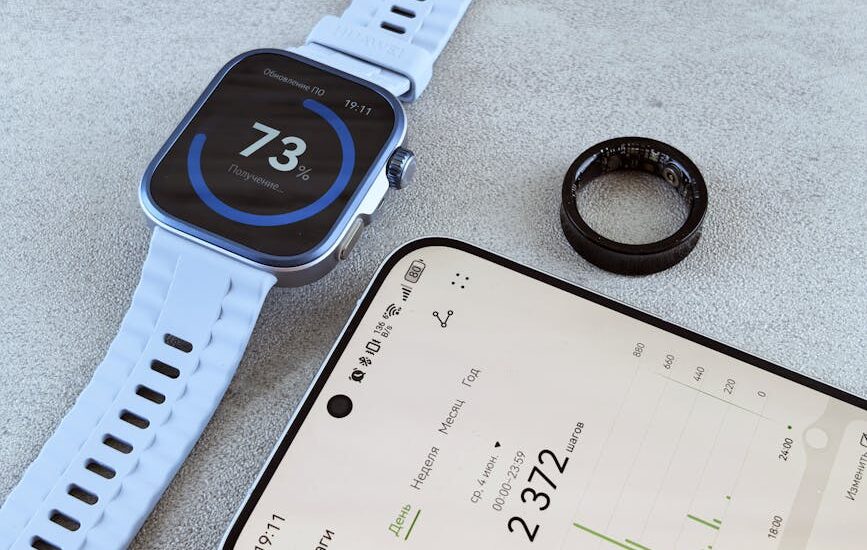
Both smart rings and fitness bands promise to track steps, sleep, and heart rate. But their designs, sensor placements, and user experiences are fundamentally different. A smart ring sits snug on your finger, relying on the rich blood flow in that area for metrics like heart rate variability (HRV) and temperature changes. Fitness bands wrap around your wrist, offering more room for screens, larger batteries, and sometimes extra sensors like GPS or SpO2 (blood oxygen) monitors.
That core distinction shapes everything: comfort, accuracy, what you see at a glance, and even how you interact with your health data. Let’s break down the real-world implications.
How the options compare for real-world users
| Option Type | Best For | Form Factor | Battery Life | Data Display | Price |
|---|---|---|---|---|---|
| Minimalist Smart Ring | Discreet, screen-free tracking | 2.5–3mm thick, 7–9g | 4–7 days | No on-device display | $$$ |
| Screenless Fitness Band | Basic step/sleep logging | 12–15mm wide, 18–25g | 5–14 days | LED or vibration cues | $ |
| Display Fitness Band | On-the-go stats, notifications | 15–22mm wide, 20–35g | 4–7 days | Full OLED/AMOLED screen | $$ |
| Advanced Sensor Fitness Band | Multi-sport & health tracking | 18–25mm wide, 25–45g | 3–6 days | Customizable display | $$$ |
Pricing context: $, $$, and $$$ are relative ratings against the other products listed above, not absolute dollar ranges. Live current prices follow below.
Related Guides
- Smart Ring vs Fitness Band: Which Wearable Is Right for You?
- Our guide to Are Smart Jump Ropes Worth It? An Honest Review
- Smart Inhalers for Asthma: Which Devices Are Worth Considering?
- How to Charge a Fitness Tracker: Simple Steps for Every Model
- Our guide to How to Clean Fitness Mats: A Step-by-Step Guide
- Are Smart Scales Accurate? What the Science Says
Sensor placement and accuracy: What matters for health metrics?
The finger is a surprisingly powerful site for physiological monitoring. Smart rings can capture pulse waveforms and skin temperature with high fidelity because your fingers have dense arterial flow and are less exposed to movement “noise” than the wrist. This can give rings an edge for overnight heart rate, HRV, and temperature variability. Some studies suggest finger-based photoplethysmography (the optical method for heart rate) matches or exceeds wrist accuracy, especially for HRV and sleep staging.
Fitness bands, in contrast, often struggle with accuracy during vigorous movement—think running or HIIT—because the wrist flexes and the sensor can lose contact. However, bands with multiple LEDs and motion sensors can compensate for this, and their larger size allows for more advanced tech like GPS chips or SpO2 sensors. For all-day activity tracking and workout stats, bands generally offer richer data, but with more artifacts if worn loosely or during intense motion.
For health users interested in trends (not minute-by-minute data), either is likely “accurate enough.” But if you want detailed sleep staging, recovery metrics, or temperature trends for things like menstrual cycle tracking, a smart ring’s finger-based sensors are tough to beat.
Comfort, discretion, and wearability: Which wins for all-day use?
Comfort is the dealbreaker for many. Smart rings are lightweight (usually under 10g) and don’t trap sweat or snag on clothing. You can wear them 24/7, including while sleeping, showering, or even lifting weights—though heavy gripping can scuff the surface. Sizing is critical: a ring that’s too loose gives bad data, while one that’s too tight is uncomfortable and can affect circulation. Most brands offer sizing kits or guides to get this right.
Fitness bands, particularly screenless or slim models, are usually comfortable during the day but can feel bulky or restrictive at night. Wider, heavier bands with screens might irritate sensitive skin or cause pressure marks, especially if you wear them tight for sensor accuracy. If you dislike jewelry or have joint issues, a band may be easier to put on and take off than a ring.
What you see: Data access and user experience
Smart rings are all about minimalism. There’s no display—just a ring, an app, and the data it syncs. That means no on-wrist notifications, no glancing for quick stats, and no distraction. All feedback happens in the app, which is usually rich in trend graphs, readiness scores, and sleep breakdowns. If you want to check your heart rate or step count instantly, a ring isn’t the right tool.
Fitness bands with screens give you real-time feedback: steps, heart rate, notifications, workout timers, and sometimes even weather or calendar alerts. Some bands let you start/stop workouts, track intervals, or control music directly on your wrist. If you like seeing your progress without pulling out your phone, a display band is the clear winner. Screenless bands exist for those who want basic tracking with even less distraction, but you’ll still get some vibration or LED cues for alerts.
Battery life and charging: What to expect day-to-day
Battery life varies widely, but most smart rings last 4–7 days per charge, thanks to low-power sensors and the absence of a screen. Charging is usually done via a proprietary dock; plan for 60–90 minutes to full. Fitness bands can last anywhere from 3 days (for bright displays and GPS) to 2 weeks (for basic, screenless models). Bands with always-on displays and advanced sensors draw more power but may still last a week if you’re not using GPS constantly.
Neither option is truly “set and forget”—you’ll need to charge at least once a week. But if you travel often or hate remembering chargers, a basic fitness band or a smart ring with a 7-day battery will minimize hassle.
App ecosystems and integrations: Where your data goes
Most smart rings focus on health and recovery. Their apps emphasize sleep staging, readiness or “recovery” scores, and long-term trends. They often sync with popular health platforms, but may not integrate directly with third-party fitness apps or devices. Export features are common if you want to share data with a clinician or coach.
Fitness bands—especially those with screens—typically offer broader app ecosystems. You’ll find built-in workout tracking, multi-sport modes, and sometimes social features or challenges. Many sync with Apple Health, Google Fit, and other popular health platforms. Some advanced bands offer APIs for exporting raw data or integrating with nutrition and training apps, but this varies widely between brands.
Data privacy varies: read each brand’s policy carefully. Some smart rings store data locally and sync only when you open the app; others upload to the cloud. Fitness bands may require an account to access advanced features or historical trends. For a deep dive into wearable privacy, see Consumer Reports.
Total cost of ownership
The sticker price is only part of the story. Here are the ongoing or hidden costs you’ll want to consider for both smart rings and fitness bands:
- Replacement chargers: Both devices use proprietary charging solutions. Losing or damaging one can cost $20–$40 for a replacement.
- Subscription fees: Some smart rings and a few fitness bands require an ongoing monthly or annual fee (typically $5–$10/month) to unlock advanced analytics, readiness scores, or detailed sleep breakdowns.
- Replacement bands/rings: Fitness band straps wear out or break every 1–2 years, especially with daily use. Expect to pay $10–$30 per replacement. Smart rings are more durable, but resizing or replacing a lost ring can be expensive (often 50–75% of the original cost).
- App integrations: Some third-party app integrations or export features are locked behind paywalls or premium tiers, adding $20–$60/year if you need advanced data access.
- Battery degradation: Most built-in batteries last 2–3 years before noticeable decline. Out-of-warranty battery replacement is rarely offered, meaning eventual full replacement of the device.
Common mistakes buyers make (and how to avoid them)
The most frequent regret among smart ring buyers is poor sizing. Unlike a watch or band, a ring must fit precisely—too loose, and you get poor readings; too tight, and it’s uncomfortable or even unsafe. Always use a sizing kit or measure multiple times (at different times of day) before ordering.
With fitness bands, the biggest issue is overestimating comfort. A band that feels fine for an hour may become irritating overnight or during sweaty workouts. Test the fit for a few hours before committing, and look for hypoallergenic materials if you have sensitive skin.
Both device types can be disappointing if you expect “medical-grade” accuracy. These are wellness tools, not diagnostic devices. Treat the data as trends, not clinical facts. If you’re buying for a specific health concern, discuss with a healthcare professional first.
Who should pick a smart ring—and who’s better off with a fitness band?
Choose a smart ring if you want:
- Discreet, screen-free health tracking that blends with daily wear
- Accurate overnight HRV, sleep, and temperature data
- No wrist irritation or distraction from notifications
- You’re willing to accept app-only data access and higher up-front cost
Opt for a fitness band if you want:
- Real-time stats and notifications visible on your wrist
- Multi-sport tracking, GPS, or advanced workout metrics
- Customizable displays and more app integrations
- Simpler sizing and typically lower up-front cost
Still undecided? See what’s available in both categories for current deals and bundles that may tip the scales.
FAQ: Smart ring vs fitness band—what people really ask
How accurate are smart rings compared to fitness bands for sleep tracking?
Smart rings typically provide more accurate sleep and HRV data due to their finger placement, which is less prone to motion artifacts. Fitness bands can be accurate for sleep duration but may struggle with sleep stage differentiation if worn loosely or if you move a lot during sleep.
Can you wear a smart ring and a fitness band at the same time?
Yes, you can wear both simultaneously—one on your finger, the other on your wrist. Some users do this to cross-check data or use the band for workouts and the ring for sleep/recovery tracking. However, wearing both may feel excessive for daily use unless you have a specific reason.
What is the typical battery life for a smart ring versus a fitness band?
Smart rings usually last 4–7 days per charge, depending on how often you sync data and whether you use features like temperature tracking. Fitness bands can last anywhere from 3 days (with GPS and always-on display) to 14 days (for basic, screenless models). Charging times are comparable—usually under 90 minutes.
Which is better for tracking workouts: smart ring or fitness band?
Fitness bands are generally superior for workout tracking. They often include dedicated workout modes, real-time stats, and sometimes built-in GPS for distance and pace. Smart rings focus on passive health metrics and do not track active workouts with the same detail or accuracy.
Are there recurring costs after buying a smart ring or fitness band?
Yes, some devices require a monthly or annual subscription to unlock advanced analytics, readiness scores, or historical data. Replacement parts (bands, chargers) and out-of-warranty replacements add to the total cost of ownership. Always check the details before purchasing.
What should you do if your smart ring or fitness band stops working within the first year?
Most devices come with a 1-year limited warranty covering manufacturing defects. Contact the retailer or manufacturer for troubleshooting or replacement. For accidental damage or wear and tear, review the warranty terms—some brands offer discounted replacements, but not all.
Smart ring vs fitness band for heart rate monitoring—who wins?
For resting heart rate and overnight HRV, smart rings have an edge due to finger-based sensors. For continuous heart rate during exercise, fitness bands tend to perform better, especially if worn snugly and equipped with multiple LEDs and motion sensors.
Final verdict: Which should you choose?
If you’re drawn to invisible, all-day health tracking with deep sleep and recovery insights—and you don’t mind using your phone for all feedback—a smart ring is hard to beat. But if you want instant stats, workout tracking, and more interactive features, a fitness band is the practical, versatile choice. The best option is the one you’ll wear comfortably, use consistently, and actually check. Compare today’s deals and try sizing or fit testers if you’re on the fence—comfort and usability trump specs every time.


Last updated: July 2026 · Our editorial process