8 min read
Disclosure: As an Amazon Associate and eBay Partner Network publisher, we earn from qualifying purchases. This doesn’t affect what we recommend or how we describe it.
Electric foam rollers fill a very specific need: you want more muscle relief than a basic roller can provide, but you don’t want to spend $300+ on a full massage gun or a gym membership for access to pro recovery tools. If you’re a runner trying to speed up post-workout recovery, a desk worker with persistent back tension, or someone looking for a compact, at-home solution for muscle soreness, these devices are designed for you. The challenge is sorting through the real differences between models — speed settings, portability, and even the feel of the vibration — to find what actually matches your routine.
Top picks at a glance
- Hyperice Vyper Go Portable Vibrating Foam Roller — the premium option from a leading brand
- FITINDEX Vibrating Foam Roller 5-Speed — a feature-rich alternative with multiple speeds
- Brookstone Bodyform Electric Vibrating Foam Roller — the budget pick from a recognised brand
- Everlast Barrel Roller Vibration Therapy Electric Foam Roller — the most compact choice from a fitness brand
How the main options stack up
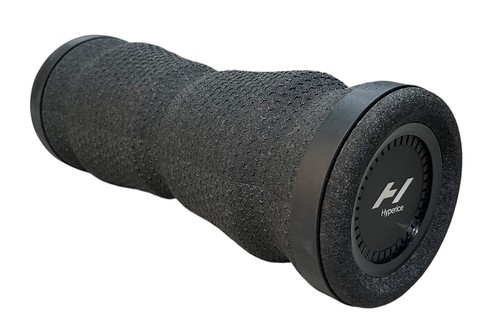
Pictured: Hyperice Vyper Go
| Product | Condition | Price | Best For | Speeds | Portability |
|---|---|---|---|---|---|
| Hyperice Vyper Go Portable Vibrating Foam Roller |
New | $$ | Premium brand, travel-friendly | 3 | Portable (compact design) |
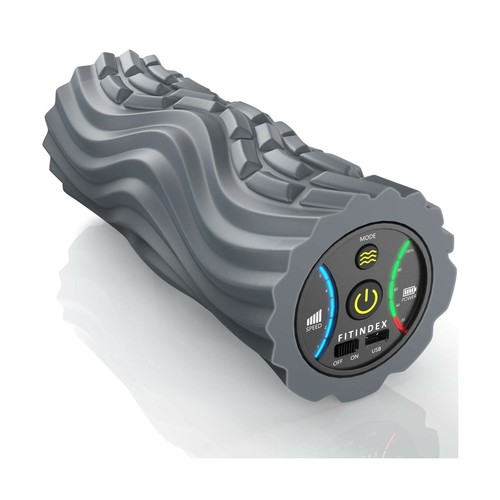 FITINDEX Vibrating Foam Roller 5-Speed FITINDEX Vibrating Foam Roller 5-Speed |
New | $$$ | Multiple speeds, advanced users | 5 | Standard |
 Brookstone Bodyform Electric Vibrating Foam Roller Brookstone Bodyform Electric Vibrating Foam Roller |
New | $ | Budget, general use | — | Standard |
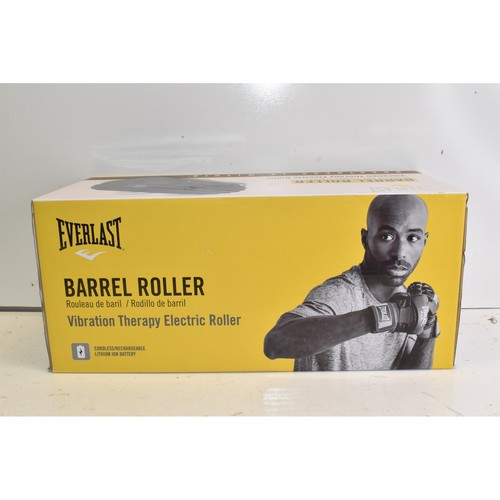 Everlast Barrel Roller Vibration Therapy Electric Foam Roller Everlast Barrel Roller Vibration Therapy Electric Foam Roller |
New | $ | Compact, small spaces | — | Most compact |
Pricing context: $, $$, and $$$ are relative ratings against the other products listed above, not absolute dollar ranges. Live current prices follow below.
What separates these rollers beyond the basics
Most electric foam rollers look similar at a glance: a textured foam cylinder with a motor inside. But the differences aren’t just cosmetic. The Hyperice Vyper Go stands out for its travel-friendly design, weighing under 2 lbs and measuring about 12 inches long, making it easy to toss in a gym bag or carry-on. By spec, it uses three vibration speeds (not five), but Hyperice is known for motors that deliver strong, even pressure without rattling or losing power at higher settings. This is the premium pick — not the cheapest, but built for frequent use and portability.
The FITINDEX Vibrating Roller is the power user’s choice. It offers five distinct vibration speeds, letting you fine-tune intensity from gentle to deep muscle work. This is especially valuable for athletes or anyone who wants more control over their recovery sessions. FITINDEX markets it as a full-size roller, so it’s less portable than the Hyperice, but you get more variation in speed. It’s also the priciest option in this lineup, positioning itself as the feature-rich alternative.
For straightforward relief at the lowest price, the Brookstone Bodyform is the budget option. It’s from a recognized brand, but you’re trading off advanced features — there’s no detailed speed control listed, and the design is more basic. This is the right fit for casual users who want vibration without paying for extra bells and whistles.
The Everlast Barrel Roller is the most compact of the bunch, designed for portability and small spaces. Everlast pitches this model for users who need a roller that fits easily in a locker or suitcase. It’s also in the budget price tier, but it’s a better match for anyone prioritizing size over advanced features.
Related Guides
- Foam Roller vs Massage Stick: Which Recovery Tool Is Right for You?
- Electric Foam Rollers That Are Actually Worth Buying
- Orthopedic Pillow vs Memory Foam Pillow: Which Is Better for Sleep Support?
- How to Charge an Electric Heating Pad: A Step-by-Step Guide
- Our guide to Electric Facial Cleansing Brushes to Upgrade Your Routine
- Electric Eye Massager Benefits: What Science and Users Reveal
How we selected these electric foam rollers
For this guide, only branded electric foam rollers with clearly listed vibration and sizing features were included. The main criteria were: number of vibration speeds (more speeds allow finer adjustment and are important for advanced users), physical dimensions and weight (for portability), brand reputation (for support and warranty confidence), and whether the product focused on budget value or advanced features. Noise level and battery life are also relevant, but these details are not always provided by manufacturers, so they weren’t used as primary differentiators here.
All products included are new, from established brands, and positioned for consumer use (not industrial or clinical models). Unbranded rollers, listings without verifiable vibration specs, or bundles where the core product is unclear were excluded. If you’re only interested in static stretching, or you know that vibration aggravates certain injuries or sensitivities, a traditional foam roller or a manual massage stick is likely a better fit for your needs.
Is the extra cost for more speeds or a premium brand justified?
By spec, the main premium you pay for is either advanced vibration control (the FITINDEX has five speeds) or a well-known brand with a reputation for durability and support (the Hyperice Vyper Go). For most casual users, the difference between three and five speeds is less important than the overall build quality and comfort. If you’re sensitive to vibration intensity or plan to use the roller for targeted muscle groups (like calves vs. quads), more speed options can be a real advantage. If you want a device that will hold up to frequent travel and heavy use, the Hyperice is likely worth the step up in price. For basic relief or occasional use, the Brookstone and Everlast models cover the essentials at a lower cost.
Total cost of ownership
Sticker price is only part of the equation. Here’s what else to factor in over a year or two of use:
- Battery replacement: Most electric rollers use rechargeable lithium-ion batteries. These typically last 2-3 years with regular charging. If a battery fails outside warranty, expect $20-$40 for a replacement (if available).
- Charging cables: Losing or damaging the proprietary charging cable can mean a $10-$20 replacement cost, especially for models that don’t use standard USB-C.
- Foam wear: The foam surface can degrade over time, especially under heavy use. While most are designed to last a year or more, high-frequency users may see flattening or tearing and need to replace the roller, not just the foam — usually at full device cost.
- Travel cases or accessories: If you want to protect your roller in a gym bag or suitcase, a padded case or strap may run $10-$30 extra, and isn’t always included.
- Electricity: Energy use is minimal — typically under 5-10 watts per charge — but it’s worth noting for those who charge daily; annual cost is likely under $2 in most households.
FAQ: Real-world questions about electric foam rollers
How long does the battery last per charge on most electric foam rollers?
Most models in this category offer 2-3 hours of use per full charge, depending on vibration intensity and age of the battery. This is usually enough for a week of daily 10-15 minute sessions. Always check manufacturer specs for your chosen model, as battery life can vary.
Hyperice Vyper Go vs FITINDEX Vibrating Roller — which is better for travel?
The Hyperice Vyper Go is specifically designed for portability, with a lighter and more compact build than the FITINDEX Vibrating Roller. If you need something that fits easily in a carry-on or gym bag, the Hyperice is the better match. The FITINDEX offers more vibration speeds, but is bulkier and less suited to frequent travel.
Are these rollers loud during use?
Electric foam rollers do produce some noise from the internal motors, but most reputable models keep sound levels under 70 decibels (about as loud as a vacuum cleaner). The Hyperice Vyper Go is known for quieter operation compared to some budget models, but none are truly silent. Use on hard floors may amplify noise.
Can you use these rollers on all muscle groups?
Most electric foam rollers are designed for use on major muscle groups: calves, hamstrings, quads, glutes, and back. Smaller or more contoured areas (like neck or forearms) may be difficult to target due to the roller’s size and shape. Always avoid direct use on joints or bones, and consult a professional if you have injury concerns.
What is the typical warranty or return policy for electric foam rollers?
Brand-name electric foam rollers usually come with a 1-year limited warranty covering manufacturing defects. Return policies depend on the retailer, but most allow returns within 30 days if the device is unused or defective. Always retain your proof of purchase and register your device if required by the brand.
Do vibration rollers actually improve muscle recovery?
Vibration therapy is supported by some research for improving circulation and reducing delayed onset muscle soreness (DOMS), but results can vary by individual. For a technical overview, see the Journal of Strength and Conditioning Research. Electric rollers offer more consistent pressure and vibration than manual rollers, but they’re not a substitute for medical treatment or physical therapy.
Verdict: Which electric foam roller is right for you?
For most buyers, the Hyperice Vyper Go hits the sweet spot of portability, brand reputation, and reliable vibration settings. If you’re an athlete or want more granular control, the FITINDEX Vibrating Roller justifies its higher price with five speeds and a robust build. Budget-focused users should look at the Brookstone Bodyform for general use, or the Everlast Barrel Roller if you need the most compact option. If you don’t need vibration, or have medical reasons to avoid it, a classic foam roller or a physical therapist’s guidance is likely a better investment.
For more on vibration therapy and its uses in muscle recovery, you can read further at the National Strength and Conditioning Association.
Still comparing? You can see the full range of electric foam rollers and accessories on Amazon.
Last updated: June 2026 · Editorial standards