10 min read
Disclosure: As an Amazon Associate and eBay Partner Network publisher, we earn from qualifying purchases. This doesn’t affect what we recommend or how we describe it.
Most fitness guides treat foam rollers and massage sticks as interchangeable tools for muscle recovery, but that misses what actually separates them. Neither is “better” across the board — the differences come down to how your body moves, the specific muscle groups you want to target, and how much pressure you can realistically apply. If you’re deciding between these two, the most important consideration isn’t texture or brand, but how each tool fits the way you need to use it.
Muscle Coverage: What Each Tool Can (and Can’t) Reach
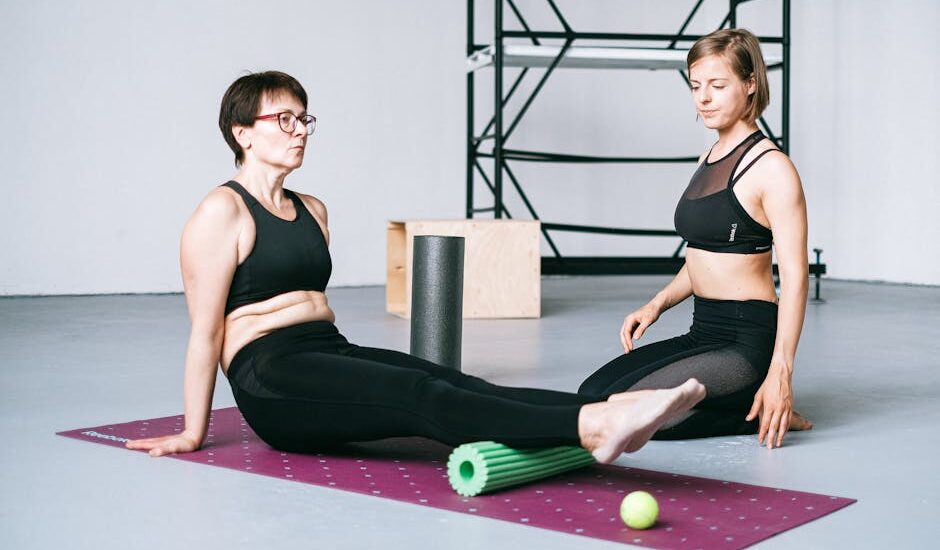
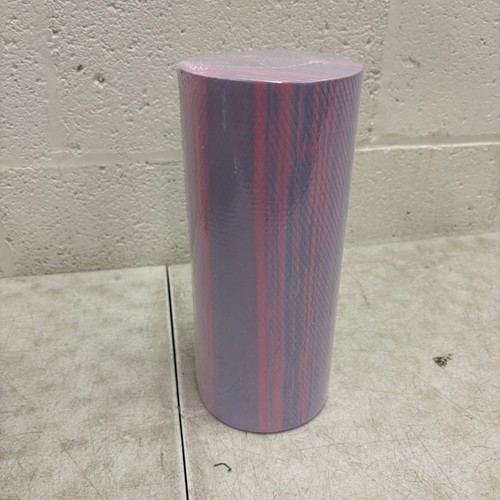
Foam rollers excel at covering large muscle groups in a single pass. Their typical diameter (12–15 cm) and length (30–90 cm) let you roll out your quads, hamstrings, glutes, and back with broad, sweeping movements. You use your body weight to control intensity — that’s both the roller’s superpower and its limitation. For example, it’s easy to roll your back or thighs, but nearly impossible to apply deep, direct pressure to calves or shins without contorting yourself.
Massage sticks, on the other hand, are narrow and handheld, usually 40–55 cm long and 3–5 cm in diameter. You grip each end and “roll” the stick over muscles, much like kneading dough. This makes them ideal for smaller, more angular muscle groups — think shins, forearms, or the neck. Because you supply the force with your arms, you can precisely control pressure, but you’ll never match the sheer deep-tissue intensity a foam roller delivers when you put your full body weight behind it.
Pressure Control: Body Weight vs. Hand Strength
Foam rollers leverage gravity. When you lie on a roller, your body mass does the work, often generating 50–80 psi (pounds per square inch) — more than most people can achieve with their arms and a massage stick. This is why rollers are favored for breaking up large knots in the quads or glutes. But this same intensity can be a downside if you have low pain tolerance or joint issues; you can’t always “dial it back” as easily as with a stick.
Massage sticks put you in total control. You decide how much pressure to apply with your hands, typically maxing out at about 20–30 psi, depending on your grip strength. This is often enough for sore calves or forearms, but less effective for thick muscle groups like the hamstrings or glutes. For anyone recovering from injury or with limited mobility, the stick’s gentler, adjustable pressure is usually less intimidating — but also less transformative if you need real deep-tissue work.
How the Options Compare: Foam Roller vs Massage Stick
| Tool Type | Typical Dimensions | Muscle Coverage | Pressure Range | Best For | Price |
|---|---|---|---|---|---|
| Standard Foam Roller | 30–90 cm x 12–15 cm | Large muscle groups (quads, back, glutes) | 50–80 psi (body weight) | Deep-tissue, full-body | $$ |
| Compact Foam Roller | 30–45 cm x 10–12 cm | Targeted areas, travel | 40–60 psi | Quick use, portability | $ |
| Textured Foam Roller | 33–60 cm x 13–15 cm | Enhanced trigger point release | 60–90 psi | Advanced users | $$$ |
| Standard Massage Stick | 40–55 cm x 3–5 cm | Small muscle groups (calves, shins, arms) | 10–30 psi (hand force) | Precision, low-mobility | $ |
| Textured Massage Stick | 45–55 cm x 4–5 cm | Trigger points, fascia | 15–35 psi | Spot relief, athletes | $$ |
The price column compares within this guide: $ is the budget end, $$ mid, $$$ premium. For exact, up-to-date prices, see the live listings lower in the article.
Real-World Scenarios: Who Benefits Most From Each Tool
If you’re a runner with chronically tight calves and shins, a massage stick is simply easier to maneuver and more comfortable for daily use. The stick’s narrow profile lets you angle into the tibialis anterior (the muscle next to your shin bone) — a spot that’s nearly impossible to hit with a foam roller without awkward balancing and limited pressure.
For lifters, cyclists, or anyone with tight glutes and hamstrings, a foam roller’s broad surface and body-weight leverage make it the go-to. You can roll out both hamstrings at once, or tackle the entire length of your back in one sweep. The trade-off: foam rollers are bulkier, take up more space, and require a bit of floor real estate to use properly.
If you have limited mobility — trouble getting down to the floor, recovering from injury, or working around joint pain — the massage stick is less intimidating. You can use it seated or standing, adjust pressure instantly, and avoid awkward transitions. For those who want maximum intensity and don’t mind a bit of discomfort, the foam roller remains unmatched for deep, sustained pressure.
Surface Texture: Smooth vs. Aggressive Ridges
Foam rollers come in two main surface types: smooth and textured. Smooth rollers (plain EVA or EPE foam) offer even, broad pressure — best for beginners or those with low pain tolerance. Textured rollers feature ridges, knobs, or grids designed to mimic a massage therapist’s fingers, delivering more targeted pressure to break up adhesions (“knots”) in the muscle. But those aggressive textures can be intolerable for sensitive users and may bruise if overused.
Massage sticks also come in smooth and textured variants. The textured sticks may have nubs or segmented rollers that dig into fascia and trigger points, but keep in mind: because you can only apply as much force as your arms allow, the effect is less intense than a textured foam roller. For most people, a smooth stick is sufficient for everyday use, while a textured stick is better reserved for spot-treating stubborn knots.
Cleaning and Durability: What Lasts and What Gets Gross
Foam rollers are typically made from closed-cell EVA or EPP foam, which resists moisture and is easy to wipe down after use. That said, textured rollers with deep grooves can trap sweat and dirt, requiring more thorough cleaning. Over time (usually 2–4 years with regular use), the foam compresses and loses firmness, especially in budget models.
Massage sticks usually feature a plastic or steel core with rubberized or hard plastic rollers. These materials are highly durable and rarely deform. Sticks are less likely to absorb sweat and are easily cleaned with a disinfectant wipe. Moving parts (segmented rollers) can occasionally squeak or jam after heavy use, but overall, massage sticks tend to outlast foam rollers, especially in gym or team environments.
Portability: What Fits in Your Bag, What Stays Home
The average foam roller is 45–60 cm long and 13–15 cm in diameter — not something you casually toss in a backpack. Compact rollers (30–45 cm) exist, but you still need floor space for use. If you travel or want to keep a tool in your work bag, a massage stick is the clear winner: 40–55 cm long, 3–5 cm diameter, typically under 400 grams. It fits in most gym bags, desk drawers, or even a suitcase side pocket.
For home use, the foam roller’s size is less of a concern. But if portability is a top priority, or you want something you can use at your desk, the massage stick is far more practical. See what’s available for compact and travel-friendly options.
Clinical Context: What the Research Actually Says
Both foam rolling and massage stick use fall under “self-myofascial release” (SMR), a technique aimed at reducing muscle soreness and improving mobility. Most clinical studies focus on foam rolling, showing modest benefits for short-term flexibility (Physio-Pedia summarizes key findings), with some evidence for reduced delayed-onset muscle soreness (DOMS) 24–72 hours after intense exercise. The data on massage sticks is thinner, but small studies suggest similar (if slightly less pronounced) benefits for acute soreness and range of motion.
Importantly, neither tool is a substitute for clinical massage or physical therapy if you have serious injuries. For healthy adults, both are safe when used as directed, but the depth of pressure and ease of use should guide your choice. There’s no strong evidence that textured surfaces are categorically better than smooth ones — it’s more about personal tolerance and how much pressure you can apply consistently.
For more on the science behind these tools, see the American College of Sports Medicine.
Related Guides
Beginner’s pre-purchase checklist
- Measure the space where you’ll use the tool — standard foam rollers need at least 1.5 meters of clear floor area for full-body rolling.
- Check your arm and grip strength — if you have wrist or hand issues, a massage stick may be fatiguing for longer sessions.
- Assess your main target areas: for calves, shins, or forearms, a stick is usually more effective; for back, glutes, and thighs, a roller is more efficient.
- Test your pain tolerance — if you bruise easily or dislike deep pressure, start with a smooth-surfaced tool, not a textured one.
- Weigh your portability needs — if you want to bring the tool to work or the gym, measure your bag to ensure it fits (sticks under 55 cm, compact rollers under 45 cm).
- Consider storage: foam rollers take up more space and don’t fit in most drawers or lockers.
- Check for known allergies — some rollers and sticks use latex or certain plastics that may trigger sensitivities.
FAQ: Common Questions About Foam Rollers and Massage Sticks
Is a foam roller or a massage stick better for lower back pain?
Neither tool is ideal for direct use on the lower back, as applying intense pressure to the lumbar spine can be risky. For general muscle tightness around the lower back, a foam roller can help release the glutes and upper back, while a massage stick is safer for gently rolling the muscles on either side of the spine. Always avoid direct pressure on the vertebrae.
How long should you use a foam roller or massage stick per session?
Most evidence suggests 1–2 minutes per muscle group (up to 10 minutes total) is sufficient for short-term mobility and soreness relief. Longer sessions don’t necessarily provide more benefit and may increase the risk of bruising, especially with textured surfaces. Listen to your body and stop if you feel sharp pain.
Can you use both a foam roller and a massage stick in the same routine?
Yes, many athletes and physical therapists recommend combining both tools. Use the foam roller for large muscles like the quads, hamstrings, and back, then switch to a massage stick for specific spots like calves or forearms. Alternating tools can provide more comprehensive muscle relief.
Which tool is more durable — foam roller or massage stick?
Massage sticks typically last longer, as their plastic or steel cores resist deformation and are less prone to wear. Foam rollers (especially budget models) can lose firmness or develop flat spots after 1–2 years of frequent use. Investing in a higher-density foam or EPP roller can extend its lifespan.
Foam roller vs massage stick: which is better for runners with shin splints?
For shin splints, a massage stick is usually more effective. Its narrow diameter and handheld control let you precisely target the tibialis anterior and surrounding muscles without excessive pressure. Foam rollers are too broad for this area and can be uncomfortable or awkward to use on the shins.
Do foam rollers or massage sticks actually improve flexibility?
Short-term increases in range of motion (5–10% improvement) are common after using either tool, but these effects are typically temporary, lasting up to an hour. Regular use may help maintain flexibility, but neither tool replaces a structured stretching or mobility program.
What should you do if you bruise after using a foam roller or massage stick?
Bruising indicates you’re applying too much pressure or spending too long on one area. Reduce the intensity, switch to a smoother surface, or limit sessions to shorter durations. If bruising persists, consult a healthcare provider before continuing use.
Which Tool Should You Actually Buy?
Foam rollers and massage sticks both earn a place in a well-rounded recovery toolkit — but they’re not substitutes for each other. Choose a foam roller if you want deep, full-body muscle release and don’t mind making space for a bulkier tool. Opt for a massage stick if you need targeted relief, portability, or have limited mobility. For most people, starting with a massage stick is less intimidating and easier to use daily; you can always add a foam roller later for more intense sessions. Compare today’s deals to find the right fit for your needs and routine.


Last updated: June 2026 · Our editorial process