9 min read
Disclosure: As an Amazon Associate and eBay Partner Network publisher, we earn from qualifying purchases. This doesn’t affect what we recommend or how we describe it.
Wall-mounted pull-up bars offer a space-efficient, stable way to train at home—but the instruction details, mounting requirements, and feature sets vary widely. Choosing the right model comes down to knowing your wall type, the kind of exercises you want to do, and how much adjustability or extra clearance you need. Below, you’ll find specific setup guidance, direct product comparisons, and practical tips based on the actual specs and positioning of seven real pull-up bars currently available.
Top picks at a glance
- ProsourceFit Wall-Mounted Pull-Up Bar — the budget pick
- Ultimate Body Press Wall Mount Pull Up Bar with Extra Clearance — best for extra wall clearance
- Multi-Grip Wall Mount Pull-Up Bar 16 Inches & 24 Inches Reversible Stud — the most versatile mounting option
- Solid Steel Wall Mounted Pull Up Bar — the simplest design
Comparing Wall-Mounted Pull-Up Bars: Specs, Mounting, and Best Uses

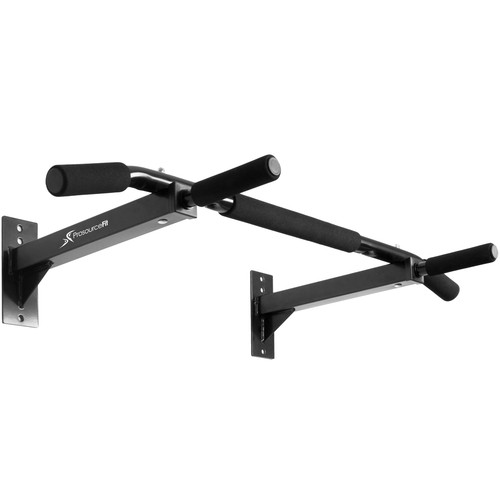
Pictured: ProsourceFit pull-up bar
| Product | Condition | Price | Best For | Mounting Flexibility | Grip Variety |
|---|---|---|---|---|---|
| ProsourceFit Wall-Mounted Pull-Up Bar |
New | $ | Budget pick | Fixed (standard studs) | Multiple grips |
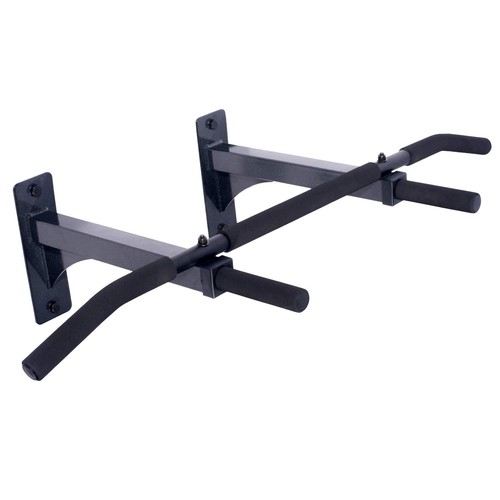 Ultimate Body Press Wall Mount Pull Up Bar with Extra Clearance Ultimate Body Press Wall Mount Pull Up Bar with Extra Clearance |
New | $$ | Extra wall clearance | Fixed (studs) | Angled/wide grips |
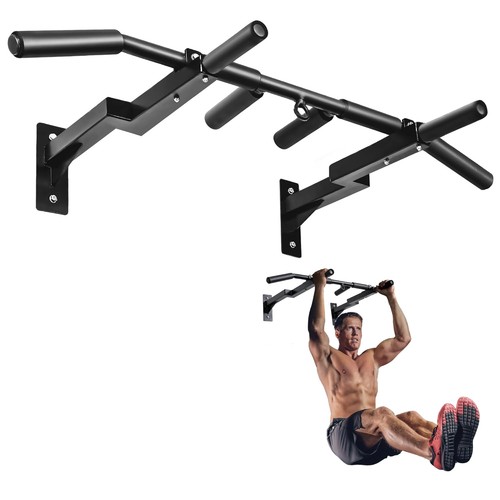 Multi-Grip Wall Mount Pull-Up Bar 16 Inches & 24 Inches Reversible Stud Multi-Grip Wall Mount Pull-Up Bar 16 Inches & 24 Inches Reversible Stud |
New | $$$ | Versatile mounting | 16″ or 24″ studs (reversible) | Multi-grip |
 Solid Steel Wall Mounted Pull Up Bar Solid Steel Wall Mounted Pull Up Bar |
New | $ | Simplest design | Fixed | Single bar |
 BESTHLS Wall Mounted Pull Up Bar Dip Station BESTHLS Wall Mounted Pull Up Bar Dip Station |
New Other (See Details) | $ | Dip + pull-up versatility | Fixed | Pull-up + dip handles |
 HWOOUSA Wall Mount Pull Up Bar HWOOUSA Wall Mount Pull Up Bar |
New | $$ | Heavy-duty pick | Fixed | Standard grips |
 Swedish Ladder Gymnastics Stall Bar Wall Mount Adjustable Pull Up Bar Swedish Ladder Gymnastics Stall Bar Wall Mount Adjustable Pull Up Bar |
New | $$$ | Premium multifunctional | Adjustable bar on ladder | Multiple ladder heights |
Price: $ = budget, $$ = mid-range, $$$ = premium — relative to the options compared above. Live prices and current stock are below.
Wall Mounting: Stud Spacing, Tools Needed, and Safety Considerations
Every wall-mounted pull-up bar on this list requires securely anchoring into wall studs—never just drywall—because bodyweight exercises generate significant force. Most U.S. homes use 16″ or 24″ stud spacing, but not all bars fit both. The Multi-Grip Wall Mount Pull-Up Bar 16 Inches & 24 Inches Reversible Stud stands out for supporting both 16″ and 24″ stud spacing, making it the most flexible option if you’re not sure about your wall’s layout. Standard models like the ProsourceFit Wall-Mounted Pull-Up Bar and Ultimate Body Press Wall Mount Pull Up Bar with Extra Clearance are designed for fixed stud distances (usually 16″), so always measure before purchase.
For installation, you’ll need a stud finder, a power drill (with a 3/16″ or 1/4″ drill bit for pilot holes), a socket wrench, and a level. Most bars include mounting hardware, but double-check that lag bolts and washers are supplied. If not, source heavy-duty lag bolts rated for at least 300 lbs, as recommended by structural fastener standards. Always mount at shoulder height or higher, ensuring at least 12″ clearance above the bar for chin-over-bar movements.
Feature Differences: Clearance, Grip Variety, and Multi-Exercise Capability
Clearance from the wall determines what exercises you can comfortably perform. The Ultimate Body Press bar is engineered for extra clearance, with arms that extend the bar further from the wall (typically 20″-24″, per manufacturer specs), making it more comfortable for strict pull-ups, muscle-ups, or hanging leg raises. In contrast, the Solid Steel pull-up bar is a minimalist, single-bar design mounted close to the wall—ideal for basic pull-ups but limiting for kipping or wide-grip moves.
Grip variety is another key differentiator. The Multi-Grip Reversible Stud bar offers angled, parallel, and wide grips, supporting multiple hand positions for targeting different muscle groups. The ProsourceFit pull-up bar also features multiple grip positions, while the Solid Steel pull-up bar is a straight bar only. If you want to combine dips and pull-ups, the BESTHLS Dip Station adds dip handles, so you can work chest and triceps in addition to back and biceps.
For those seeking a full-body, multifunctional solution, the Swedish Ladder Stall Bar integrates an adjustable pull-up bar with a full ladder, supporting stretching, mobility, and gymnastic strength work—at a premium price and with a more involved installation.
Related Guides
- Electric Foam Rollers That Are Actually Worth Buying
- Smart Inhalers for Asthma: Do They Really Make a Difference?
- Vibration Therapy vs Percussion Therapy: Which Is Right for You?
- Ankle Braces vs Compression Socks: What’s the Difference?
- Top Electric Heating Pads Worth Trying for Effective Pain Relief
- Our guide to How to Set Up a CPAP Machine: A Step-by-Step Guide
- Browse all Device Guides →
Which Pull-Up Bar Fits Your Home Gym?
- Most affordable, multi-grip pull-ups: The ProsourceFit pull-up bar is the clear entry-level pick if you want multiple grip options without extra features or cost.
- Best for tight or simple setups: The Solid Steel pull-up bar has a no-nonsense design—a single bar, minimal wall clearance, and budget pricing. It’s right if you only need basic pull-ups and have limited wall space.
- Need to mount on 24″ studs or want reversible orientation? The Multi-Grip Reversible Stud bar is the most flexible, supporting both common stud spacings. It’s the best match if you have nonstandard framing or want to future-proof your setup.
- Want more exercise options (dips and pull-ups): The BESTHLS Dip Station adds parallel dip bars to the basic pull-up platform, all at a budget price. Installation is similar to other fixed bars, but be sure you have enough wall width for both dip and pull-up handles.
- Extra wall clearance for leg raises or wide swings: The Ultimate Body Press bar is purpose-built for exercises that require more space away from the wall, reducing the risk of scraping knees or feet.
- Heavy-duty, high-capacity training: The HWOOUSA pull-up bar positions itself as the robust choice (by spec, this usually means a higher weight rating and thicker steel), suitable for weighted pull-ups or frequent use.
- All-in-one stretching, mobility, and pull-up station: The Swedish Ladder Stall Bar is a premium, multifunctional solution for serious home gyms. Expect a more complex install and a larger footprint.
Installation Details: Practical Tips for Each Model
Most wall-mounted bars, including the ProsourceFit pull-up bar, Ultimate Body Press bar, and Solid Steel pull-up bar, require the same basic steps: locate studs, mark holes with a level, pre-drill, and lag bolt the brackets into place. The Multi-Grip Reversible Stud bar adds an extra step—choose the orientation and stud spacing (16″ or 24″) before marking holes. The Swedish Ladder Stall Bar typically requires mounting at both the top and bottom, and possibly anchoring to both wall and floor, so allow extra time and check your wall’s load-bearing capacity.
For any model, always use a level for both the mounting brackets and the bar itself—uneven installation can cause wobble or premature wear. If you’re renting, be aware that all these bars require permanent holes and may not be allowed by your landlord.
Long-Term Durability and Weight Limits
Heavy-duty bars like the HWOOUSA pull-up bar are typically rated for higher weight capacities (often 400 lbs or more), making them suitable for users who plan to add weight vests or do explosive movements. Basic models like the Solid Steel pull-up bar usually support standard bodyweight (often 250-300 lbs). For bars with multiple grips or dip handles, check manufacturer specs for load ratings on each grip position—overloading unsupported handles can cause failure.
Corrosion resistance is another consideration. Most bars are powder-coated steel, which resists rust indoors but should not be used in outdoor or damp environments unless explicitly stated. For more on indoor fitness equipment maintenance, see this overview of physical fitness equipment care.
FAQ: Wall-Mounted Pull-Up Bar Instructions and Buyer Concerns
How do I know if my wall can support a pull-up bar?
Always check for wooden studs behind your drywall using a stud finder. Concrete block walls are also suitable, but require masonry anchors. Drywall alone will not support the load—anchoring into studs or solid masonry is a must for safety and longevity.
What’s the difference between 16″ and 24″ stud mounting?
Most U.S. homes use 16″ stud spacing, but some garages and basements have 24″ spacing. The Multi-Grip Reversible Stud bar is the only bar listed here that supports both, making it the safest bet if you’re unsure. Standard bars may not fit 24″ studs—always measure before drilling.
Which bar is better for leg raises: ProsourceFit pull-up bar or Ultimate Body Press bar?
The Ultimate Body Press bar is better suited for leg raises because its extra wall clearance (typically 20″+ from the wall) gives your knees and feet more space during the movement. The ProsourceFit pull-up bar is closer to the wall, which can restrict your range of motion for these exercises.
How long does installation usually take for these bars?
Most standard wall-mounted pull-up bars take about 30-60 minutes to install if you have the right tools and hardware. More complex setups, like the Swedish Ladder Stall Bar, can take up to two hours due to the need for multiple anchor points and precise leveling.
Can I use these bars outdoors or in a humid basement?
Most bars are powder-coated steel, which resists rust indoors but is not intended for outdoor or high-humidity environments. If you plan to use a bar in a damp area, periodically check for corrosion and avoid direct exposure to rain. Always follow the manufacturer’s care instructions for best results.
What if I want to remove the bar later? Will there be damage?
Wall-mounted pull-up bars require lag bolts into studs, which leave holes when removed. These can usually be patched with wood filler and touch-up paint, but the repair may be visible on close inspection. If you rent, check your lease or ask your landlord before installing any permanent hardware.
Is the price difference between the Multi-Grip Reversible Stud bar and the ProsourceFit pull-up bar justified?
If you need to mount on 24″ studs or want reversible orientation for future flexibility, the Multi-Grip Reversible Stud bar justifies its higher price. If your wall is standard 16″ studs and you only need basic multi-grip pull-ups, the ProsourceFit pull-up bar covers all the basics at a lower cost.
Bottom Line: Picking and Installing the Right Wall-Mounted Pull-Up Bar
Choosing a wall-mounted pull-up bar comes down to matching your wall’s stud spacing, the grip and clearance features you want, and your budget. For most home gyms, the ProsourceFit pull-up bar is the best value for basic multi-grip training, while the Multi-Grip Reversible Stud bar is the most versatile for tricky wall layouts or future-proofing. Prioritize installation safety: always anchor into solid studs, use appropriately rated lag bolts, and check level before tightening all fasteners. If you want dip capability or full-body functionality, consider the BESTHLS Dip Station or the Swedish Ladder Stall Bar. For live pricing and availability, see the listings below or browse more wall-mounted pull-up bars here.
Last updated: June 2026 · About our research