9 min read
Disclosure: As an Amazon Associate and eBay Partner Network publisher, we earn from qualifying purchases. This doesn’t affect what we recommend or how we describe it.
Staring at your phone after a tense meeting, you notice your chest feels tight, your hands are clammy, and you can’t seem to catch a deep breath. You’ve heard about biofeedback devices for stress management, but which type actually helps you regain calm—and which ones are little more than fancy gadgets? This guide breaks down the real-world pros, cons, and trade-offs of the major categories, so you can make a decision that fits your needs, tech comfort level, and budget.
What Biofeedback Devices Actually Do—and How That Relates to Stress
Biofeedback devices measure physiological signals—like heart rate, skin temperature, muscle tension, or breathing patterns—and give you real-time feedback. The goal: help you recognize signs of stress in your body and learn to control them. For example, a device might show you how your heart rate drops as you practice slow breathing, or alert you when your muscle tension spikes during a stressful email.
The underlying idea is supported by decades of clinical research: people can learn to influence their autonomic nervous system (the “automatic” part that controls heart rate, sweating, etc.) through conscious practice, especially when given immediate feedback. This is why biofeedback is used in some medical settings for anxiety, migraines, and hypertension. For everyday stress management, the question isn’t whether biofeedback works in principle—it’s which types of devices actually provide meaningful, actionable data outside a clinic.
Major Types of Biofeedback Devices for Stress Management—And How They Differ
Not all biofeedback devices are created equal. Some focus on heart rate variability (HRV), a proven marker of stress and resilience. Others track skin conductance (how much you sweat), muscle tension, or breathing. Here are the main categories you’ll find on the consumer market:
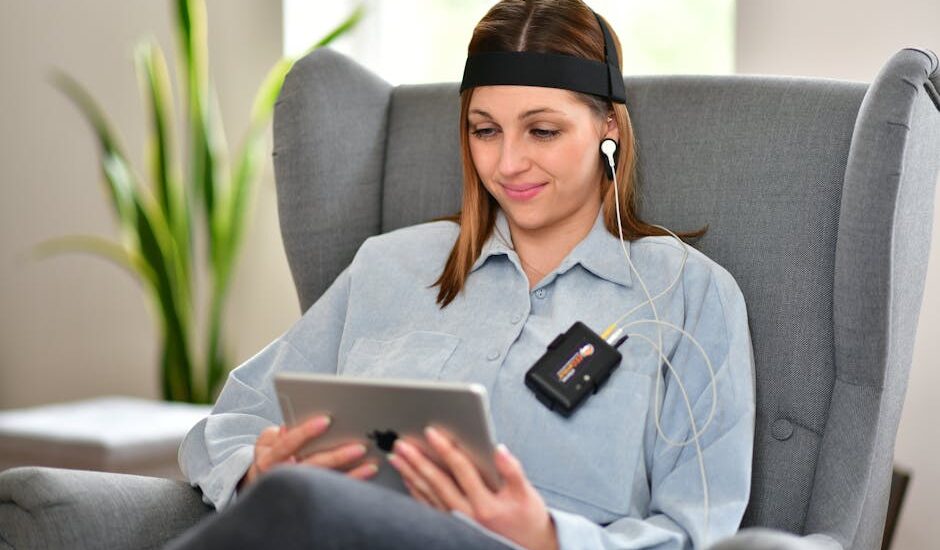
- HRV-based wearables: These use optical or electrical sensors to track your heart’s beat-to-beat changes, typically via wristbands, chest straps, or finger clips. They’re the gold standard for stress-related feedback in a portable format.
- Skin conductance monitors: These measure tiny changes in sweat gland activity (electrodermal activity, or EDA), often with finger or palm sensors. Stress increases EDA, so you get a direct readout of sympathetic nervous system arousal.
- Respiratory/breathing trackers: These use chest straps, abdominal belts, or even smart patches to monitor your breathing rate and depth. Since slow, deep breathing is a proven way to reduce stress, these devices guide you to optimal patterns.
- Muscle tension (EMG) sensors: These track electrical activity in muscles, usually via pads placed on the forehead, shoulders, or jaw. Tension here often correlates with emotional stress or anxiety.
- Multi-sensor platforms: These combine two or more of the above measurements, often integrating with an app to guide you through stress-reduction exercises and track trends over time.
Each category comes with trade-offs in accuracy, comfort, price, and how much actionable insight they deliver. Let’s break down the specifics.
How the Main Options Compare: A Side-by-Side Table
| Type | Best For | Key Signal(s) | Typical Measurement Range | Tech Requirements | Price |
|---|---|---|---|---|---|
| HRV Wearable | Data-driven stress tracking, trend analysis | Heart Rate, HRV | HRV: 20–120 ms SDNN; HR: 40–180 bpm | Bluetooth, App required | $$ |
| Skin Conductance Sensor | Immediate stress response awareness | EDA (μS) | Skin conductance: 0.5–20 μS | App optional, some standalone | $ |
| Respiratory Tracker | Guided breathing, breath retraining | Breathing rate/depth | 6–30 breaths/min; depth: 0.2–2 L | App or display, most Bluetooth | $$ |
| Muscle Tension (EMG) | Jaw/forehead tension, migraine management | EMG (μV) | 0–200 μV (forehead/jaw) | Wired or wireless, setup required | $$$ |
| Multi-Sensor Platform | Comprehensive feedback, coaching | HRV, EDA, Respiration | Varies by sensor type | Smartphone/tablet, app required | $$$ |
Pricing key: $ marks the budget tier, $$ the mid-range, $$$ the premium picks. Tiers are relative to the products in this comparison; actual prices update live below.
Why Heart Rate Variability (HRV) Is the Most Actionable Signal for Most Users
Among all the physiological signals, HRV stands out for stress management. HRV refers to the variation in time between each heartbeat, measured in milliseconds. Higher HRV generally indicates better stress resilience and a more adaptable nervous system. Consumer devices typically report HRV as SDNN (standard deviation of NN intervals) or rMSSD (root mean square of successive differences), with normal ranges for healthy adults from 20 to 120 ms SDNN.
HRV responds rapidly to stressors, relaxation techniques, and even sleep quality. Devices that measure HRV—using either photoplethysmography (PPG, a light sensor) or electrical sensors—can show you, in real time, how your body is reacting. Unlike basic heart rate, which can jump due to caffeine or exercise, HRV gives a more nuanced readout of your stress “load” and recovery.
However, not every device labeled as “HRV-capable” is equally accurate. Look for those that provide raw HRV values (not just “stress scores”), measure at least 250 Hz (sampling rate), and allow for session-based readings of 2–5 minutes to get reliable data. Devices that simply display “relaxed” or “stressed” without showing your HRV number are less useful if you want to track progress over time.
View optionsReal-World Comfort and Usability: What Buyers Overlook
Even the most accurate device won’t help if you never use it. Here are some real-world considerations that don’t always show up in spec sheets:
- Wear location: Wristbands are convenient but can be less accurate for HRV than chest straps or finger sensors. EMG sensors for muscle tension often require sticky pads on the skin, which some users find uncomfortable for daily use.
- Session length: To train stress management, most protocols recommend 5–20 minute sessions. Devices that require elaborate setup or constant calibration often end up in drawers. Simpler is often better for consistent use.
- Data access: Some devices lock your data behind a paywall or require a subscription to see your raw signals. Make sure you can access your history and export data if you want to track long-term trends.
- Battery life: Look for at least 3–5 days between charges for wearables, and 1–2 hours of use per charge for session-based devices. Nothing kills a stress-reduction habit like a dead battery.
Multi-Sensor Platforms: When Are They Worth the Investment?
Multi-sensor platforms combine HRV, EDA, and sometimes respiration or temperature in a single device. These are marketed as the most “comprehensive” biofeedback solutions, but are they worth the extra cost?
For most people focused on daily stress management, a well-designed HRV or EDA-only device is sufficient. Multi-sensor platforms shine if you’re using biofeedback for a clinical condition (like migraine or panic disorder), or if you want detailed coaching and trend analysis across multiple signals. Just be aware that complexity can be a double-edged sword: more sensors mean more things to calibrate, charge, and troubleshoot. These devices almost always require a smartphone or tablet for full functionality.
Compare today’s dealsRelated Guides
Common mistakes to avoid
- Assuming all “stress trackers” are biofeedback devices. Many fitness trackers display “stress” scores calculated from heart rate alone, not true HRV or EDA. These typically lack the accuracy and feedback needed for real stress management training.
- Choosing devices with proprietary “scores” but no raw data. If you can’t see your actual HRV, EDA, or EMG numbers, you can’t validate progress or compare against clinical norms. Always opt for devices that provide access to real physiological data.
- Ignoring comfort and session logistics. Devices that are complicated to set up or uncomfortable to wear tend to gather dust. Prioritize comfort and ease of use over marginal gains in accuracy.
- Overpaying for features you’ll never use. Multi-sensor platforms are tempting, but if you only plan on using guided breathing or HRV feedback, a simpler and less expensive device is often the smarter buy.
- Neglecting device compatibility. Some devices only work with certain smartphones or require specific operating systems. Double-check compatibility before purchasing to avoid frustration.
FAQs: What Buyers Really Ask About Biofeedback Devices for Stress Management
How long does it take to see results from using a biofeedback device?
Most users notice some improvement in stress awareness within the first week of consistent daily practice (10–20 minutes per session). For lasting changes in stress resilience, studies suggest 4–8 weeks of regular biofeedback training are needed.
HRV vs. skin conductance: Which is better for stress management at home?
HRV devices are generally more versatile, offering insights into both acute stress and long-term trends. Skin conductance (EDA) sensors give immediate feedback on stress spikes but are more sensitive to movement and ambient conditions. If you want ongoing tracking and trend data, HRV is the better choice for most users.
Can you use a biofeedback device without a smartphone?
Some basic EDA and EMG devices operate independently, displaying feedback via lights or sounds. However, most HRV and multi-sensor platforms require a smartphone or tablet for data visualization, session guidance, and progress tracking.
What’s the typical warranty or return window for these devices?
Warranties typically range from 1 to 2 years for electronic biofeedback devices. Return windows vary by retailer but are usually 30–60 days. Always check the seller’s policy, especially if you’re buying a device you haven’t tried before.
Do these devices work for everyone, or are there people who shouldn’t use them?
Biofeedback devices are safe for most adults. However, those with implanted cardiac devices (like pacemakers) should consult a healthcare provider before using electrical sensors. People with certain skin conditions may find adhesive pads irritating. These devices are not substitutes for medical care if you have severe anxiety or panic disorders.
How accurate are consumer biofeedback devices compared to clinical tools?
Consumer-grade HRV and EDA devices are generally accurate enough for personal stress management, with HRV readings within 5–10 ms of clinical ECG equipment for most users. EMG devices for home use are less precise than lab setups but still provide useful feedback for muscle tension reduction.
Where to Find Credible Guidance and Further Reading
For a deeper dive into the science behind biofeedback and its applications, the Association for Applied Psychophysiology and Biofeedback offers resources, practitioner directories, and research updates. This is a reputable, non-commercial source trusted by clinicians and researchers in the field.
Bottom Line: What Matters Most When Choosing a Biofeedback Device for Stress?
The best biofeedback device for stress management is the one you’ll actually use, delivers clinically meaningful data (preferably HRV or EDA), and fits your lifestyle and budget. Skip devices that hide your data or require endless setup. Start with a simple, comfortable option—then upgrade only if you need more features. With the right tool and a little practice, you can make stress management a daily habit, not just an aspiration.


Last updated: June 2026 · About our research