9 min read
Disclosure: As an Amazon Associate and eBay Partner Network publisher, we earn from qualifying purchases. This doesn’t affect what we recommend or how we describe it.
The most reliable blood pressure monitors for home use are upper arm cuff models that provide clinically validated accuracy within ±3 mmHg, offer clear digital displays, and fit a wide range of arm sizes. Wrist and finger monitors are more convenient but tend to be less accurate. The best pick for you depends on your arm size, ease-of-use needs, whether you want smartphone syncing, and how often you need to track readings. This guide breaks down the real differences between monitor types, the specs that actually matter, and the common mistakes that can sabotage your readings.
Upper Arm, Wrist, or Finger — What’s the Real Difference?
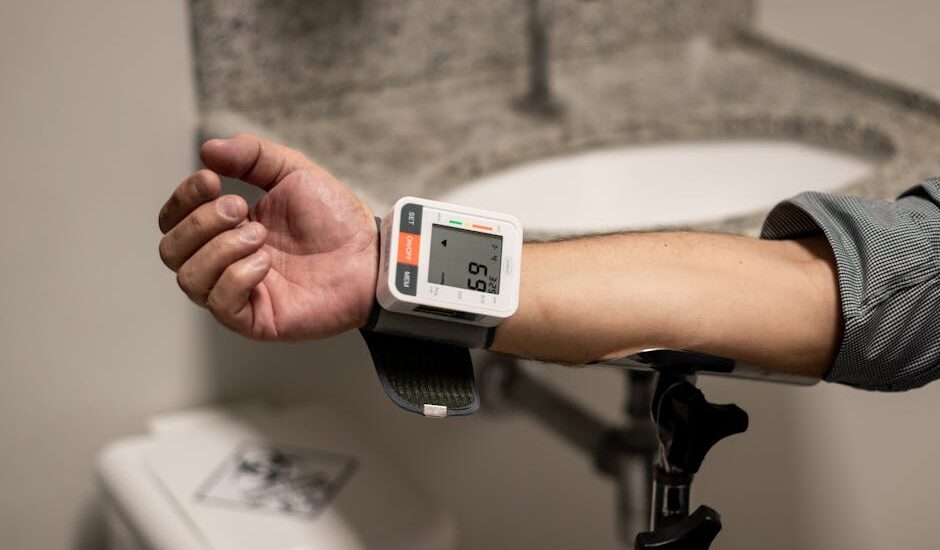
Most people shopping for a home blood pressure monitor see three main types: upper arm cuff, wrist cuff, and finger monitors. Each has trade-offs in accuracy, comfort, and ease of use. Clinical guidelines — including those from the American Heart Association — recommend upper arm cuff monitors for most people. These use an inflatable cuff that wraps around the bicep and are the only type routinely validated for accuracy in medical studies. Wrist monitors are compact and easy to use one-handed, but they’re highly sensitive to arm positioning and are more likely to give false readings if not perfectly aligned with your heart. Finger monitors are even less reliable, and are not recommended for anyone who needs trustworthy results for health management.
If you want the closest results to what you’d get in a doctor’s office, choose an upper arm monitor. Only consider a wrist model if you have a medical need (such as very large arms or limited mobility) that makes arm cuffs difficult to use. Finger monitors are best left for casual curiosity, not health decisions.
How the Main Types of Blood Pressure Monitors Compare
| Monitor Type | Typical Accuracy | Best For | Arm Size Range | Ease of Use | Price |
|---|---|---|---|---|---|
| Upper arm, automatic cuff | ±3 mmHg | Most home users | 22–42 cm | Moderate (may need both hands) | $$ |
| Upper arm, manual inflation | ±3 mmHg (if used correctly) | Users comfortable with manual pumps | 22–42 cm | Hardest (requires coordination) | $ |
| Wrist cuff, automatic | ±5 mmHg | People with limited mobility | 13.5–21.5 cm | Easiest (one-handed use) | $$ |
| Finger monitor | ±7 mmHg (not clinically validated) | Quick checks, not clinical use | — | Easiest | $ |
| App-integrated, smart cuff | ±3 mmHg | Tech-savvy, tracking over time | 22–42 cm | Moderate (needs app setup) | $$$ |
Pricing context: $, $$, and $$$ are relative ratings against the other products listed above, not absolute dollar ranges. Live current prices follow below.
Related Guides
- How to Choose a Sit-Stand Desk Converter for Dual Monitors
- Wearable Hydration Monitors That Are Actually Worth Your Money
- How to Assemble Adjustable Dumbbells: A Step-by-Step Guide
- Our guide to How to Clean CPAP Masks: A Practical Guide for Better Sleep Hygiene
- Our guide to Air Compression Leg Massagers That Are Actually Worth Buying
- Are White Noise Machines Worth It? What the Science Says
- Browse all Buying Guides →
What Makes an Upper Arm Monitor More Reliable?
Upper arm monitors use oscillometric technology — they detect blood flow vibrations as air is released from the cuff. This method is the gold standard for home use and is widely validated against mercury sphygmomanometers (the traditional doctor’s office device). Models with an accuracy rating of ±3 mmHg or better and a validated listing from an independent authority (such as the British and Irish Hypertension Society or the Association for the Advancement of Medical Instrumentation) are the most trustworthy. Look for a cuff that fits your arm: too tight or too loose a fit will skew your readings by as much as 10 mmHg.
Manual inflation models, which require you to squeeze a bulb to inflate the cuff, can be just as accurate — but only if you have the dexterity and patience to use them correctly. For most users, automatic inflation is much simpler and reduces user error.
Fit, Features, and the Hidden Pitfalls of Home Monitoring
The most common source of inaccurate readings is a poorly fitted cuff. Upper arm monitors typically fit arms from 22 to 42 cm in circumference, but some only go up to 32 or 36 cm — a critical distinction if you have larger arms. Always measure your arm at the midpoint between shoulder and elbow before you buy.
Features like large backlit displays, memory storage for multiple users, irregular heartbeat detection, and one-button operation can make daily monitoring less of a chore. Tech-integrated models can sync readings to your phone via Bluetooth, letting you track trends over weeks or months. These are useful if you’re sharing readings with your healthcare provider or managing a chronic condition. Just be aware that app setup can be finicky, and not all apps are equally reliable or private.
Don’t fall for marketing claims about “clinically proven” accuracy unless the device lists a specific validation protocol or independent certification. Real validation means passing a formal protocol such as ISO 81060-2 or being listed by a recognized hypertension society. If you can’t find this detail, assume the accuracy is unproven.
Choosing by User Profile: Who Should Consider Each Type?
- General adult users: Automatic upper arm monitors with digital displays and memory for at least 60 readings.
- People with large or small arms: Look for models offering wide-range cuffs (22–42 cm or larger), or order a specialty cuff if needed.
- Tech-forward users: App-integrated smart cuffs that sync via Bluetooth or Wi-Fi, with trend tracking and export features.
- People with limited dexterity: Wrist monitors (if arm positioning can be done correctly), or upper arm models with “pre-formed” cuffs that hold their shape for easier one-handed fitting.
- Budget shoppers: Manual inflation upper arm models — as long as you’re comfortable using a bulb and reading an analog dial or basic display.
Check current prices for digital upper arm monitors, or see what’s available in wide-range cuff options.
Specifications that actually matter
Accuracy (± mmHg)
This is the single most important spec. A clinically validated monitor should specify accuracy within ±3 mmHg for systolic and diastolic readings. Anything wider than ±5 mmHg is considered unreliable for most health decisions. Always check for independent validation — not just a claim on the box.
Cuff Size Range (cm)
Upper arm monitors list a minimum and maximum arm circumference, usually in centimeters. A common range is 22–42 cm, but some models are much narrower. If the cuff doesn’t fit, your readings will be off by 5–10 mmHg or more. Measure your arm before choosing a monitor.
Memory Storage (number of readings)
For tracking trends, look for models that store at least 60 readings per user. Multi-user memory (e.g., two or four-user profiles) is useful for households. Some app-connected monitors can store unlimited readings in the cloud, but this depends on app reliability.
Power Source (batteries vs. AC)
Most home monitors run on AA or AAA batteries, with typical life of 100–300 readings per set. Some offer optional AC adapters, which are worthwhile if you check your blood pressure daily. Battery-only models are more portable but may cost more in the long run if you check frequently.
Display Readability (digits size, backlight)
A display with digits at least 15 mm tall is easier to read at arm’s length. Backlit LCD screens help in low light. Some models use color-coded indicators to flag high readings, which can be useful for quick interpretation.
Common Mistakes That Skew Your Results
Even the best monitor is only as good as your technique. The most frequent errors are using a cuff that’s too small or large, measuring with your arm unsupported, or failing to rest quietly for 5 minutes beforehand. Crossing your legs, talking, or sitting in a cold room can all raise your reading by 5–15 mmHg. For wrist monitors, failing to keep the device exactly at heart level is the most common pitfall. Always follow the manufacturer’s instructions, and consider taking your monitor to a pharmacist or clinic to check its accuracy against their equipment at least once a year.
For a deeper dive into home blood pressure monitoring and clinical validation standards, see the British and Irish Hypertension Society and American Heart Association sites.
FAQs: Blood Pressure Monitors in Real-World Use
How often should I replace my home blood pressure monitor?
Most digital upper arm monitors remain accurate for 2–5 years, but it’s wise to have them checked against a professional device annually. Cuffs can wear out sooner, especially if used daily or by multiple people. If your readings start to fluctuate wildly, replace the cuff first.
Upper arm vs. wrist monitor — which is more accurate?
Upper arm monitors are generally more accurate for most people, with typical accuracy of ±3 mmHg if the cuff fits properly. Wrist monitors can be off by 5 mmHg or more if not positioned exactly at heart level. Choose a wrist model only if you cannot use an upper arm cuff comfortably.
What arm size do most cuffs fit?
Standard upper arm cuffs fit arm circumferences from 22 to 32 cm, while wide-range cuffs extend up to 42 cm or more. Always measure your upper arm before purchasing, as a poor fit is the leading cause of false readings.
How many readings can a typical monitor store?
Most digital monitors store between 60 and 200 readings per user. Multi-user models divide this storage among profiles, so a two-person monitor with 120-memory will keep 60 readings each. App-integrated monitors may offer unlimited storage, but this depends on the app’s reliability.
Can I use a blood pressure monitor if I have an irregular heartbeat?
Many modern monitors have “irregular heartbeat detection” that flags possible arrhythmias, but they are not diagnostic tools. If you have a known condition, choose a monitor that is validated for use with arrhythmias, and confirm readings with your healthcare provider.
What’s the warranty on most home monitors?
Typical warranties range from one to five years, covering defects in the monitor itself but not always the cuff. Some brands require registration for extended coverage. Always check the warranty terms before you buy, especially if you plan to use the device daily.
Ready to upgrade your setup? Compare today’s deals on validated upper arm monitors, or view options for tech-integrated models with app support.
Bottom line: For most people, a digital upper arm monitor with a clinically validated accuracy of ±3 mmHg and a cuff that fits your arm properly will deliver the most reliable readings. Don’t get distracted by unnecessary features — focus on fit, accuracy, and ease of use. If you want smartphone integration or multi-user tracking, expect to pay a premium, but don’t compromise on the basics. With the right monitor and good technique, you’ll have the information you need to manage your blood pressure confidently at home.
Last updated: June 2026 · About our research