Disclosure: As an Amazon Associate and eBay Partner Network publisher, we earn from qualifying purchases. This doesn’t affect what we recommend or how we describe it.
8 min read
Most portable UV toothbrush sanitizers claim to zap away 99.9% of germs, but what actually separates a reliable, travel-ready sanitizer from a glorified plastic box with a blue light? For anyone serious about oral hygiene on the go, the difference comes down to a handful of technical details—wavelength, exposure time, battery type, and usability quirks—that can make or break both effectiveness and convenience. Here’s how to cut through the marketing haze and choose a portable UV toothbrush sanitizer that genuinely works for your needs. For more detail, see Ultraviolet germicidal irradiation overview.
Why UV-C Wavelength Is Non-Negotiable for Toothbrush Sanitizing
Not all UV light is created equal. Only UV-C light—specifically in the 200–280nm wavelength range—has been shown in lab settings to reliably disrupt the DNA and RNA of bacteria and viruses. Within this band, 254nm is the most commonly cited “germicidal” sweet spot for toothbrush sanitizers. Anything using UV-A or UV-B (315–400nm, 280–315nm) simply doesn’t have the same clinical backing for disinfection.
You’ll see plenty of products boasting “UV” without listing a wavelength. That’s a red flag. Confirm the sanitizer uses a UV-C LED or mercury lamp with a stated wavelength between 253–275nm. Some budget picks fudge this detail or use blue-violet LEDs (405nm), which look impressive but do very little to kill microbes.
If you want the newest model, free returns, and quick shipping, Amazon is the easiest place to compare.
See on Amazon →How the Main Types of Portable UV Toothbrush Sanitizers Compare
Portable UV toothbrush sanitizers split into a few clear design categories, each with pros and trade-offs. Here’s how the main “buying profiles” stack up side by side:
How Portable UV Toothbrush Sanitizer Options Compare
| Buying Profile | UV-C Wavelength | Exposure Time | Battery Type | Capacity | Notable Features | Best For |
|---|---|---|---|---|---|---|
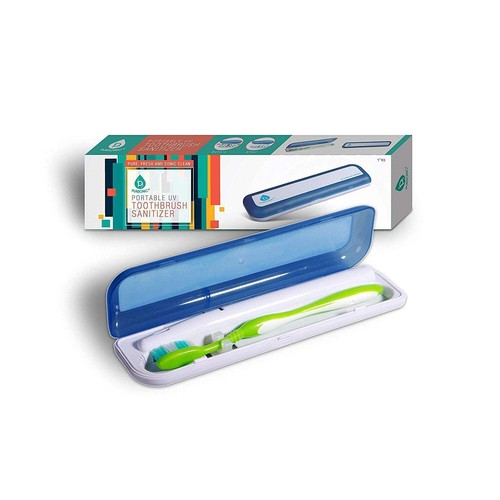
| Single-Brush Snap Case | 253–275nm | 3–7 min/cycle | AAA/AA or USB-rechargeable | 1 manual/standard brush | Fits in pocket, auto shut-off, no liquids required | Solo travelers, everyday pocket carry |
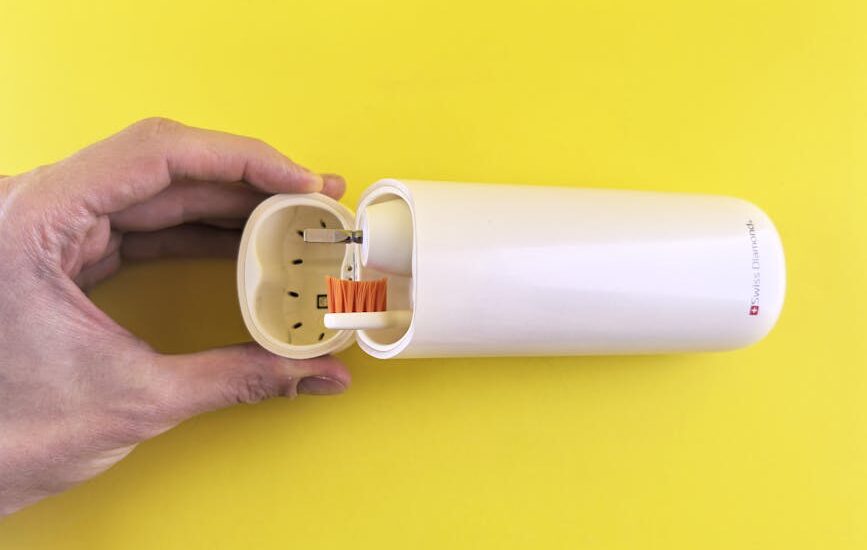
| Multi-Brush Travel Box | 254nm (most), some unstated | 5–10 min/cycle | Rechargeable Li-ion | 2–5 brushes or brush heads | Organizes family brushes, holds toothpaste | Families, couples, group travel |
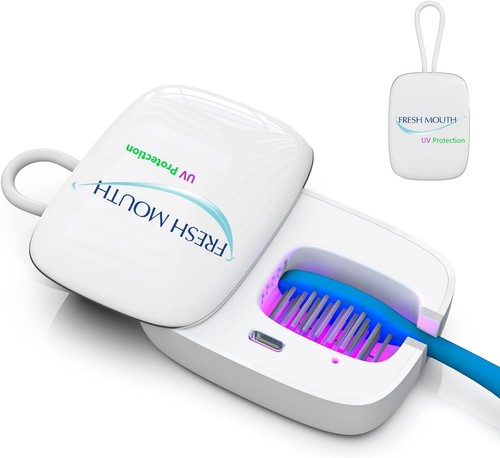
| Electric Toothbrush Head-Only Clip | 260–275nm | 2–5 min/cycle | Button cell or USB | 1 electric brush head | Snaps directly on head, ultra-compact | Electric brush users, minimalist kits |
| Hybrid Toothbrush Holder + Sanitizer | 253–265nm | 3–10 min/cycle | Rechargeable or wall-powered | 1–4 brushes | Wall-mount or stand, doubles as bathroom holder | Home/travel versatility, shared spaces |
Why Exposure Time and Interior Design Matter (More Than You Think)
UV-C in the right range only works if the brush head gets full, direct exposure. Most portable sanitizers run a cycle between 3 and 10 minutes. Shorter cycles (under 2 minutes) may not deliver a high enough dose to inactivate tougher bacteria, especially if the brush bristles are densely packed or wet. Look for a model with at least a 3-minute cycle, and check for an auto shut-off feature to avoid draining the battery.
The interior design also matters: flat, mirrored, or highly reflective surfaces bounce UV-C light around to reach all sides of the bristles. Case designs that cradle the brush so it doesn’t rest flush against plastic are superior for even exposure. In contrast, cases that “sandwich” the brush head between opaque walls can leave shadowed areas untouched by UV-C, undermining the whole process.
Some high-end options include a “drying” function using a tiny fan or desiccant to reduce moisture. This isn’t essential for germicidal action, but it does help prevent mold or musty smells if you routinely pack a damp brush.
Battery Choices: Disposable, Rechargeable, or Wall-Powered?
Power source is often overlooked, but it has a direct impact on both usability and reliability:
- AAA/AA Battery: Most common in basic snap cases. One set typically lasts 1–3 months with daily use. Easy to replace, no cords needed, but not eco-friendly if you travel often.
- USB Rechargeable: Found in advanced or multi-brush cases. A full charge can last 1–2 weeks (roughly 10–20 cycles) depending on the battery (usually 400–800mAh). No disposable waste, but you need to remember to charge it—if it dies mid-trip, you’re out of luck unless you have a cable handy.
- Wall-Powered: Hybrid home/travel options sometimes require plugging in. This isn’t practical for pure travel, but can be helpful if you want one device for both home and away.
For true portability, USB-rechargeable or AAA-powered models are the most practical. If you’re going off-grid or on long trips without charging options, stick with disposable batteries.
View optionsWhat Actually Gets Killed? Clinical Context for UV Toothbrush Sanitizers
Lab studies confirm that UV-C light at 254nm can reduce common oral bacteria (like Streptococcus mutans, E. coli, and Candida) on toothbrush bristles by over 99%—but only with direct, prolonged exposure. Viruses and fungal spores are more resistant and may require higher doses or longer cycles. Importantly, UV-C does not remove debris, toothpaste residue, or biofilm: it only inactivates the DNA of microbes on exposed surfaces.
Real-world use introduces variables: a brush packed with toothpaste or stored dripping wet may block UV-C from reaching all bristles. For best results, rinse and shake excess water off your toothbrush before placing it in the sanitizer. UV-C also won’t neutralize strong odors instantly—drying functions or periodic manual cleaning are still needed if your case gets funky.
Common Mistakes to Avoid When Choosing a Portable UV Toothbrush Sanitizer
- Buying “UV” devices without a stated wavelength: If the product doesn’t specify 253–275nm, assume it’s not genuine UV-C and skip it.
- Assuming all cases fit electric toothbrushes: Many snap cases only accommodate slim manual brushes. If you use a large or oddly-shaped electric brush head, check internal dimensions (usually 1–1.5 inches wide, 6–8 inches long for full cases).
- Overlooking cycle length: A 1-minute quick cycle sounds convenient, but may not deliver enough UV-C dose for real disinfection. Stick to at least 3 minutes per cycle.
- Ignoring power source: If you travel internationally, a USB or battery-powered model avoids voltage compatibility headaches.
Who Should Skip a UV Toothbrush Sanitizer (and Who Actually Benefits)
Portable UV toothbrush sanitizers are genuinely useful for frequent travelers, anyone sharing bathrooms, or those with compromised immune systems who want to minimize germ exposure. They’re less crucial if you store your toothbrush in a well-ventilated, private space and replace it every 3–4 months as recommended by dental associations. For most healthy adults, the incremental hygiene benefit is small but real—especially if you’re on the road and can’t air-dry your brush between uses.
One group that should avoid UV sanitizers: anyone with a toothbrush containing natural bristles or materials sensitive to UV light. Prolonged UV-C exposure can weaken or discolor natural fibers over time.
See what’s availableHow to Tell If a Portable UV Toothbrush Sanitizer Is Actually Working
Most sanitizers include a small indicator light to show when the cycle is running. Some add a “window” so you can see the UV-C lamp or LED glowing (never stare directly at it). The real test: after a cycle, the brush should be dry to the touch, smell neutral, and show no visible residue. If you’re concerned about performance, some dental professionals recommend using a plaque-disclosing tablet on your brush before and after a sanitizing cycle as a crude visual check—though this isn’t a laboratory test, it can highlight missed spots if your sanitizer’s interior design is flawed.
If you want the newest model, free returns, and quick shipping, Amazon is the easiest place to compare.
Compare Options on Amazon →FAQs: Portable UV Toothbrush Sanitizers
Does UV-C light damage toothbrush bristles?
Prolonged, repeated exposure to UV-C can weaken certain materials over time, especially natural bristles or soft plastics. Most synthetic nylon bristles tolerate typical sanitizer cycles (3–10 minutes daily) without noticeable wear for the life of the toothbrush. Avoid using UV sanitizers on brushes with wood or natural fiber handles.
How often should I run the sanitizer cycle?
For most users, running a cycle after each brushing session (2–3 times daily) is sufficient. There’s no harm in running it more often, but you’ll use up batteries or charge cycles faster with little added benefit. Always start with a rinsed, mostly dry brush for best results.
Can a portable UV sanitizer replace regular toothbrush replacement?
No. Even with daily use, UV sanitizers do not remove physical debris or worn bristles. Dental associations still recommend replacing your toothbrush every 3–4 months, or sooner if the bristles fray. UV-C is a supplement, not a substitute, for manual cleaning and replacement.
Are UV toothbrush sanitizers safe for children’s brushes?
Most are safe for synthetic, child-sized brushes, but always check the manufacturer’s sizing. Avoid using on brushes with decorative coatings or stickers, which may fade or peel under UV-C light. Supervise young children to prevent accidental exposure to active UV-C lamps.
How do I know if my sanitizer really uses UV-C and not just blue LEDs?
True UV-C LEDs or bulbs emit light in the 253–275nm range and are invisible or faintly blue-white, not deep blue or purple. Check the product’s documentation for a stated wavelength. If it only mentions “UV” or glows bright blue, it may not be genuine germicidal UV-C.
Do I need to use any special cleaning solution with a UV sanitizer?
No additional chemicals are needed. UV-C works via light, not liquid. However, it’s smart to periodically wipe down the inside of the case to remove buildup, as UV-C won’t clean away toothpaste residue or grime.
Bottom Line: What Actually Matters When Choosing a Portable UV Toothbrush Sanitizer
Forget generic claims and focus on UV-C wavelength (253–275nm), exposure time (at least 3 minutes), and a power source that fits your travel style. The best portable UV toothbrush sanitizer isn’t the flashiest or the most expensive—it’s the one that fits your brush, delivers real germicidal UV-C, and won’t die on you mid-trip. For anyone who wants a practical hygiene boost on the go, a well-designed UV-C snap case or travel box delivers real peace of mind—just don’t expect miracles, and keep replacing your brush as usual.