Disclosure: As an Amazon Associate and eBay Partner Network publisher, we earn from qualifying purchases. This doesn’t affect what we recommend or how we describe it.
7 min read
Most body fat calipers on the market claim accuracy within a fraction of a millimeter. In practice, the difference between a tool that helps you track fat loss and one that collects dust in your drawer comes down to three things: jaw tension, calibration, and your actual measurement skill. The best caliper for you isn’t necessarily the most expensive or the one with the fanciest display — it’s the one that fits your hand, matches your commitment to tracking, and delivers repeatable results within a realistic margin of error. Here’s how to separate marketing from what actually matters, and how to choose a body fat caliper you’ll actually use. For more detail, see CDC: Assessing Your Weight.
Why Precision Matters More Than “Accuracy” in Body Fat Calipers
Most body fat calipers promise accuracy to ±0.2 mm, but the real-world variable is you. Even the gold-standard calipers used in clinical studies rely on consistent pinch technique and correct site placement — not just mechanical precision. The best calipers make it easy to repeat the exact same measurement, with a jaw tension (spring force or click stop) that delivers consistent pressure: typically 10g/mm² for professional-grade models. If you’re comparing options, look for tools that specify jaw pressure, not just jaw opening or scale increments. Repeatability — not the absolute number — is what lets you track real change over time.
If you’ve narrowed your shortlist and want new stock with free returns, Amazon is the practical choice.
Check Amazon →Manual, Digital, and “Smart” Calipers: What Actually Changes
Body fat calipers break down into three categories:
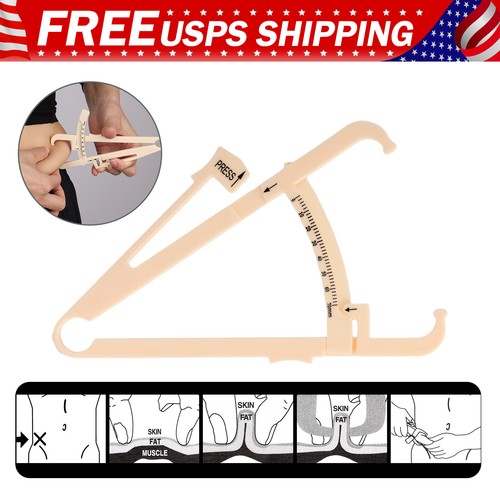
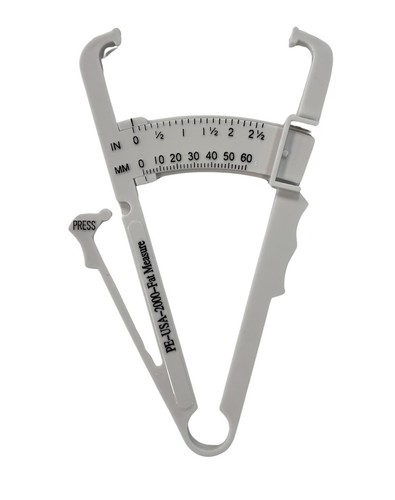
- Manual calipers: Classic, spring-loaded or click-stop. Rely on your visual reading and hand pressure. Measurement scales are usually in millimeters, with ranges from 0-60mm or 0-80mm.
- Digital calipers: Display readings via LCD, sometimes with memory for multiple sites. Still require manual pinch, but remove scale-reading guesswork. Battery life is typically 6-12 months with average use.
- “Smart” or app-connected calipers: Pair with phone apps to log data. Some offer guided measurement sites or trend tracking. Added tech can help with consistency, but only if you’re committed to regular use.
The core difference? Manual models force you to learn technique. Digital and smart calipers can reduce reading errors, but don’t fix technique mistakes. Price jumps with added tech, but measurement reliability still depends on your skill.
How the Options Compare: Key Differences at a Glance
| Profile | Measurement Range | Jaw Tension | Readout Type | Best For | Current Deals |
|---|---|---|---|---|---|
| Basic manual caliper | 0-60mm | Manual, no spring | Analog scale | First-timers, budget tracking | Check current prices |
| Spring-loaded manual | 0-80mm | 10g/mm² spring | Analog scale | Repeatable measurements, multiple users | See what’s available |
| Digital readout caliper | 0-60mm | Manual or spring | LCD (0.1mm increments) | Easy reading, app-averse users | Compare today’s deals |
| App-connected caliper | 0-50mm | Spring or manual | Digital + app sync | Tech-savvy, tracking trends | View options |
| Professional/clinical caliper | 0-80mm | Calibrated spring, certified | High-contrast scale | Trainers, research, clinics | Check current prices |
What Actually Affects Your Measurement: Jaw Tension, Scale Resolution, and Hand Fit
Most home users overlook jaw tension — the pressure the caliper applies to the skinfold. Professional calipers specify 10g/mm²; cheap models may be stiffer or looser, leading to inconsistent pinches. If your caliper doesn’t specify jaw tension, expect more variability between readings. Scale resolution is the next differentiator: basic calipers may only offer 1mm increments, while digital options go to 0.1mm. For tracking small changes (especially under 20mm), finer increments help, but only if you’re consistent in site placement and pressure. Finally, hand fit matters: a tool that’s too big or too slippery won’t let you measure one-handed, which increases error and frustration.
Manual Versus Digital: When Simplicity Wins (and When It Doesn’t)
Manual calipers win on durability and cost. There’s nothing to break, and you never worry about batteries dying mid-measurement. But if your eyesight struggles with small scale markings or you want to log multiple sites quickly, a digital readout can save time and reduce reading error. The trade-off: digital calipers require batteries (usually CR2032 coin cells), and cheap models sometimes lose calibration after drops or rough handling. For most home users tracking progress rather than clinical research, the difference in body fat percentage calculation is negligible — as long as you’re consistent in your method.
Related Guides
How to Choose the Right Jaw Opening and Scale for Your Body Type
Jaw opening — the maximum skinfold thickness a caliper can measure — typically ranges from 40mm (entry-level) to 80mm (professional). If you’re measuring larger sites (abdomen, thigh) or have higher body fat, a 60mm+ opening prevents “bottoming out” the jaws and underestimating your reading. For athletic or lean users, a 40mm jaw is sufficient and often easier to handle. Scale clarity matters: look for high-contrast markings or digital readouts with at least 0.1mm resolution if you want to spot small changes. For multi-user households, adjustable tension or robust springs help keep measurements consistent across hands and users.
Clinical Context: How Calipers Compare to Other Body Fat Methods
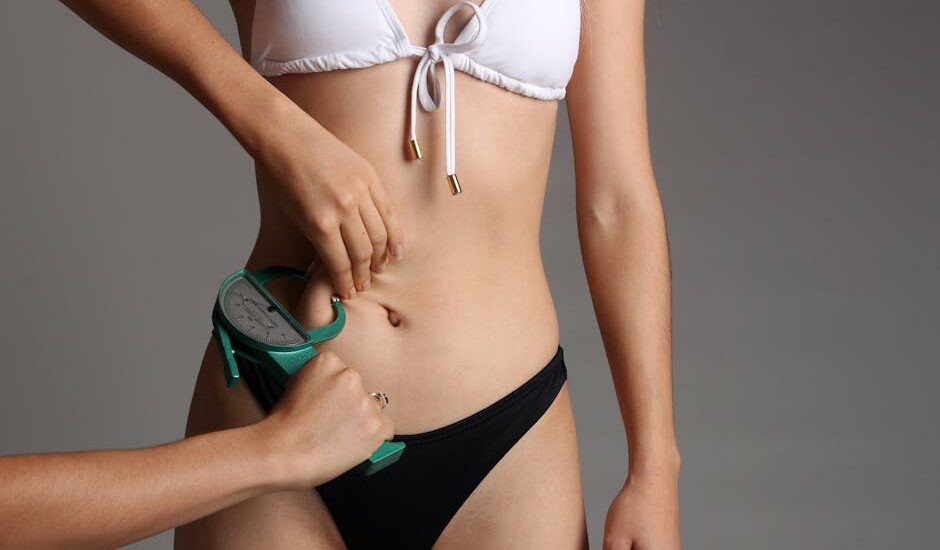
Calipers don’t measure body fat directly — they estimate subcutaneous fat at specific sites, then use equations (like Jackson-Pollock or Durnin-Womersley) to calculate body fat percentage. In research, skilled technicians using calibrated calipers can achieve a margin of error around ±3–4% body fat compared to gold-standard DEXA scans. For home users, expect a wider margin, especially if you’re still learning technique. Calipers are more sensitive to change than bathroom scales or BIA (bioelectrical impedance) devices, but only if you measure the same site, at the same time of day, under similar hydration and temperature conditions. Consistency trumps absolute number: the best caliper is the one you can use the same way, every time.
Common Mistakes: Where Users Go Wrong With Body Fat Calipers
Even with a high-quality tool, technique errors sabotage results. The most common mistakes:
- Pinching too much muscle: Only subcutaneous fat should be measured. Pinch perpendicular to the skin, not at an angle.
- Inconsistent site location: Use a marker or photo to ensure you’re measuring the same spot each time.
- Measuring after exercise or showering: Heat and hydration can affect skin thickness. Always measure under similar conditions.
- Using the wrong equation for your body type/sex: Different formulas exist for men and women, and for different site numbers. Choose one and stick with it for trend tracking.
Most errors are technique, not tool. Even the most expensive caliper can’t compensate for inconsistent measurement habits.
Who Should Consider a Professional-Grade Caliper?
If you’re a personal trainer, coach, or plan to measure multiple people regularly, a professional-grade caliper with certified jaw tension, a wide measurement range (up to 80mm), and easy-to-clean surfaces is worth the investment. These models hold calibration longer, and their heavier build gives more control for one-handed operation. For solo home users tracking long-term trends, a mid-range digital or spring-loaded manual caliper is usually sufficient — but avoid ultra-cheap plastic models that flex or lose tension after a few months.
If you’ve narrowed your shortlist and want new stock with free returns, Amazon is the practical choice.
Compare Options on Amazon →FAQ: Real Questions About Body Fat Calipers
How accurate are body fat calipers for home use?
Most home users can expect a margin of error of ±3–5% body fat compared to DEXA scans, assuming consistent technique. The tool’s precision is less important than your measurement consistency and site selection.
Do digital calipers give more reliable results than manual ones?
Digital calipers make it easier to read small differences and reduce human error when reading the scale. However, they don’t improve measurement accuracy if your technique or site placement is inconsistent. Both types are reliable if used correctly.
Can I use body fat calipers on myself, or do I need another person?
You can use calipers on yourself, especially for easily reached sites like the abdomen or thigh. Some sites (like the triceps or back) are easier with a partner, but practice can help you manage solo measurements with most models.
What body fat percentage equations should I use with caliper measurements?
Popular equations include Jackson-Pollock 3, 4, or 7-site formulas and Durnin-Womersley. Choose one based on your sex and number of sites you can reliably measure, and stick with it for trend tracking.
How often should I measure body fat with calipers?
Weekly or biweekly is typical for tracking trends without overreacting to daily fluctuations. Always measure at the same time of day, under similar hydration and temperature conditions for consistency.
Are more expensive calipers always better?
Not always. Higher prices often reflect better build quality, jaw tension calibration, and durability. However, for most home users, a well-made mid-range caliper offers similar results if used with good technique.
Bottom Line: The Best Caliper Is the One You’ll Actually Use
Chasing the “most accurate” body fat caliper is a distraction if your technique isn’t consistent. Prioritize jaw tension (aim for 10g/mm² if specified), a measurement range that covers your skinfold, and a scale or display you can read easily. Manual models win on simplicity and durability; digital or app-connected options help with logging and trend tracking. Ultimately, the best body fat caliper is the one that fits your hand, your routine, and your willingness to repeat the same measurement — not just the one with the most features or highest price tag. View options and choose the one that matches how you’ll actually use it.