
8 min read
Disclosure: As an Amazon Associate and eBay Partner Network publisher, we earn from qualifying purchases. This doesn’t affect what we recommend or how we describe it.
Home vein finders are a niche but essential tool for three very different groups: people managing home infusions or injections who want to reduce failed sticks, caregivers supporting elderly or pediatric family members with tricky veins, and first-aid enthusiasts preparing for emergencies where quick vein access matters. Each group has a distinct need—precision, ease, or speed—and not every device serves them equally well. The two leading products on the market, the Veinlite LED+ Vein Finder Rechargeable LED Plus Vein Transilluminator and the Veinlite EMS Pro Vein Finder Emergency Vein Access Device, are both built on professional-grade technology, but their strengths are different. This guide breaks down how they compare, who each one is best for, and what you need to know about using a vein finder at home.
Top picks at a glance
- Veinlite LED+ Vein Finder Rechargeable LED Plus Vein Transilluminator — the premium professional option
- Veinlite EMS Pro Vein Finder Emergency Vein Access Device — best for emergency use
Comparing the leading home vein finders

Pictured: Veinlite LED+
| Product | Condition | Price | Best For | Light Source | Rechargeable |
|---|---|---|---|---|---|
| Veinlite LED+ Vein Finder Rechargeable LED Plus Vein Transilluminator |
New | $$$ | Premium professional option | LED | Yes |
 Veinlite EMS Pro Vein Finder Emergency Vein Access Device Veinlite EMS Pro Vein Finder Emergency Vein Access Device |
New | $ | Emergency use | LED | — |
About the $ symbols: they’re a quick budget/mid/premium read of where each option sits relative to the others in this comparison. See current prices in the live listings below.
What makes a home vein finder effective?
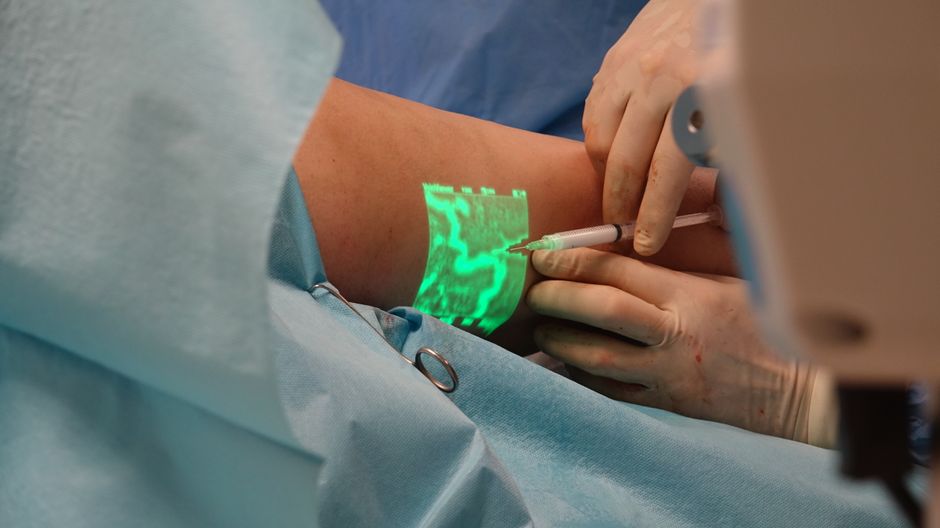
Finding a vein—especially in older adults, children, or anyone with hard-to-see veins—can be frustrating and painful if you miss. The best home vein finders use transillumination: strong LED light shines through the skin, making veins stand out as dark lines. Both the Veinlite LED+ and Veinlite EMS Pro use this principle, with a circular light array that creates a “shadow” effect around the vein for visibility. The difference comes down to features, power source, and real-world use cases.
Professional-grade precision: Veinlite LED+
The Veinlite LED+ is designed for clinicians but is accessible to advanced home users who want top-tier performance. Its key strengths are a rechargeable battery (no scrambling for disposables), a robust LED array, and a durable build. The LED+ typically includes a combination of red and orange LEDs—red for deeper veins, orange for superficial ones—giving you flexibility across skin tones and thicknesses. The device’s ring diameter and light intensity are tuned for consistent, repeatable results. If you’re dealing with regular home infusions, or supporting someone with chronic conditions that require frequent venipuncture, this device is engineered to minimize missed sticks and discomfort. The higher price reflects its professional pedigree and rechargeable convenience.
Emergency readiness: Veinlite EMS Pro
The Veinlite EMS Pro targets a very different scenario: rapid, reliable vein access in emergencies. It’s a favorite among EMTs and first responders for its simplicity and portability. The EMS Pro uses a single-use battery (typically AA or AAA), so you can stash it in a first aid kit or go-bag without worrying about recharge cycles. Its no-frills design means fewer breakable parts and faster deployment. This is the right pick if you want a dedicated backup for urgent situations, or if you’re supporting someone who might need sudden IV access at home. For daily or frequent use, the lack of rechargeable power and fewer light options may be a drawback, but for occasional, critical use, it’s hard to beat for the price.
Related Guides
- Air Purifiers vs Humidifiers: Which One Does Your Home Really Need?
- Our guide to Digital Otoscopes for Home Use: Which Ones Are Worth Buying?
- Red Light Therapy Panels for Home Use: What to Know Before You Buy
- Acupressure Mats Worth Trying for Home Wellness
- Top Electric Nail Files Worth Trying for Salon-Quality Results at Home
- Browse all Buying Guides →
Choosing the right vein finder for your needs
If you need a device for daily or weekly use—especially for home infusion therapy, insulin injections, or blood draws—the Veinlite LED+ is the strongest match. Its rechargeable design and multi-wavelength LED array justify the premium price for regular users who want reliability and comfort. If your priority is having a tool on hand for emergencies, or you need something affordable that’s ready to go out of the box, the Veinlite EMS Pro offers the core functionality without the higher cost or extra features. Both are compact and easy to handle, but the LED+’s build and feature set are overkill for occasional use.
Total cost of ownership
Beyond the upfront device cost, a home vein finder has a few ongoing or hidden expenses that are easy to overlook:
- Batteries or charging: The Veinlite EMS Pro requires replacement batteries (typically AA or AAA). For infrequent use, this is negligible, but regular users could spend $10–$20 per year on batteries. The Veinlite LED+ is rechargeable, but its battery will eventually degrade; replacement batteries (if available) may cost $20–$40 every few years.
- Disposable covers: For hygiene, especially if sharing the device, you’ll want to use disposable plastic covers or sleeves. Official Veinlite covers are sold in packs (often $15–$30 per 50), adding $30–$60 per year for frequent users.
- Cleaning supplies: Alcohol wipes or disinfectant sprays are needed to clean the device between uses, especially in multi-user households. Budget $10–$20 a year.
- Replacement bulbs/LEDs: While LEDs are long-lasting (often 10,000+ hours), if the device is heavily used, eventual LED failure is possible. Out-of-warranty repairs or replacements can cost $50–$100, though this is rare.
- Storage cases: A protective carrying case is not always included. If you want one, expect to pay $10–$25 extra.
These costs are minor compared to the initial purchase, but for budget-conscious buyers—or those planning frequent use—they do add up over time.
How we selected these vein finders
To build this guide, we compared every currently available home-use vein finder with a proven record in professional and home settings. The main criteria were: reliability of vein visualization (LED type and arrangement), power source (rechargeable vs disposable), suitability for both routine and emergency use, listed durability, and brand reputation in medical settings. We prioritized devices with clear specification sheets and a track record of use in both clinical and home environments. Products that lacked explicit power details, or that were bundled with unnecessary accessories, were excluded for clarity. Off-brand or generic models with no stated specs or unclear warranty were also left out. This guide is for people who need reliable, device-assisted vein visualization at home—if you rarely need this or are uncomfortable with any form of self-venipuncture, you’re likely better served by professional care or simpler first-aid tools.
For more background on safe venipuncture and home infusion, see the Infusion Nurses Society, which sets widely-followed standards for vascular access and home infusion safety.
Frequently asked questions about home vein finders
How does a vein finder actually work?
Vein finders like the Veinlite LED+ and EMS Pro use transillumination—LED light passes through the skin, and veins appear as darker lines because they absorb more light. This makes them stand out visually, especially in patients with hard-to-see veins. The circular design helps isolate a single vein for easier access.
How long do the LEDs and batteries last in these devices?
The LEDs in both devices are rated for thousands of hours—typically 10,000 or more—so under normal home use, they should last several years. For power, the Veinlite LED+’s rechargeable battery may need replacing every 2–4 years with regular use, while the EMS Pro’s disposable batteries last several sessions but should be replaced after prolonged storage or heavy use.
Veinlite LED+ vs EMS Pro—what’s better for regular home injections?
For routine injections or infusions, the Veinlite LED+ is the better fit. Its rechargeable battery, dual-wavelength LEDs, and robust build are designed for repeated, comfortable use. The EMS Pro is more barebones, making it ideal for emergencies but less convenient for daily or weekly procedures.
What if I have very dark or thick skin—will these devices still work?
Both models use high-intensity LEDs, and the Veinlite LED+’s multiple wavelengths (typically orange and red) are specifically chosen to improve vein visibility across a range of skin tones and thicknesses. However, in some cases, extremely deep veins may still be hard to visualize; clinical skill and proper positioning are just as important as the device itself.
Are these devices safe to use at home without medical training?
While the devices themselves simply visualize veins, any procedures involving needles or blood draws at home should be done with proper training and under medical guidance. The UK National Health Service provides guidelines on safe injection techniques. The vein finder is a tool to assist, not a substitute for clinical skill.
Can I return or exchange a vein finder if it doesn’t work for me?
Return and warranty policies vary by seller and region. Most reputable suppliers offer at least a 30-day return window for new, unused devices, but hygiene rules may apply. Always check the specific seller’s policy before purchasing, especially if you’re unsure about compatibility or fit.
Do I need special accessories or covers to use these devices safely?
Disposable covers are recommended, especially if the device will be used on multiple people. This helps prevent cross-contamination. Alcohol wipes or disinfectant sprays are also important for cleaning the device after each use. While not strictly required, these accessories are considered best practice for home medical equipment.
The bottom line
Choosing between the Veinlite LED+ and Veinlite EMS Pro comes down to how often you plan to use the device and in what context. For daily or frequent needs, the LED+ offers greater comfort, flexibility, and long-term savings. For those wanting a simple, reliable backup for emergencies, the EMS Pro delivers core functionality at a lower upfront cost. Both are miles ahead of generic or unbranded alternatives in terms of reliability and safety. As always, make sure you’re comfortable with safe injection and vein access techniques, and consult a healthcare professional if you’re unsure.
Last updated: June 2026 · Editorial standards