Disclosure: As an Amazon Associate and eBay Partner Network publisher, we earn from qualifying purchases. This doesn’t affect what we recommend or how we describe it.
10 min read
Even a slight drop in bedroom humidity can trigger dry skin, stuffy noses, and restless sleep for babies — but too much moisture risks mold and dust mites. The sweet spot is narrow: pediatricians often recommend keeping nursery humidity between 40% and 50%. The challenge is finding a humidifier that reliably holds this range, runs quietly enough for naps, and won’t turn cleaning into a daily headache. Most “baby” humidifiers on the market look similar, but the differences in mist output, tank design, and safety features are anything but trivial once you actually set them up in a real bedroom.
Why Nursery Humidity Matters More Than You Think
Infants are more sensitive to dry air than adults. Their airways are smaller, so even a little congestion can disrupt sleep and feeding. Research suggests that humidity below 30% can dry out nasal passages, making babies more prone to stuffy noses, coughs, and even nosebleeds. On the other hand, humidity above 60% increases the risk of dust mites, mold, and bacterial growth — problems that can trigger allergies or worsen respiratory conditions.
That’s why the American Academy of Pediatrics suggests aiming for a 40–50% humidity band in the nursery. This range keeps the air moist enough to soothe delicate skin and airways, but not so wet that you’re encouraging mold. A reliable, well-matched humidifier is the most practical way to keep your baby’s bedroom in this zone, especially during winter or in dry climates.
Amazon is the simplest path when you want the newest model, Prime shipping, and a no-questions-asked return window.
Shop Humidifiers →What Actually Sets “Baby” Humidifiers Apart?
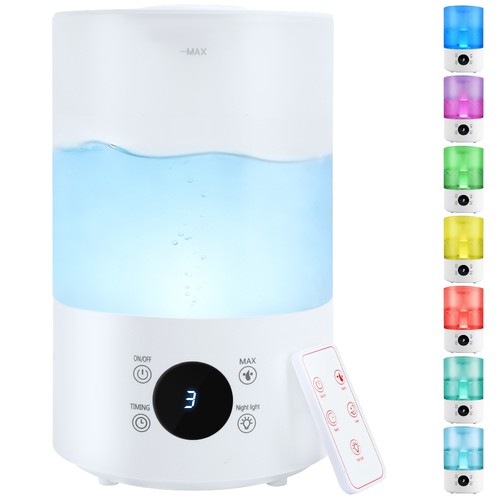
Many humidifiers are marketed for nurseries, but most are simply compact ultrasonic models with a pastel color scheme. What actually matters for use around babies comes down to a few technical and safety details:
- Noise output: Units that operate above 40dB can disrupt light sleepers. Look for models that specify a noise level of 30–35dB at low settings — about as loud as a quiet library.
- Tank size and runtime: A 1–1.5L tank typically runs 8–12 hours on low, enough for overnight use in a small bedroom. Larger tanks (2–4L) can go 24+ hours, but may be bulkier and harder to clean.
- Cleaning access: Mold risk is highest in tanks with narrow openings or lots of nooks. Wide-mouth tanks (at least 70mm diameter) are dramatically easier to scrub and rinse.
- Cool mist vs. warm mist: Pediatricians generally recommend cool mist for babies. Warm mist units can burn if tipped, and add heat to the room — not ideal for sleep safety.
- Auto shut-off and tip-over protection: Essential for peace of mind if you’re running the humidifier while you sleep.
- Mist output control: Adjustable dials or digital settings let you fine-tune mist to keep humidity in the 40–50% range, rather than flooding the room or running too dry.
Many “cute” or themed options skip these basics in favor of aesthetics. The best choice is one that prioritizes safety, hygiene, and precise control over room conditions.
How the Options Compare: Real-World Buying Profiles
| Buying Profile | Best For | Tank Size & Runtime | Noise (dB) | Cleaning Access | Humidity Control | Safety Features | Price Range |
|---|---|---|---|---|---|---|---|
| Ultra-Quiet, Compact | Light-sleeping babies, small rooms | 1–1.5L / 8–12 hrs | 30–35dB | Wide mouth (≥70mm) | Manual dial, 2–3 levels | Auto shut-off, tip-over | $30–$50 |
| Large-Capacity, Low-Maintenance | Parents who want less refilling/cleaning | 3–4L / 24–36 hrs | 35–40dB | Removable base, wide mouth | Digital humidistat, timer | Auto shut-off, filter change alert | $60–$100 |
| Budget-Friendly Entry | Occasional use, travel, tight budgets | 0.5–1L / 4–8 hrs | 35–40dB | Small opening (≤50mm) | Single setting | Auto shut-off | $20–$35 |
| Tech-Integrated (Smart) | Parents who want app control/monitoring | 2–3L / 12–24 hrs | 30–38dB | Wide mouth, dishwasher-safe parts | Digital humidistat, app alerts | Auto shut-off, child lock | $70–$150 |
Want to see which profile fits your space and sleep routine? Compare today’s deals for real-world pricing and availability.
Why Noise Ratings and Mist Output Matter at Night
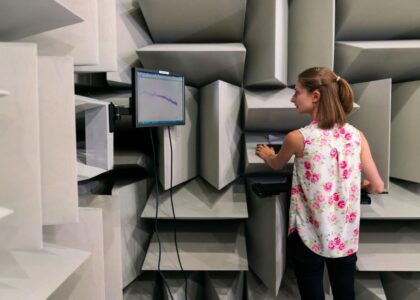
Babies spend up to 16 hours a day asleep — and many are easily startled by unfamiliar sounds. Even a humidifier that sounds “quiet” in the store can seem loud in a silent nursery at 2am. Look for published noise ratings: 30–35dB is a good target for overnight use, equivalent to a whisper or soft rustling leaves. Models with adjustable mist output let you run on the lowest setting at night, further reducing noise and minimizing over-humidification.
Some units feature “sleep mode” or lights-off settings, which can be helpful if your baby is sensitive to LEDs or display glow. If you use a white noise machine, check that the humidifier’s sound blends in rather than competing with it.
Cleaning: The Hidden Dealbreaker Most Parents Discover Too Late
Humidifiers left uncleaned can breed mold, bacteria, and pink “slime” (Serratia marcescens). The CDC cautions that contaminated humidifiers can actually worsen respiratory symptoms in children. The most practical models for baby bedrooms have a tank opening at least 70mm wide — large enough for an adult hand and sponge to reach every surface. Some designs have removable bases or dishwasher-safe parts, but always check the manufacturer’s guidance before running components through a dishwasher, as not all plastics tolerate heat well.
Expect to empty and dry the tank daily, and to do a thorough cleaning (with vinegar or mild soap, not bleach) at least once a week. Complex shapes, narrow necks, or built-in nooks make this a real chore. Simpler, wider tanks mean you’ll actually keep up with maintenance, which is the single best way to prevent mold and keep your baby’s air safe.
Want to see which cleaning style fits your routine? See what’s available to compare wide-mouth and easy-clean options.
Cool Mist vs. Warm Mist: Why Pediatricians Recommend One Over the Other
Most experts recommend cool mist humidifiers for baby bedrooms. Warm mist models (sometimes called steam vaporizers) boil water to create steam, which can scald if tipped or touched. They also raise room temperature — not ideal for safe sleep, since overheating is a risk factor for SIDS. Cool mist ultrasonic humidifiers use high-frequency vibration to create a fine mist at room temperature, maintaining humidity without heating the air. There’s no risk of burns, and they’re typically more energy-efficient and quieter than warm mist units.
Evaporative (wick-based) humidifiers are another alternative, but they use fans that can be noisier (often 40–50dB) and require regular filter changes. For most bedrooms, ultrasonic cool mist is the safest and most practical choice for infants.
How to Size a Humidifier for Your Baby’s Bedroom
Humidifier performance is measured in milliliters of mist per hour (ml/hr) and recommended room coverage (usually in square feet or meters). For a typical baby bedroom of 100–200 square feet (about 9–18m²), a mist output of 100–200ml/hr is usually enough to maintain 40–50% humidity, assuming doors and windows are closed and the HVAC isn’t running constantly. Larger tanks (2–4L) mean less refilling, but if the output is too high for the room size, you risk condensation on windows or walls — a sign you’re over-humidifying.
Always pair your humidifier with a digital hygrometer (humidity meter). Built-in humidistats are helpful, but inexpensive standalone hygrometers (accuracy within ±5%) let you double-check and fine-tune your setup. This is especially important in climates where humidity swings with the weather or central heating.
Curious about which tank size matches your room? Check current prices for compact, mid-size, and large-capacity options.
Safety Features Worth Prioritizing (and Which Are Just Gimmicks)
Auto shut-off is a non-negotiable: this feature turns off the unit when the tank runs dry, preventing overheating or motor burnout. Tip-over protection — typically a weighted base or sensor — is critical if the humidifier sits on a dresser or side table within reach of curious hands. Child lock functions, found on some tech-integrated models, prevent accidental changes to mist settings.
Nightlights and aroma diffusers are common add-ons. While a gentle nightlight can be helpful, avoid strong LEDs or colored lights that may disrupt sleep. Skip aroma or essential oil trays in the baby bedroom: pediatricians generally advise against diffusing oils for infants, as even “natural” vapors can irritate sensitive lungs.
Common Mistakes Parents Make With Bedroom Humidifiers
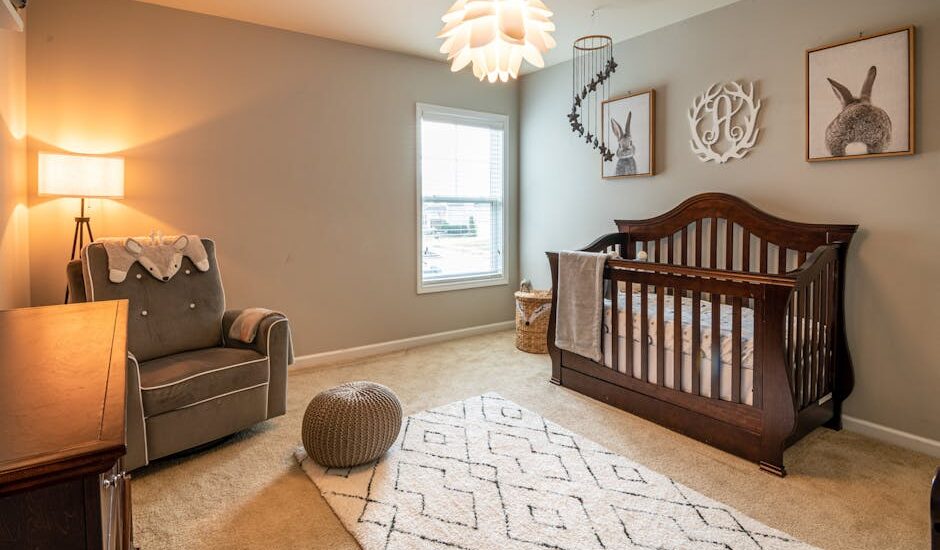
- Putting the humidifier too close to the crib: Mist should disperse into the air, not fall directly onto bedding or your baby’s face. Keep the unit at least 3 feet from the crib.
- Running nonstop without monitoring humidity: Over-humidifying can cause condensation, mold, and dust mite growth. Check with a hygrometer and adjust settings to keep in the 40–50% range.
- Neglecting regular cleaning: Even a few days of standing water can breed bacteria and mold. Daily emptying and weekly cleaning are essential.
- Using tap water with high minerals: Hard water leaves white dust and mineral buildup. Use distilled or demineralized water if your tap water is hard (above 120ppm).
- Ignoring filter replacement schedules: For evaporative models, failing to change filters as recommended can reduce performance and harbor bacteria.
Amazon is the simplest path when you want the newest model, Prime shipping, and a no-questions-asked return window.
Compare Humidifier Options →Frequently Asked Questions
What humidity level is safest for a baby’s bedroom?
The generally recommended range is 40% to 50% relative humidity. This helps keep nasal passages moist and reduces the risk of dry skin or congestion, while minimizing the risk of mold and dust mites that thrive above 60%.
Is a cool mist or warm mist humidifier better for babies?
Cool mist is considered safer for infants. Warm mist models can pose a burn risk if tipped over or touched, and can also raise room temperature, which is not ideal for safe sleep. Cool mist units maintain humidity without adding heat.
How often should I clean my baby’s bedroom humidifier?
Daily emptying and drying of the tank is best practice. A thorough cleaning with mild soap or vinegar should be done at least once a week to prevent mold and bacteria buildup. Avoid using bleach, as residue can be harmful if inhaled.
Where should I place the humidifier in the nursery?
Place the humidifier on a stable, flat surface at least three feet away from the crib. This prevents direct mist from settling on your baby and allows even distribution of moisture throughout the room.
Can I use tap water in a humidifier for my baby’s room?
If your tap water is soft (low in minerals), it’s usually safe. Hard water (over 120ppm minerals) can cause white dust and mineral buildup in the humidifier. In that case, use distilled or demineralized water to reduce maintenance and airborne particles.
Do I need a humidifier with a built-in humidistat?
A built-in humidistat helps maintain a set humidity level automatically, but even the best models can drift by ±5%. For precise control, pair your humidifier with a separate digital hygrometer to monitor the actual room humidity and adjust settings as needed.
Is it safe to add essential oils to my baby’s humidifier?
Most pediatricians advise against using essential oils in a baby’s bedroom humidifier. Even natural oils can irritate delicate airways or trigger allergic reactions in infants. Stick to plain water unless your pediatrician specifically recommends otherwise.
How can I tell if my humidifier is too powerful for my baby’s room?
If you notice condensation on windows, damp walls, or a musty smell, your humidifier may be outputting more mist than the room can absorb. Use a digital hygrometer to confirm if humidity is rising above 50%. Reducing mist output or choosing a smaller capacity model can help maintain a healthier environment.
What is the difference between ultrasonic and evaporative humidifiers for baby bedrooms?
Ultrasonic models use vibration to create a cool mist and are typically quieter (30–38dB), making them ideal for sleep. Evaporative humidifiers use a fan and wick filter, which can be noisier (up to 50dB) and require regular filter changes, but they are less likely to produce white dust if you have hard water.
The Bottom Line: Reliable Humidity Is Worth the Effort
Choosing a humidifier for your baby’s bedroom isn’t about pastel colors or cartoon shapes — it’s about finding a design that’s quiet, easy to clean, and capable of keeping humidity in the healthy 40–50% range. Prioritize wide-mouth tanks, auto shut-off, and a published noise rating below 35dB for overnight peace of mind. Pair your pick with a digital hygrometer, and don’t underestimate the value of easy cleaning — it’s the single best way to protect your baby’s air. When you’re ready to compare options, focus on real specs and user-friendly features, not just what’s trending on parent forums. Your baby’s sleep (and yours) is worth the extra research.