
7 min read
Disclosure: As an Amazon Associate and eBay Partner Network publisher, we earn from qualifying purchases. This doesn’t affect what we recommend or how we describe it.
The gap between the least and most expensive stethoscopes on the market can exceed $300, but the real difference isn’t just price — it’s how each tool records, amplifies, and transmits sound. Choosing between digital and analog stethoscopes comes down to how you use them, what features you need, and how much technological complexity you want to manage.
Top picks at a glance
- Littmann CORE Digital Stethoscope — the most advanced digital option
- Littmann Classic III Stethoscope Chocolate Brown — the classic analog pick
- Prestige Medical Clinical Lite Stethoscope — the lightweight analog alternative
What sets digital and analog stethoscopes apart?
Digital stethoscopes, like the Littmann CORE Digital Stethoscope, convert acoustic sounds into electronic signals, often amplifying the sound by up to 40x and allowing features like Bluetooth connectivity and noise cancellation. Analog models, such as the Littmann Classic III Stethoscope Chocolate Brown and Prestige Medical Clinical Lite Stethoscope, rely entirely on mechanical transmission of sound through hollow tubing and a chest piece. This gives analog models a direct, unfiltered sound but limits their volume and ability to filter background noise.
For most buyers, the choice is about more than just sound quality. You’ll want to consider digital features, weight, comfort, and how you plan to use your stethoscope day to day. Here’s how the top options stack up.
Side-by-side comparison: Digital vs. Analog stethoscopes

Pictured: Littmann CORE
| Product | Condition | Price | Best For | Weight | Digital Features |
|---|---|---|---|---|---|
| Littmann CORE Digital Stethoscope |
New | $$$ | Maximum amplification, tech integration | 232g | Bluetooth, 40x amplification, noise cancellation |
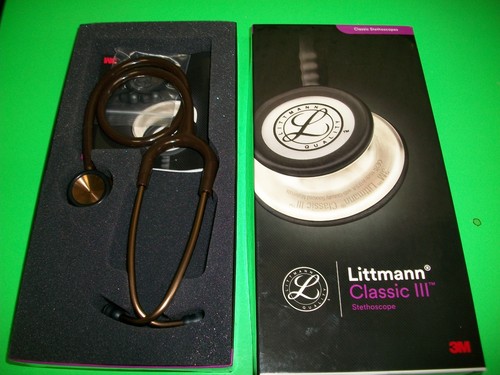 Littmann Classic III Stethoscope Chocolate Brown Littmann Classic III Stethoscope Chocolate Brown |
New – Open Box | $$ | Classic analog performance | 150g | — |
 Prestige Medical Clinical Lite Stethoscope Prestige Medical Clinical Lite Stethoscope |
New | $ | Lightweight, budget-friendly | 99g | — |
Price tiers ($/$$/$$$) read across this comparison only — they mark each product’s relative position from cheapest to priciest in the set. Actual prices live below.
Sound amplification and clarity
Digital models like the Littmann CORE offer adjustable amplification levels up to 40x, making them well-suited for users who work in noisy environments or those with mild hearing loss. The CORE also features active noise cancellation, which can help isolate lung and heart sounds even in a busy clinic. In contrast, the Littmann Classic III and Prestige Clinical Lite rely entirely on the quality of their acoustic design and your own hearing. For most healthy adults in quiet settings, analog models are more than adequate, but they can’t match the volume or filtering capability of a digital stethoscope.
Weight and comfort for all-day wear
If you wear a stethoscope around your neck for hours, weight can become a deciding factor. The Prestige Clinical Lite is the lightest at just 99g, followed by the Littmann Classic III at 150g. The Littmann CORE, with its digital components and heavier build, weighs in at 232g. For those prone to neck fatigue or who do not require electronic features, the Prestige Clinical Lite stands out as the most comfortable for all-day use.
Digital connectivity and tech features
The Littmann CORE is the only stethoscope in this set with Bluetooth connectivity, allowing you to pair with mobile apps for sound visualization, recording, and sharing. This can be especially valuable for telemedicine, teaching, or reviewing complex cases. It also offers multiple listening modes (analog and amplified digital), so you can switch as needed. Analog models like the Littmann Classic III and Prestige Clinical Lite do not support connectivity or recording — they are strictly for live listening.
Build quality and reliability
All three models are backed by established brands with a track record for clinical reliability. The Littmann Classic III is a mainstay in hospitals and clinics, known for its durable tubing and tunable diaphragm. The Prestige Clinical Lite is designed for portability and affordability, using lightweight aluminum. Digital stethoscopes like the Littmann CORE add more electronics, which can mean more points of failure over years of use, but Littmann is recognized for robust engineering and offers support and parts for its digital line.
Related Guides
- Our guide to Digital Scales vs Analog Scales: Which Should You Choose?
- Digital Dynamometer Prices: What to Expect and How to Find the Best Deals
- How to Set Up a Digital Blood Pressure Monitor: Step-by-Step Guide
- Digital Otoscopes for Home Use: What to Know Before You Buy
- Digital Pill Organizers With Reminders: Are They Worth It?
How these made the shortlist
This guide focuses on three stethoscopes that represent the key choices for buyers deciding between digital and analog models. We evaluated each based on:
- Amplification and clarity: Maximum and minimum volume, ability to filter background noise, and overall acoustic quality.
- Weight and comfort: Total weight (in grams) for all-day wear, as listed in manufacturer specs.
- Digital features: Presence of Bluetooth, sound recording, mobile compatibility, and noise cancellation.
- Build and reliability: Materials used, reputation of the brand, and known issues with durability.
- Price tier: Relative cost, as this is a major deciding factor for students, professionals, and part-time users.
We compared the listed specs and positioning of each option against these criteria using manufacturer data and official product listings. We excluded unbranded stethoscopes, models lacking basic technical details, and bundled kits that made it unclear which stethoscope was included. This list is aimed at adults choosing a personal-use stethoscope for clinical, teaching, or home monitoring — not for pediatric specialists or those requiring highly specialized auscultation tools.
If you need a stethoscope for veterinary use or for highly specialized cardiac diagnostics, this shortlist may not cover your needs. For most general adult users, however, these represent the best available options in each category.
Red flags in listings to walk past
- No stated amplification or technical specs: If a digital stethoscope listing doesn’t mention the amplification factor (e.g., 40x) or lacks details about Bluetooth compatibility, it’s likely generic or outdated tech.
- Stock photos only, no close-ups: Listings that rely on manufacturer promo images without showing the actual product may be hiding wear, damage, or a knock-off item.
- Missing weight or material information: If a stethoscope’s weight or tubing material isn’t specified, you may end up with a model that’s uncomfortably heavy or made from low-grade plastics.
- Unbranded or misspelled brand names: Misspellings or “Littman” instead of “Littmann” are classic signs of counterfeit products.
- Vague warranty or return policy: If the listing doesn’t specify a warranty length or return window, you risk being stuck with a defective or misrepresented item.
FAQ: Digital vs. analog stethoscopes in practice
How much louder is a digital stethoscope compared to analog?
Digital stethoscopes like the Littmann CORE can amplify sounds up to 40 times, making them significantly louder than analog models. This is especially useful if you need to hear faint heart or lung sounds, or if you work in a noisy environment where traditional stethoscopes struggle.
Littmann CORE vs. Littmann Classic III — which is better for teaching or telemedicine?
The Littmann CORE is much better suited for teaching and telemedicine because it can record and transmit auscultation sounds via Bluetooth. The Classic III, while excellent for traditional clinical use, does not support sound sharing or recording, limiting its usefulness in remote or educational settings.
Are lightweight stethoscopes less durable?
Lightweight models like the Prestige Clinical Lite use aluminum and thinner tubing to reduce weight, which can make them less robust than heavier options. However, for occasional use or as a backup, they still offer reliable performance if handled with care.
How long do digital stethoscope batteries last?
Most digital stethoscopes, including the Littmann CORE, run for several days to weeks on a single charge, depending on usage. You should expect to recharge or replace batteries every 8-20 hours of continuous use, so having a backup analog model can be wise for long shifts or emergencies.
Is the price difference between digital and analog models justified?
If you need features like sound amplification, Bluetooth connectivity, or noise cancellation, the higher price of a digital model like the Littmann CORE can be justified. For routine exams in quiet settings, analog models such as the Littmann Classic III or Prestige Clinical Lite deliver excellent performance at a much lower cost.
Can digital stethoscopes be used as analog models if the battery dies?
The Littmann CORE offers both analog and digital listening modes, so you can still use it as a standard stethoscope if the battery runs out. Not all digital models have this fallback, so it’s worth checking the specs before you buy.
Verdict: Which stethoscope is right for you?
If you want the latest tech and plan to record, share, or amplify sounds, the Littmann CORE is the clear choice — but it’s heavier and comes at a premium. For most users who value reliability and simplicity, the Littmann Classic III remains a gold standard in analog stethoscopes. If weight and cost are your top concerns, the Prestige Clinical Lite offers a no-frills, featherweight alternative. For more on stethoscope standards and clinical use, see the American Medical Association and American Nurses Association for guidance on stethoscope selection in clinical practice.


Last updated: July 2026 · How we research and evaluate