9 min read
Disclosure: As an Amazon Associate and eBay Partner Network publisher, we earn from qualifying purchases. This doesn’t affect what we recommend or how we describe it.
Body fat percentage readings from smart scales can swing by as much as 8% from one day to the next, even when you haven’t changed anything about your routine. That’s not a glitch—it’s the reality of how these devices work. For anyone hoping to track precise changes in fat, muscle, or water weight with a smart scale, this variability has real consequences. Here’s what actually determines whether a smart scale is accurate, when its numbers matter (and when they don’t), and how to tell if a device is worth trusting with your health data.
What “accuracy” means for smart scales—beyond the marketing
Most smart scales claim to measure weight, body fat, muscle mass, bone mass, and sometimes advanced metrics like visceral fat or metabolic age. But each of these requires a different kind of accuracy. For weight, accuracy is straightforward: does the scale display your real weight, within a small margin of error (typically ±0.2–0.5 kg for consumer models)? For body composition, it’s much trickier. Most consumer smart scales use bioelectrical impedance analysis (BIA): a weak electrical current passes through your body, and the device estimates your fat, muscle, and water content based on resistance. But these estimates depend on assumptions about body shape, hydration, and even skin temperature. That’s why two smart scales can give you very different body fat readings on the same day.
How the options compare: smart scale types and measurement reliability
| Type | Weight Accuracy | Body Fat Accuracy | Connectivity/Features | Measurement Range | Price |
|---|---|---|---|---|---|
| Basic digital scale | ±0.2–0.5 kg | Not measured | None | Up to 180 kg | $ |
| Single-frequency BIA scale | ±0.2–0.5 kg | ±4–8% (vs DEXA) | Bluetooth/app sync | Up to 180–200 kg | $$ |
| Multi-frequency BIA scale | ±0.2–0.3 kg | ±3–5% (vs DEXA) | Bluetooth/Wi-Fi, advanced metrics | Up to 200 kg | $$$ |
| Hand-to-foot BIA scale | ±0.2–0.3 kg | ±2–4% (vs DEXA) | Bluetooth/Wi-Fi, segmental analysis | Up to 200 kg | $$$ |
| Professional DEXA scan (reference) | ±0.1 kg | ±1–2% | Clinic only | Up to 200 kg | $$$ |
Price tiers ($/$$/$$$) read across this comparison only — they mark each product’s relative position from cheapest to priciest in the set. Actual prices live below.
Why your bathroom floor matters: placement and surface effects
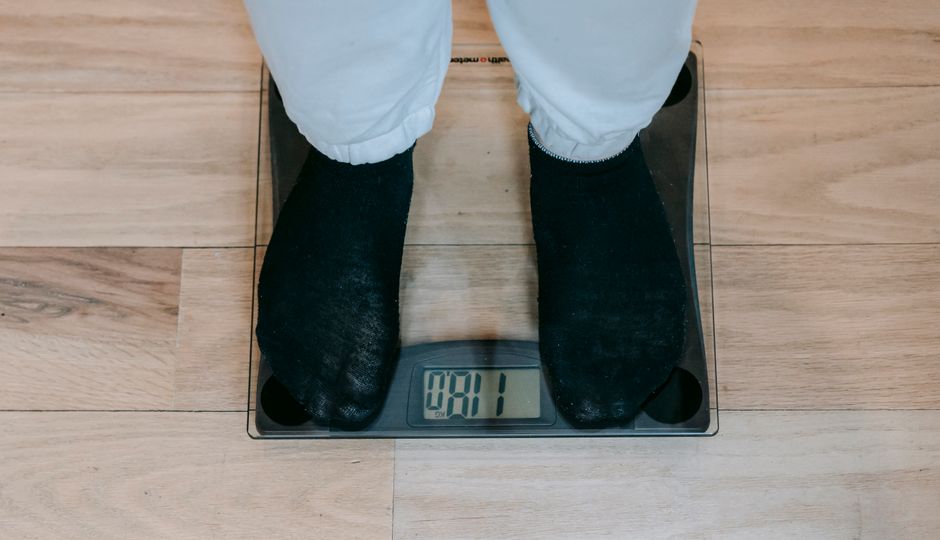
Even the best smart scale can give bad readings if placed on a carpet or uneven tile. Scales use load cells—metal sensors that flex under weight—to detect small pressure changes. A soft or uneven surface can throw off these measurements by several hundred grams, or even more. For consistent results, place your scale on a hard, flat surface (tile, hardwood, or concrete). Some models offer adjustable feet for leveling, but these only help if you calibrate them correctly. Always weigh yourself in the same spot for best consistency.
What body composition readings actually tell you (and don’t)
BIA-based smart scales offer a range of metrics: body fat percentage, muscle mass, bone mass, water content, and more. But unlike weight, these are estimates—sometimes very rough ones. The gold standard for body composition is a DEXA scan, which uses X-rays to directly measure fat, muscle, and bone. In studies, even high-end consumer BIA scales can be off by 4–8% for body fat compared to DEXA (see NIH clinical research). That’s enough to turn a “healthy” reading into an “at risk” one, or vice versa. Hydration, meal timing, and even a hot shower can shift your reading. For most people, the real value is in tracking trends over time—using the same device, under the same conditions—rather than fixating on a specific percentage.
Why multi-frequency and hand-to-foot models cost more (and what you get)
Most budget and mid-range smart scales use single-frequency BIA, sending a current between both feet. Multi-frequency models use several currents at different frequencies, which penetrate tissues differently and can give a more nuanced estimate of fat and muscle. Hand-to-foot BIA scales add electrodes for your hands, measuring the whole body (not just the lower half). This can reduce error—especially if you carry more fat or muscle in your upper body. In lab tests, hand-to-foot models can come within 2–4% of DEXA for body fat, but they cost significantly more and take up more space. If you’re serious about tracking changes in muscle or fat mass, these premium models are the only consumer options that consistently approach clinical accuracy.
Compare today’s dealsWhy smart scales fluctuate—hydration, meals, and measurement timing
Step on a smart scale before breakfast and after a workout, and you might see your body fat percentage jump by 3–5 points. That’s not a sign you gained fat—it’s a limitation of BIA technology. Hydration is the biggest variable: drinking a glass of water can shift readings, as water conducts electricity and alters the resistance measured by the scale. Eating a meal, taking a shower, or even the temperature of your feet can all affect results. For best consistency, weigh yourself at the same time each day—ideally in the morning, after using the bathroom and before eating or drinking. Ignore day-to-day swings; look for trends over weeks or months.
How smart scales sync and store your data: privacy and app reliability
Most smart scales connect to your phone via Bluetooth or Wi-Fi. Bluetooth requires you to open the app each time you weigh in, while Wi-Fi models can sync automatically. Some devices offer integrations with broader health platforms, letting you track trends across devices. But app reliability varies: some lose data during updates, or fail to sync if your phone isn’t nearby. Check how long the manufacturer promises to support the app, and what happens to your data if you switch phones or operating systems. For privacy, read the data policy—some companies share anonymized data with partners, while others keep everything on your device. If privacy is a priority, look for options offering local-only storage or explicit data deletion controls.
See what’s availableCommon mistakes that make readings less accurate
- Weighing at different times of day: Your hydration and food intake can swing results by several percent.
- Standing on carpet or uneven floors: This can throw off both weight and body composition readings.
- Weighing after showering or exercise: Wet or warm skin reduces resistance, often underestimating fat percentage.
- Sharing a scale with people of similar body size: Many scales auto-detect users, but can mix up profiles if weights are close.
- Ignoring calibration: Some models need to be zeroed periodically, especially after moving them.
Related Guides
- Are Smart Jump Ropes Worth It? An Honest Review
- Smart Inhalers for Asthma: Which Devices Are Worth Considering?
- Forehead vs Temple Infrared Thermometers: Which Is More Accurate?
- Our guide to Smart Ring vs Fitness Band: Which Wearable Is Right for You?
- Are Home Cholesterol Tests Accurate? What You Need to Know
- Our guide to How Accurate Are Fitness Tracker Heart Rate Measurements?
- Browse all Educational Guides →
Red flags in listings to walk past
- No stated measurement error or range: If a scale listing avoids mentioning accuracy (e.g., “±0.2 kg” for weight), it’s probably not been tested or is hiding poor performance.
- Claims of “medical grade” or “doctor recommended” without proof: These are marketing phrases with no regulatory meaning in this context. True clinical devices require certification and cost much more.
- Unrealistic body fat precision (e.g., “accurate to 0.1%”): No consumer BIA scale can reliably measure body fat to a tenth of a percent. If you see this, assume the rest of the claims are exaggerated.
- Missing connectivity details: Listings that don’t specify Bluetooth, Wi-Fi, or app compatibility often turn out to be basic digital scales with no smart features.
- Stock photos with no actual product images: Sellers who only show generic images may be reselling low-quality generic devices that don’t match the description.
FAQ: Smart scale accuracy—real-world answers
How accurate are smart scales for body fat percentage?
Consumer smart scales typically estimate body fat within ±4–8% of a DEXA scan, the clinical standard. Multi-frequency and hand-to-foot models can be more precise, but daily readings still fluctuate due to hydration and other factors. For most people, these numbers are best used to track trends rather than absolute values.
Why does my smart scale give different readings minutes apart?
Small changes in foot placement, hydration, or even skin temperature can change resistance readings. If you weigh yourself multiple times in a row, expect to see swings of 1–2 kg in body fat or water percentage. Always use the same conditions—time of day, placement, and posture—for best consistency.
Is a smart scale more accurate than a regular digital scale for weight?
For weight alone, most smart and basic digital scales are similarly accurate (±0.2–0.5 kg). The main advantage of smart scales is connectivity and tracking, not improved weight measurement. If you only care about weight, a well-calibrated digital scale is just as reliable.
How long does a smart scale battery last?
Most smart scales run on standard AAA batteries or built-in rechargeables. Depending on usage and connectivity (Wi-Fi drains more power than Bluetooth), expect 6–12 months of battery life for typical use. Some models offer low-battery alerts via their app.
Hand-to-foot vs foot-only smart scales—which is better for body composition?
Hand-to-foot models measure the entire body, reducing error for people who carry more fat or muscle in their upper body. These can be within 2–4% of DEXA, while foot-only models may miss changes above the waist. Choose a hand-to-foot design if you’re closely tracking fat or muscle distribution.
Can I return a smart scale if the readings seem inaccurate?
Return policies vary widely. Some sellers offer 30-day returns, but you may need to prove a defect rather than just inconsistency. Always check the warranty and return policy before buying, especially if you’re ordering from a third-party marketplace.
Are smart scales suitable for athletes or people with medical devices?
Smart scales using BIA are often inaccurate for athletes (due to unusual muscle/fat ratios) and generally not recommended for people with pacemakers or other implanted electronic devices. Consult your device’s manual or your doctor if you have concerns. For athletes, professional assessment methods are more reliable.
Where to find trustworthy research and standards
For a deeper dive into smart scale accuracy and the clinical limits of body composition measurement, see the Centers for Disease Control and Prevention for consumer guidance and the National Institutes of Health for peer-reviewed studies. These sources provide unbiased information on health measurement devices and their limitations.
Smart scales are great for tracking long-term trends, but don’t expect clinical-grade accuracy—especially for body fat or muscle mass. For most users, consistency is more important than precision. If you want a device that helps you stay accountable and see progress over months, a well-reviewed smart scale is a worthwhile tool. But if you need medically precise data, only a clinical assessment will do.
Last updated: June 2026 · About our research