
Disclosure: As an Amazon Associate and eBay Partner Network publisher, we earn from qualifying purchases. This doesn’t affect what we recommend or how we describe it.
Pulse oximeters flood the market with bold claims, but only a handful are cleared by the FDA for medical use—meaning they’ve met specific accuracy and reliability standards, not just marketing hype. The difference between a device that’s FDA-cleared and one that isn’t can be a matter of life-or-death accuracy, especially for people managing respiratory conditions or monitoring oxygen at home. Here’s what actually separates FDA-approved (technically, “FDA-cleared”) pulse oximeters from generic options, how to tell the difference, and which buying profiles make sense for different needs.
Why FDA Clearance Actually Matters for Pulse Oximeters
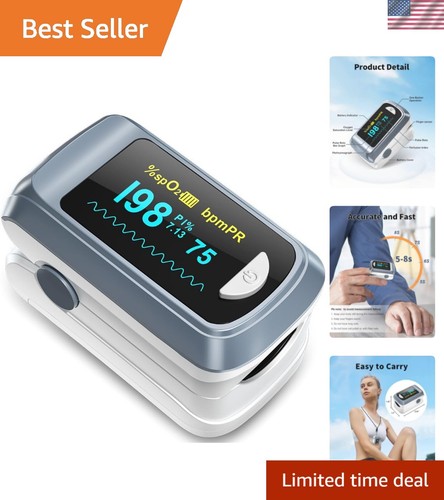
Pulse oximeters measure blood oxygen saturation (SpO2) and pulse rate by passing light through your fingertip. For a device to be FDA-cleared as a medical device (Class II, 510(k)), it must demonstrate accuracy within ±2% for SpO2 readings in the 70–100% range, validated against arterial blood gas measurements. Non-cleared models may not be tested this rigorously, and their readings can drift by 5% or more—enough to mislead someone about a drop in oxygen.
FDA clearance also means manufacturers must report malfunctions, meet labeling requirements, and submit to periodic audits. Over-the-counter oximeters without this clearance are marketed for “wellness” or “sports” use and may legally be sold, but they’re not authorized for clinical decision-making or home monitoring of conditions like COPD, COVID-19, or sleep apnea.
Shopping new with fast Prime shipping? Amazon usually has the best stock.
Shop Online →How the Options Compare: FDA-Cleared vs. Generic Oximeters
| Buying Profile | FDA Status | SpO2 Accuracy | Pulse Range | Display Type | Battery Life | Who It’s For |
|---|---|---|---|---|---|---|
| Full medical-grade option | FDA-cleared (510(k)) | ±2% (70–100%) | 25–250 bpm | OLED, multi-directional | ~30–40 hours (2 AAA) | People with chronic lung/heart conditions, at-home clinical monitoring |
| Simple wellness monitor | Not FDA-cleared | ±3–5% (claims only) | 30–200 bpm | Basic LED, single orientation | ~20 hours (2 AAA) | General wellness tracking, athletes, curiosity use |
| Tech-integrated/app-connected | FDA-cleared or not (verify) | ±2% (if cleared) | 25–250 bpm | OLED + Bluetooth/app sync | ~24–30 hours (rechargeable or AAA) | Tech-savvy users, data tracking, sharing with healthcare providers |
| Pediatric/infant design | FDA-cleared (specific models) | ±2% (validated for children) | 40–240 bpm | Small OLED, child-sized clip | ~18–24 hours | Parents/caregivers, pediatric clinics |
| Budget backup | Not FDA-cleared | ±4–5% (variable) | 30–200 bpm | LED, basic | ~15 hours | Emergency-only, non-critical use |
How to Verify FDA Clearance—And Why It’s Tricky
Unlike some over-the-counter products, pulse oximeters can’t simply claim FDA clearance—they must list a 510(k) number and manufacturer information on the packaging or in the instructions. You can cross-check this number on the FDA’s medical device database. If a product or listing uses phrases like “FDA registered” (which refers only to facility registration, not device safety) or “for wellness use only,” it is not cleared for medical use.
Some app-connected or “smart” pulse oximeters advertise features like sleep tracking or remote monitoring, but FDA clearance applies only to the accuracy of the SpO2 and pulse readings—not to the quality of the app, data privacy, or connectivity. Always check the most recent FDA database entry for the specific device style, as some manufacturers update older models with new clearances.
Clinical Context: Who Actually Needs an FDA-Cleared Pulse Oximeter?
For anyone with a history of chronic respiratory disease (COPD, interstitial lung disease, pulmonary fibrosis), heart failure, or post-COVID complications, an FDA-cleared oximeter is the only type recommended by medical guidelines for home monitoring. This also applies to people discharged from hospital on oxygen, or those who need to track SpO2 for telehealth visits.
For healthy adults curious about their numbers, or athletes tracking trends during exercise, a non-cleared device may suffice for general feedback—but should never be relied on for medical decisions. Pediatric pulse oximeters with FDA clearance are necessary for infants and small children, as their readings can be affected by smaller finger size and higher heart rates.
Specs That Actually Matter (and What’s Marketing Noise)
The industry standard for SpO2 accuracy is ±2% in the 70–100% range. FDA-cleared devices must prove this in lab testing. Anything looser (±3–5%) is a red flag for unreliable readings. The display should show both SpO2 and pulse rate simultaneously, preferably with a perfusion index (PI%) to indicate signal quality—many generic models omit this feature.
Pulse range should cover at least 25–250 beats per minute (bpm) for adults, and up to 240 bpm for pediatric use. Battery life for medical-grade models is typically 30–40 hours of continuous use on two AAA batteries; rechargeable options may offer slightly less. Avoid devices that don’t specify a clear accuracy range, or that have only “wellness” labeling.
Some manufacturers tout “multi-directional OLED” or “anti-motion” features. These can be helpful for seniors or restless users, but are secondary to proven accuracy. Waterproofing (IP22–IP54 ratings) is rare but available in higher-end models, useful for healthcare workers or those in humid climates.
Common Pitfalls: What Can Go Wrong with Non-FDA Oximeters
Inconsistent readings are the most frequent issue with non-cleared oximeters—especially at SpO2 values below 90%, where accuracy matters most. Factors like cold fingers, dark skin pigmentation, nail polish, or poor circulation can skew results on lower-quality sensors, leading to false alarms or missed hypoxia. FDA-cleared units are required to validate performance across diverse skin tones and conditions; generic options may not be.
Another problem: Some wellness oximeters display SpO2 in increments of 2% or 5%, rather than the more precise 1% steps required for medical devices. This can mask subtle but clinically significant drops. Firmware glitches, poor battery contacts, and lack of low-signal warnings are also common in budget options.
Real-World Buying Profiles: Which Type Fits Your Situation?
- Managing chronic lung or heart disease: Only FDA-cleared oximeters should be used. Look for clear labeling, ±2% accuracy, and a perfusion index display. Check current prices
- Remote monitoring via telehealth: Consider a tech-integrated option with Bluetooth/app sync, but verify FDA status for core readings. See what’s available
- Pediatric use: FDA-cleared, child-sized models are essential. Never use an adult device on an infant or toddler.
- General wellness or fitness tracking: A non-cleared device may suffice, but don’t trust it for medical decisions. Compare today’s deals
- Emergency backup: Budget, non-cleared models are better than nothing, but treat any abnormal result with skepticism and confirm with a clinical device if possible.
Shopping new with fast Prime shipping? Amazon usually has the best stock.
Compare Options Online →Frequently Asked Questions about FDA-Approved Pulse Oximeters
Is there a difference between “FDA-approved” and “FDA-cleared” pulse oximeters?
Yes. Pulse oximeters are typically “FDA-cleared” under the 510(k) process, which means they are substantially equivalent to an existing legally marketed device. “FDA-approved” is a term reserved for high-risk (Class III) devices, which most fingertip oximeters are not. If you see “FDA-approved” on packaging, it often means “FDA-cleared”—but always check for a 510(k) number to be sure.
Can I use a non-FDA-cleared oximeter for medical monitoring at home?
Non-cleared oximeters can provide general feedback, but they are not validated for accuracy and should not be used to make medical decisions, especially for people with known respiratory or cardiac conditions. For reliable home monitoring, use only an FDA-cleared device.
How do I check if a pulse oximeter is FDA-cleared?
Look for a 510(k) premarket notification number on the packaging or in the product manual, then verify it on the FDA’s public medical device database. Phrases like “FDA registered” or “for wellness use only” do not indicate clearance for medical use.
Are smartphone-connected oximeters as accurate as traditional models?
Some app-connected oximeters are FDA-cleared and meet the same accuracy standards as traditional models, but others are not. The presence of Bluetooth or app features does not guarantee medical-grade accuracy—always check the FDA clearance status for the core device.
Do all FDA-cleared oximeters work for children?
No. Only specific pediatric models are validated for use on infants and small children. Adult oximeters may not fit properly or provide accurate readings for pediatric patients due to differences in finger size and circulation.
Can skin color or nail polish affect pulse oximeter readings?
Yes. Both factors can interfere with light transmission and affect accuracy, especially in lower-quality devices. FDA-cleared oximeters are required to demonstrate accuracy across a range of skin tones and conditions, but all models can be impacted to some extent. For best results, remove nail polish and ensure hands are warm.
What is the perfusion index (PI%) and why does it matter?
The perfusion index (PI%) indicates the strength of the blood flow at the sensor site. A higher PI% means a stronger, more reliable signal, which leads to more accurate SpO2 readings. Devices that display PI% help users identify poor signal quality—something many budget models do not offer.
How long do batteries last in a typical FDA-cleared pulse oximeter?
Most FDA-cleared fingertip oximeters run for 30–40 hours of continuous use on two AAA batteries. Rechargeable options may provide slightly less run time, typically around 24–30 hours per charge. Always remove batteries if the device won’t be used for an extended period to prevent corrosion.
Bottom Line: Don’t Gamble on Accuracy for Medical Needs
For anyone monitoring a serious health condition, an FDA-cleared pulse oximeter is non-negotiable—the accuracy and reliability standards are there for a reason. Non-cleared devices can be useful for curiosity or basic fitness tracking, but they’re no substitute for real medical-grade readings. Always verify the FDA status, check for clear accuracy specs, and match the device style to your specific needs. When it comes to oxygen monitoring, cutting corners isn’t worth the risk.