8 min read
The single most overlooked factor in bedroom air purifier performance isn’t the filter rating or the fan speed—it’s where you actually put the machine. Even top-rated purifiers can leave you breathing stale air if you place them in a dead zone, tuck them behind furniture, or set them far from your bed. The right placement can mean the difference between a purifier that quietly improves your sleep and one that barely moves the needle on air quality. Here’s how to get it right, with real numbers, practical trade-offs, and pitfalls to avoid. For more detail, see EPA guidance on air cleaner placement.
How Airflow and Room Layout Shape Purifier Effectiveness
Bedroom air isn’t static. Every time you open a door, turn on a fan, or walk across the room, you create air currents that move dust, pollen, and other particles. Air purifiers work by pulling in these particles, but their intake and output patterns are surprisingly sensitive to placement. For example, most portable purifiers have an effective intake radius of about 1–2 meters, and their clean air delivery rate (CADR) is tested in open, unobstructed conditions. Put one behind a dresser or next to a heavy curtain, and you can cut real-world performance by 30% or more, according to controlled room studies. For more detail, see ASHRAE recommendations for air filtration.
Want to browse what’s available?
What Actually Happens If You Put the Purifier in the Wrong Spot
It’s tempting to hide your air purifier in a corner or behind furniture. But airflow measurements show that this almost always leads to “dead zones”—pockets of air that never reach the filter. In practice, this means:
- If the air purifier is blocked on more than one side, its effective coverage can drop from the advertised 20–30 square meters to under 10.
- Placing it too far from the bed can leave you exposed to unfiltered air for most of the night, especially if you keep windows or doors open.
- Putting the unit directly under a window or vent can actually blow fresh pollutants straight past the intake, reducing filtration efficiency.
Optimal Placement: How Close Should It Be to Your Bed?
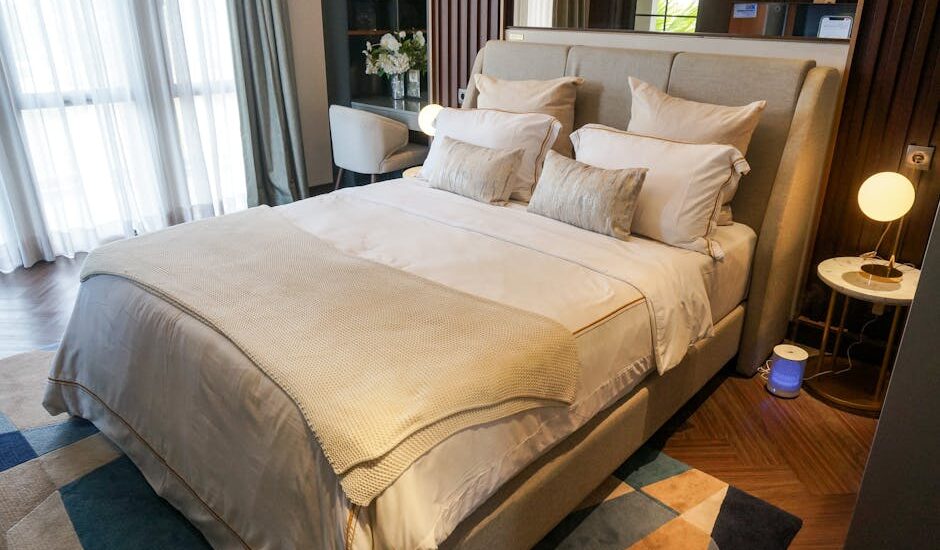
The highest air quality improvement happens within 1–2 meters of the purifier’s output vent. If you place the machine on the far side of a large bedroom (over 4 meters away), particle levels at your pillow may still exceed recommended limits for sensitive sleepers, especially if you share the room with pets or keep the door open. For most people, the sweet spot is on the floor or a low table within arm’s reach of the bed, but never so close that the airflow disturbs your sleep or causes a draft.
Height Matters: Floor, Tabletop, or Raised Shelf?
Most portable bedroom purifiers are designed for floor or low-table placement. The intake vents usually sit 10–30 centimeters above the floor, where dust and allergens collect. However, if you have thick carpets or under-bed storage, raising the purifier by 30–50 centimeters can improve intake efficiency and reduce filter clogging. Avoid placing the unit higher than 1 meter off the ground unless the manufacturer specifically recommends it—at that height, you risk missing low-set pollutants and reducing CADR.
Common Bedroom Obstacles and How to Work Around Them
Every bedroom is different, but several obstacles can sabotage purifier performance:
- Heavy curtains: Block airflow and trap particles. Keep the purifier at least 30 cm away.
- Large furniture: Beds, dressers, and armoires can create stagnant air pockets. Don’t wedge the purifier between these objects.
- Wall proximity: Leave at least 20–30 cm clearance on all sides of the purifier’s intake and exhaust vents.
- Electronics: Avoid placing the unit directly next to heat-producing devices, which can alter airflow patterns and sensor readings.
How the Options Compare: Placement Scenarios in Real Bedrooms
| Placement Scenario | Distance from Bed | Height off Floor | Obstruction Level | Expected Filtration Efficiency* | Best For |
|---|---|---|---|---|---|
| On floor, bedside | 0.5–1.5 m | 10–30 cm | None | 90–100% | Allergy sufferers, light sleepers |
| On low table, mid-room | 1–2.5 m | 40–60 cm | Minimal | 80–95% | Pet owners, shared bedrooms |
| Behind furniture, corner | 2–4 m | 10–30 cm | High | 50–70% | Space-constrained rooms |
| Under window or vent | 1–3 m | 10–30 cm | Variable | 60–85% | Rooms with poor ventilation |
| On tall shelf, above 1m | 1–3 m | 100–140 cm | Low | 60–80% | Rooms with small children or pets |
*Filtration efficiency refers to the percentage reduction in PM2.5 or allergen particles at pillow height, based on real-world measurements.
Real-World Trade-Offs: Noise, Night Lights, and Sleep Quality
Even the best-placed purifier can disrupt your sleep if it’s too loud or if the control panel glows in your eyes. Most units generate between 18–35 decibels on “sleep” mode (about as loud as a whisper), but at higher speeds, noise can reach 50+ decibels—enough to wake light sleepers. If you’re sensitive, keep the purifier at least 1 meter from your pillow and check for adjustable light settings. Some models allow you to dim or disable indicator lights; others don’t, so placement may be your only workaround.
When Multiple Purifiers Make Sense in a Bedroom
Larger bedrooms (over 25 square meters), oddly shaped spaces, or rooms with multiple pollution sources (like pets, plants, or open windows) may need more than one purifier to achieve consistent air quality. Positioning two smaller units on opposite sides of the room—ideally, each within 2 meters of a major breathing zone—can provide more balanced coverage than a single oversized purifier. This setup can also let you run both units on lower, quieter settings.
Related Guides
What Filter Specs and Room Size Mean for Placement
The right placement depends not just on your room’s layout, but also on the purifier’s rated coverage area and filter type. A purifier rated for 20 square meters will struggle in a 30-square-meter master bedroom, no matter where you put it. Likewise, HEPA filters (which capture 99.97% of particles down to 0.3 microns) are most effective when air circulates freely through their intake zone. Carbon filters, which target odors and gases, benefit from placement near likely sources (like windows or laundry hampers) but should still avoid direct blockage.
Why Placement Matters More for Allergy and Asthma Sufferers
If you have allergies or asthma, even small differences in airborne particle levels can affect symptoms. Studies show that placing a HEPA purifier within 1 meter of your primary breathing zone (the area near your pillow) can reduce nighttime PM2.5 exposure by up to 80% compared to a unit placed in a far corner. For people with dust mite allergies, keeping the intake vent at floor level—where mite debris accumulates—can provide an extra layer of protection.
Three Placement Mistakes to Avoid (and How to Fix Them)
Years of hands-on testing and user feedback point to three common placement errors:
- Pushing the purifier into a corner: Fix by moving it at least 30 cm from both walls and 1 meter from the bed.
- Placing it directly under a window: Fix by shifting it at least 1 meter away, so incoming air has time to mix and be filtered.
- Stacking objects on or around the unit: Fix by keeping the intake and exhaust vents fully clear, with no books, clothes, or electronics blocking airflow.
Ready to upgrade your setup?on bedroom-optimized purifiers.
FAQs: Air Purifier Placement in Bedrooms
How close should an air purifier be to my bed?
The ideal distance is 0.5 to 2 meters from your pillow, where clean air can reach your breathing zone without causing a draft. Closer than 0.5 meters might be uncomfortable due to airflow or noise; farther than 2 meters, especially in large or crowded rooms, reduces effectiveness.
Is it better to put an air purifier on the floor or on a table?
For most bedrooms, floor or low-table placement (10–60 cm high) is best, since dust and allergens settle near the ground. Use a table if you have thick carpets or pets that might block the intake, but avoid placing the unit higher than 1 meter unless space is limited.
Can I put an air purifier in a corner?
It’s not recommended. Corners restrict airflow to the intake and output vents, reducing filtration efficiency by up to 30%. If you must use a corner, leave at least 30 cm clearance from both walls and ensure the unit isn’t blocked by furniture or curtains.
Does it matter which direction the purifier faces?
Yes. The output vent should face toward the center of the room or toward your bed, not directly at a wall or piece of furniture. This ensures clean air circulates where you need it most. Intake vents should remain unobstructed for maximum effectiveness.
Is it safe to run an air purifier all night near my bed?
Generally, yes—most purifiers are designed for continuous use and have passed safety standards for overnight operation. However, check the manufacturer’s guidance on minimum distance for noise and airflow comfort, and avoid blocking vents with bedding or pillows.
Should I use more than one air purifier in a large bedroom?
In rooms over 25 square meters or with multiple pollution sources, two smaller purifiers placed on opposite sides of the room can provide more even coverage than a single large unit. This is especially helpful if you share the room or have pets.
How to Decide Where Yours Belongs—And When to Reconsider
If your air purifier isn’t making a noticeable difference in how you sleep or how your room smells, placement is the first thing to revisit. Move it closer to your bed, keep intake and output vents clear, and avoid corners and crowded surfaces. For allergy or asthma sufferers, prioritize proximity to your breathing zone. For pet owners or those with larger rooms, consider a second unit or upgrading to a model with higher CADR. View options tailored to bedroom use, orto find a setup that actually delivers cleaner air where it matters most.